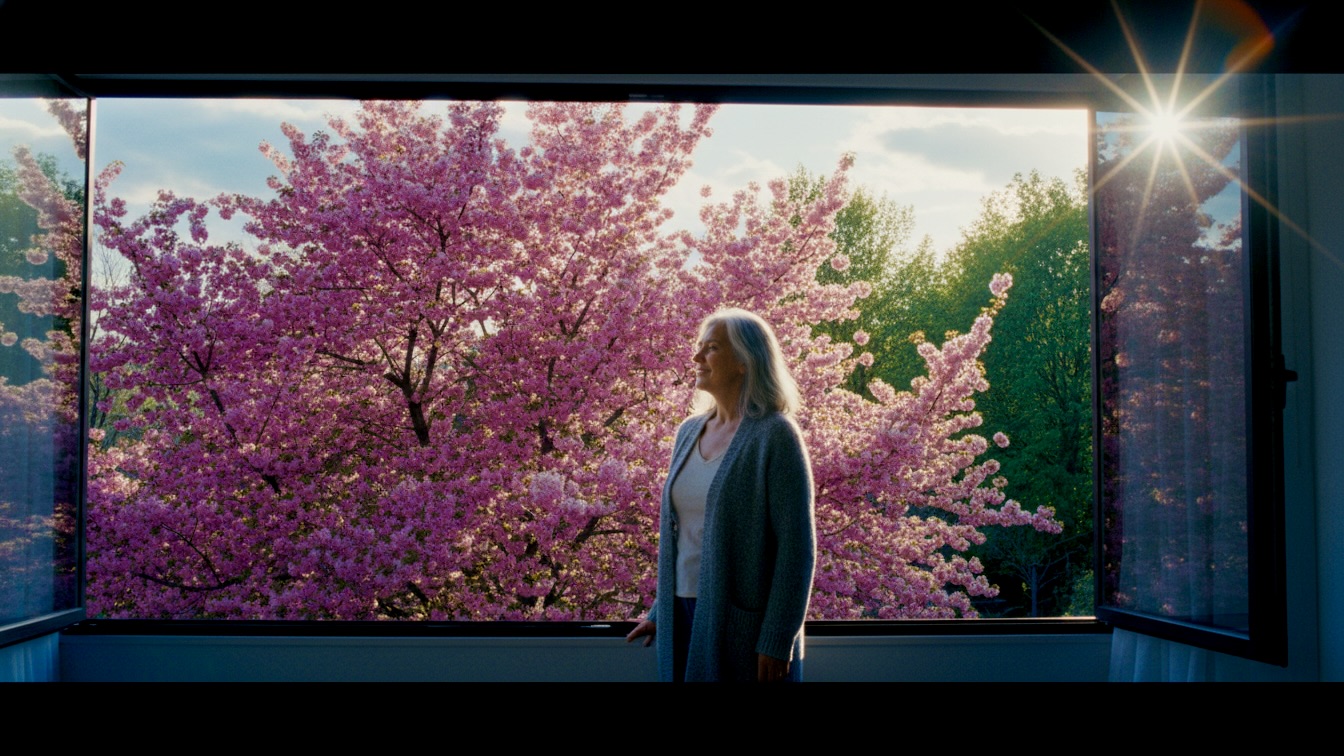
The story follows Lee-Anne, a sixty-two-year-old woman who awakens within a surreal, decaying Victorian mansion that manifests the trauma of her thirty-four-year marriage. As she navigates the rotting corridors, she is haunted by the oppressive sensory reminders of her ex-husband, Arthur, whose presence is felt through the stench of cheap cologne and the literal bleeding of black ink from the walls. She encounters a shadow beast that embodies the manipulative history of their relationship, specifically the transactional nature of his hollow apologies. Armed only with a cigarette lighter—a remnant of her past attempts to reclaim her autonomy—Lee-Anne confronts the entity, incinerating the mansion and the memories it represents. The chapter concludes with her awakening in her own peaceful apartment, signaling a total psychological liberation from the weight of her past.
The central theme of the narrative is the transmutation of trauma into agency. By externalizing the internal architecture of a toxic marriage into a physical, decaying structure, the author illustrates how long-term emotional abuse can warp a person's reality. The mansion serves as a metaphor for the stagnation of a life lived for someone else, where the boundaries between the self and the abuser have been eroded by years of passive aggression and silence.
The concept of the "trapdoor" suggests that the promise of "forever" in a destructive relationship is not a sanctuary, but a mechanism of entrapment. Lee-Anne’s journey through the house represents the arduous process of confronting one's own history. The fire she ignites acts as a purifying agent, stripping away the artificial layers of "keeping up appearances" and revealing the possibility of a life defined by the individual rather than the partner.
The story also explores the somatic nature of memory. Lee-Anne’s physical reactions—the pain in her hip, the tightness in her chest, and the eventual relief she feels—show how emotional baggage is stored within the body. The act of burning the house is not just a symbolic gesture; it is a physiological release. By destroying the physical manifestations of Arthur’s influence, she achieves a state of clarity that allows her to finally exist in the present moment, surrounded by the literal and metaphorical spring of her new, independent life.
Lee-Anne begins the narrative as a woman defined by the structural remnants of her past. Her physical pain, specifically the bursitis in her hip, mirrors the chronic, deep-seated ache of her thirty-four-year marriage. She is initially cautious and weary, reacting to the environment with a mixture of recognition and dread. However, her character trajectory is one of profound reclamation; she moves from a state of passive endurance to one of active defiance.
Her decision to keep the lighter is a crucial detail, representing a dormant spark of self-preservation that she carried even through the darkest years of her relationship. When she confronts the shadow beast, her anger is not a sudden outburst, but a crystallization of years of suppressed resentment. She realizes that she was not the architect of her misery, but a survivor of it. Her final transformation from a weary, pained individual to a woman who feels "inevitable" marks her successful shedding of the victim identity.
Arthur is portrayed not as a physical presence, but as an omnipresent psychological force. Through the sensory details of his cheap cologne and the "ash and disappointment" that permeates the house, he is depicted as a man who valued control and transaction over genuine connection. He is the master of the "trapdoor," using empty gestures like grocery store roses to maintain his hold on Lee-Anne. His presence in the story is purely parasitic, feeding off the silence and the boundaries he systematically violated. By the end, he is reduced to a shadow beast—a hollow, dragging entity that possesses no true substance once Lee-Anne refuses to grant him the power of her forgiveness.
The narrative voice is intimate and visceral, utilizing sensory details to ground the surrealist elements of the plot. By describing the house with terms like "fungal growths" and "crushed maroon velvet," the author creates an atmosphere of claustrophobia that mirrors Lee-Anne’s internal state. The pacing is deliberate, allowing the reader to experience the heaviness of the environment before escalating to the climactic fire.
The use of the "shadow beast" as a manifestation of Arthur is a powerful stylistic choice that avoids literal character interaction in favor of psychological confrontation. This allows the author to externalize the abstract concepts of manipulation and emotional exhaustion. The shift in tone from the cold, yellowed decay of the mansion to the golden, clear light of Lee-Anne’s real-world morning provides a satisfying contrast that emphasizes her psychological shift.
The prose is tight and evocative, relying on metaphors that resonate with the reader’s understanding of human relationships. The transformation of the ink—from a symbol of unpaid bills and silence to a flammable substance—is a brilliant bridge between the thematic weight of the story and its physical climax. The final scene, with its focus on simple, grounding actions like making coffee, serves as a quiet, effective resolution that reinforces the theme of reclaiming the mundane beauty of an independent life.


