What is a Man Camp?
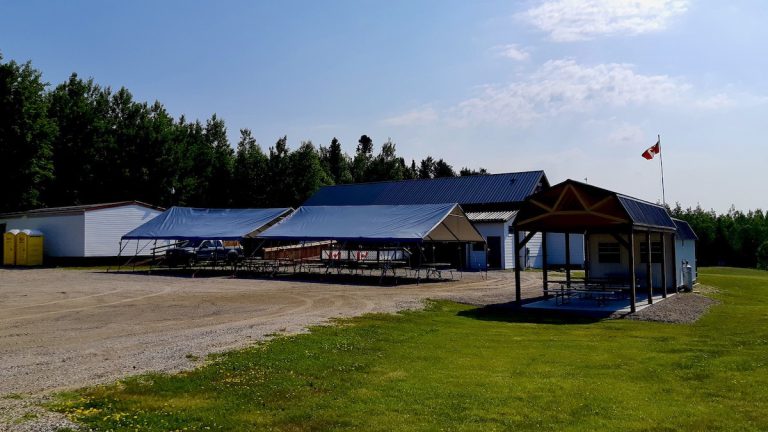
In the context of the Revell Site Deep Geological Repository (DGR), a ‘man camp’ refers to a temporary, high-density worker accommodation facility designed to house the hundreds of transient personnel required for the construction and operation of a large-scale industrial project in a remote, rural area. These facilities are typically modular, self-contained, and located on or immediately adjacent to the project site to minimize commute times and logistical overhead [Analysis: Section 9.5].
Community Perspectives and Concerns
Public reaction to the proposed worker accommodation camp is overwhelmingly negative among local residents in the unorganized territories of Melgund Township (Dyment and Borups Corners). Concerns raised include:
- Social Cohesion and Safety: Residents fear that the influx of a large, transient workforce will disrupt the quiet, rural character of their community and strain the already non-existent local emergency services [Comment Ref: 437, 584].
- Emergency Response Capacity: There is significant anxiety regarding the lack of local police, fire, and ambulance services in unorganized territories. Residents argue that the proponent cannot rely on regional hubs like Ignace or Dryden, which are already operating at capacity [Comment Ref: 294, 391].
- Stigma and Property Values: The presence of a massive industrial camp and the associated repository is perceived to permanently stigmatize the region, potentially devaluing private property and deterring future non-industrial investment [Comment Ref: 391, 437].
- Environmental and Infrastructure Strain: Residents are concerned that the camp will place an unsustainable burden on local water and waste management systems, which are currently the responsibility of individual homeowners [Comment Ref: 15.7].
Technical Deficiencies & Gaps
Our internal analysis of the proponent’s submissions reveals several critical gaps regarding the man camp:
- Lack of Self-Sufficiency: The proponent has not demonstrated 100% self-sufficiency for emergency response (fire, medical, security) for the camp, creating a potential ‘downloading’ of risk onto the already strained services of neighboring municipalities [Analysis: Section 15.7].
- Inadequate Social Impact Assessment: The proponent’s baseline studies focus on municipal centers and fail to disaggregate the specific socio-economic impacts on the unorganized residents of Melgund Township [Analysis: Section 15.5].
- Vague Mitigation: The proponent relies on ‘strict behavioural policies’ and ‘security checks’ as primary mitigation for social friction, which lacks the empirical backing required for a project of this scale in a remote area [Analysis: Section 19.2.3.13].
Recommendations & Mandates
We strongly recommend that the proponent develop a comprehensive ‘Social Management Plan’ that is legally binding and specific to the unorganized territories. This plan must include a commitment to 100% on-site self-sufficiency for all emergency services, ensuring that the camp does not rely on the volunteer-based services of the region. Furthermore, we strongly recommend that the proponent establish a ‘Community Benefit and Mitigation Fund’ specifically for Melgund Township to address the tangible impacts on property values and infrastructure, rather than relying on regional averages or distant municipal agreements.
Conclusion
The proposed man camp represents a significant socio-economic risk to the unorganized communities of Melgund Township. Without concrete, site-specific mitigation and a shift toward full operational self-sufficiency, the project risks severe social fragmentation and the erosion of the local way of life.
About the Deep Geological Repository (DGR) for Canada’s Used Nuclear Fuel Project
The Nuclear Waste Management Organization (the NWMO) is proposing a new underground deep geological repository system designed to safely contain and isolate used nuclear fuel. Wabigoon Lake Ojibway Nation (WLON) and the Township of Ignace have been selected as the host communities for the proposed project, which is located 21 kilometres southeast of the WLON and 43 kilometres northwest of the Town of Ignace, Ontario along Highway 17. As proposed, the Deep Geological Repository (DGR) for Canada’s Used Nuclear Fuel Project would provide permanent storage for approximately 5.9 million bundles of used nuclear fuel. The project is expected to span approximately 160 years, encompassing site preparation, construction, operation and closure monitoring. The project assessment is being conducted in collaboration with the Canadian Nuclear Safety Commission.
Learn more about the Integrated Impact Assessment process which is led by the Impact Assessment Agency of Canada and Canadian Nuclear Safety Commission.
- Read the Summary of Issues (February 16, 2026)
- Read the Summary of the Initial Project Description (January 5, 2026)
- Read the Initial Project Description (January 5, 2026)
- Learn More about the Melgund Integrated Nuclear Impact Assessment (MINIA) Project
- Learn More about the Nuclear Waste Management Organization (NWMO)
About the Author