Reviewing Section 15.7: Infrastructure, Services, and Community Capacity
This article is part of a series exploring the views and perspectives of youth, artists and community members working with the ECO-STAR North climate entrepreneurship project, developed through our community consultation and engagement participation in the integrated impact assessment process for the proposed Deep Geological Repository.
What is Proposed
In Section 15.7 of the Initial Project Description, the Nuclear Waste Management Organization (NWMO) outlines the baseline conditions for infrastructure and services in Ignace, Dryden, Sioux Lookout, and surrounding unincorporated areas. The summary highlights the current state of water and wastewater systems, solid waste management, housing availability, and social services. Key findings in the proponent’s baseline include the fact that Ignace’s sewage treatment plant is nearing the end of its lifespan, regional housing is operating at or near capacity, and there are significant gaps in childcare and senior services. The proponent asserts that this baseline data is sufficiently complete for the initial license application and intends to update these findings between 2023 and 2027.
Underlying Assumptions
Our analysis of the text identifies several underlying assumptions that guide the proponent’s current approach to infrastructure planning:
- Assumption of Sufficiency: The proponent assumes that the current snapshot of infrastructure is adequate for the initial regulatory phase, despite acknowledging assets that are nearing failure.
- Deferred Mitigation: There is an assumption that updates to the baseline in the coming years will be sufficient to address changes, rather than proactively planning for immediate upgrades.
- Volunteer Capacity: The text assumes that existing emergency services, which rely heavily on volunteers and are already reporting burnout, can sustain current service levels without immediate structural changes.
- Market Adjustment: There is an implicit assumption that the housing market can accommodate future growth despite current shortages and a lack of diverse housing stock.
Community Assessment
Through our community engagement, we have identified critical concerns regarding the observations made in the baseline study. While the proponent accurately identifies that critical wastewater infrastructure in Ignace and Sioux Lookout is in poor condition, the implication of this finding is severe. If the project increases the local population before these assets are replaced, it could lead to service failures or environmental non-compliance. Furthermore, the housing shortage is a pressing socio-economic risk; a lack of available housing could drive up local prices, potentially displacing current residents and making it difficult to attract the necessary workforce.
Socially, the identified gaps in childcare and senior services present a barrier to community well-being. Without full-time childcare, the project may struggle to maintain a diverse workforce, and local families may lose access to already scarce resources. Additionally, the reliance on volunteer fire services and the reported burnout among EMS staff pose a general safety risk. Increased call volumes associated with project activity could overwhelm these systems, leading to slower response times for the entire region.
Path Forward
To address these risks, we recommend that the proponent immediately undertake a quantitative ‘Project-Induced Demand’ study. This study must overlay projected workforce numbers and their dependents onto the identified infrastructure capacities, specifically addressing the 10-year window for Ignace’s sewage plant replacement. By providing clear projections, the proponent can work with provincial authorities to establish an infrastructure investment framework that ensures the project does not leave host communities with a deficit of essential services.
Additionally, a comprehensive Social Infrastructure Mitigation Plan is required. This plan should consider direct investments in community service capacity, such as funding for full-time paramedic positions or the establishment of project-linked childcare facilities. These measures are essential to mitigate the risk of displacing local residents’ access to services and to demonstrate a genuine commitment to the community’s ability to thrive alongside the project.
About the Integrated Assessment Process
The federal Impact Assessment Agency of Canada (IAAC) has formally launched the integrated impact assessment process for the proposed Deep Geological Repository (DGR) for Canada’s Used Nuclear Fuel Project, a major national infrastructure initiative led by the Nuclear Waste Management Organization (NWMO).
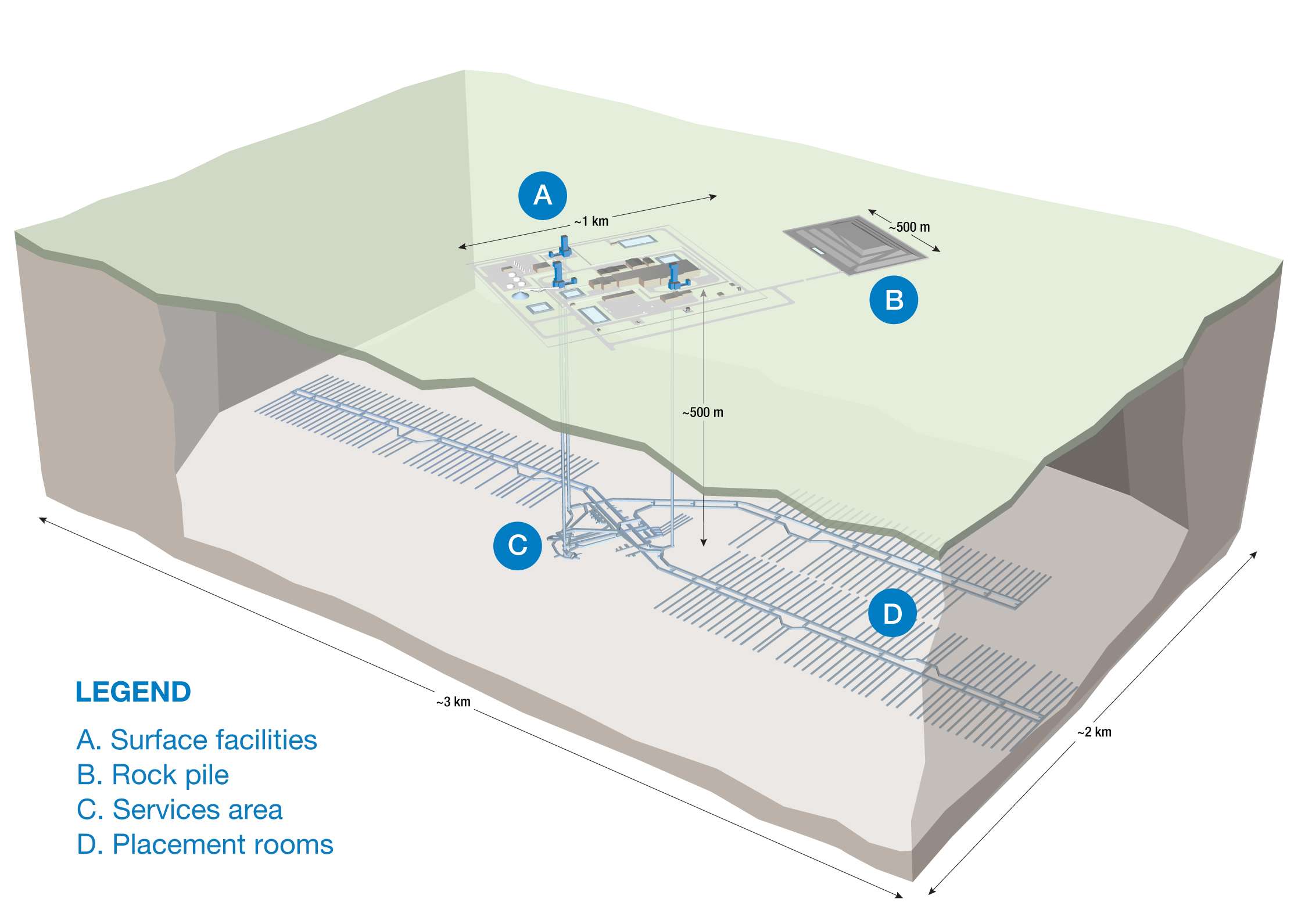
The proposed underground repository is designed to permanently contain and isolate used nuclear fuel in a secure geological formation. Wabigoon Lake Ojibway Nation and the Township of Ignace have been selected as host communities for the project. The site is located approximately 21 kilometres southeast of Wabigoon Lake Ojibway Nation and 43 kilometres northwest of Ignace, Ontario, near Highway 17.
According to project materials, the repository would provide permanent storage for approximately 5.9 million bundles of used nuclear fuel. The full lifecycle of the project is expected to span roughly 160 years, including site preparation, construction, operations, closure, and long-term monitoring.
Integrated Federal Review
Major nuclear projects in Canada are subject to an integrated assessment process jointly led by the Impact Assessment Agency of Canada and the Canadian Nuclear Safety Commission (CNSC). This “one project, one review” approach is intended to streamline regulatory oversight while ensuring rigorous evaluation of environmental, health, social, economic, and Indigenous rights impacts.
Under this framework, IAAC oversees the impact assessment requirements under the Impact Assessment Act, while the CNSC regulates nuclear safety under the Nuclear Safety and Control Act. The CNSC will issue the initial site preparation licence and manage all subsequent nuclear licensing for the project’s duration.
The integrated assessment also includes a focus on potential impacts on Indigenous Peoples, including rights, land use, cultural practices, health, and socio-economic conditions. Where potential adverse effects are identified, the process is intended to identify mitigation measures to reduce or avoid harm.
Public Comment Period Now Open
The first public comment period for the project is currently open and will run until February 4, 2026. During this phase, the public is invited to provide feedback on the Summary of the Initial Project Description submitted by the NWMO. Submissions received during this period will inform IAAC’s summary of issues, which will guide the next stages of the impact assessment. All comments submitted become part of the public project record and are posted to the federal Impact Assessment Registry.
This plain-language summary is provided by ECO-STAR North and Art Borups Corners to support public engagement.
Disclaimer: The views and perspectives expressed in this article are solely those of the independent arts program led by ECO-STAR North and Art Borups Corners. They do not reflect the official positions of the Nuclear Waste Management Organization (NWMO) or the Government of Canada.
About the Author