Evaluating the Rigor of Biological Baseline Studies
This article is part of a series exploring the views and perspectives of youth, artists and community members working with the Melgund Integrated Nuclear Impact Assessment Project. This initiative is a climate entrepreneurship and arts-based community recreation program, developed through community consultation, engagement participation in the integrated impact assessment process for the NWMO’s proposed Deep Geological Repository for nuclear waste fuel.
What is Proposed
The Nuclear Waste Management Organization (NWMO) is currently conducting baseline data collection to identify Species at Risk (SAR) and their habitats within the proposed Revell Deep Geological Repository site. As detailed in the Initial Project Description, the proponent is utilizing a combination of desktop research, terrestrial ecosystem mapping, and environmental DNA (eDNA) metabarcoding. Findings to date have confirmed the presence of several SAR, including the Little Brown Myotis, Northern Myotis, Snapping Turtle, and eleven bird species. However, the proponent has excluded wide-ranging mammals such as the woodland caribou and wolverine from detailed study, citing distance from regulated ranges. Additionally, while eDNA studies detected the American eel, the proponent has expressed uncertainty regarding this result, suggesting it falls outside the species’ typical range.
Underlying Assumptions
Our analysis of the technical submission identifies several critical assumptions guiding the proponent’s methodology:
- Assumption of Sufficiency: The belief that “opportunistic identification” of wildlife habitats during general mapping is an adequate substitute for systematic, dedicated surveys.
- Regulatory vs. Ecological Boundaries: The assumption that regulatory triggers (e.g., being 61 km or 80 km from a range boundary) are sufficient grounds to exclude wide-ranging species, ignoring potential ecological connectivity.
- Data Maturity: The assertion that current studies are “sufficiently advanced” to support a risk-informed assessment, despite the simultaneous admission that further field studies are required to verify species presence.
- Skepticism of Anomalies: The assumption that eDNA detections of high-priority species (like the American eel) that contradict desktop expectations should be treated as potential errors rather than urgent signals for precautionary verification.
Community Assessment
The community observes a concerning pattern of “methodological minimalism” in the current approach to Species at Risk. Relying on opportunistic data collection rather than systematic, grid-based protocols creates a significant risk that critical habitats—such as maternity colonies or hibernacula—may be overlooked simply because they were not encountered during general mapping activities. Furthermore, the exclusion of the woodland caribou and wolverine based on static distance buffers fails to account for the expansive home ranges of these carnivores and the potential for the project site to serve as a movement corridor.
There is also concern regarding the narrative framing of the data. Describing the cougar as a “habitat generalist” to justify a lack of focused study, or dismissing the American eel detection without immediate verification, suggests a bias toward minimizing perceived environmental sensitivity. For the community, the claim that the assessment is “risk-informed” is logically inconsistent with the admitted lack of confirmed breeding data for species within the project footprint.
Path Forward
To ensure a rigorous impact assessment, the following corrective measures are recommended:
- Systematic Surveying: Transition from opportunistic identification to a systematic, grid-based survey methodology to define Significant Wildlife Habitat (SWH) with statistical defensibility.
- Connectivity Analysis: Conduct a functional connectivity analysis for wide-ranging species like caribou and wolverine, rather than relying solely on distance buffers from regulated ranges.
- Immediate Verification: Resolve the uncertainty surrounding the American eel through targeted traditional sampling (netting or electrofishing) and barcode gap analysis immediately.
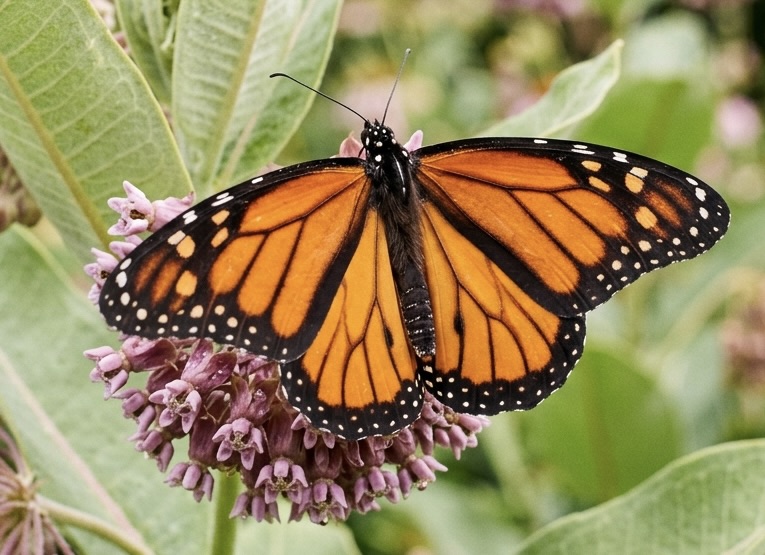
- Invertebrate Sampling: Expand the scope of terrestrial invertebrate surveys to include active sampling for the Yellow-banded Bumble Bee and Monarch butterfly, rather than relying on potential presence models.
About the Integrated Assessment Process
The federal Impact Assessment Agency of Canada (IAAC) has formally launched the integrated impact assessment process for the proposed Deep Geological Repository (DGR) for Canada’s Used Nuclear Fuel Project, a major national infrastructure initiative led by the Nuclear Waste Management Organization (NWMO).
The proposed underground repository is designed to permanently contain and isolate used nuclear fuel in a secure geological formation. Wabigoon Lake Ojibway Nation and the Township of Ignace have been selected as host communities for the project. The site is located approximately 21 kilometres southeast of Wabigoon Lake Ojibway Nation and 43 kilometres northwest of Ignace, Ontario, near Highway 17.
According to project materials, the repository would provide permanent storage for approximately 5.9 million bundles of used nuclear fuel. The full lifecycle of the project is expected to span roughly 160 years, including site preparation, construction, operations, closure, and long-term monitoring.
Integrated Federal Review
Major nuclear projects in Canada are subject to an integrated assessment process jointly led by the Impact Assessment Agency of Canada and the Canadian Nuclear Safety Commission (CNSC). This “one project, one review” approach is intended to streamline regulatory oversight while ensuring rigorous evaluation of environmental, health, social, economic, and Indigenous rights impacts.
Under this framework, IAAC oversees the impact assessment requirements under the Impact Assessment Act, while the CNSC regulates nuclear safety under the Nuclear Safety and Control Act. The CNSC will issue the initial site preparation licence and manage all subsequent nuclear licensing for the project’s duration.
The integrated assessment also includes a focus on potential impacts on Indigenous Peoples, including rights, land use, cultural practices, health, and socio-economic conditions. Where potential adverse effects are identified, the process is intended to identify mitigation measures to reduce or avoid harm.
Public Comment Period Now Open
The first public comment period for the project is currently open and will run until February 4, 2026. During this phase, the public is invited to provide feedback on the Summary of the Initial Project Description submitted by the NWMO. Submissions received during this period will inform IAAC’s summary of issues, which will guide the next stages of the impact assessment. All comments submitted become part of the public project record and are posted to the federal Impact Assessment Registry.
This plain-language summary is provided by ECO-STAR North and Art Borups Corners to support public engagement.
Disclaimer: The views and perspectives expressed in this article are solely those of the independent arts program led by ECO-STAR North and Art Borups Corners. They do not reflect the official positions of the Nuclear Waste Management Organization (NWMO) or the Government of Canada.
About the Author