Evaluating the Staged Approach to Nuclear Waste Management
This article is part of a series exploring the views and perspectives of youth, artists and community members working with the Melgund Integrated Nuclear Impact Assessment Project. This initiative is a climate entrepreneurship and arts-based community recreation program, developed through community consultation, engagement participation in the integrated impact assessment process for the NWMO’s proposed Deep Geological Repository for nuclear waste fuel.
What is Proposed
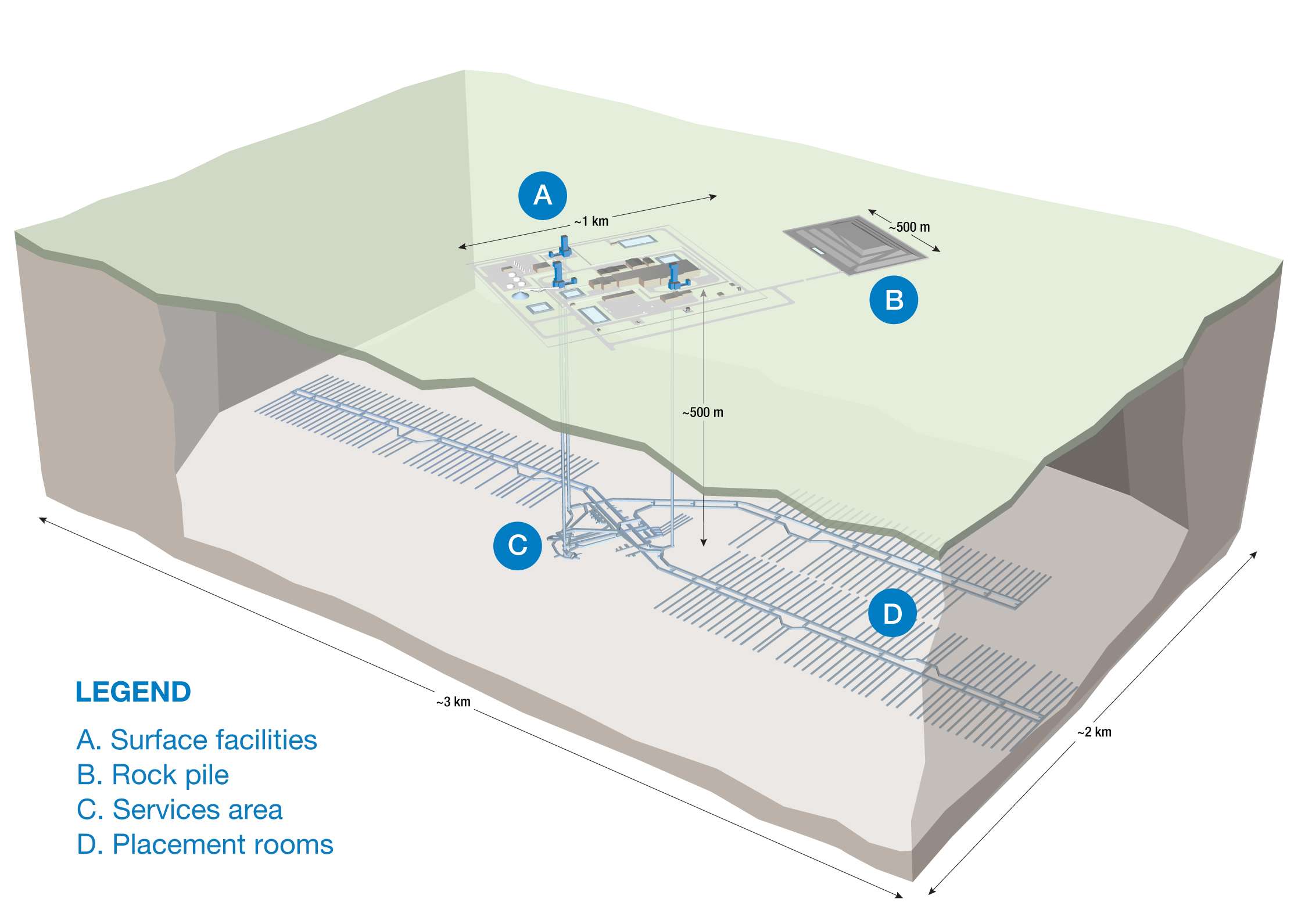
The Nuclear Waste Management Organization (NWMO) has identified “Option 4” as the preferred strategy for managing Canada’s used nuclear fuel. This approach centers on a Deep Geological Repository (DGR) designed for permanent containment. The proponent claims this method offers a balance between near-term flexibility—allowing for technological innovation and “social learning”—and a long-term solution that does not require active human management after the facility is sealed. Key claims include a 90-year financial planning window and a commitment to maintaining public health through radiological exposures that are estimated to be “very small.”
Underlying Assumptions
The proposed strategy relies on several critical assumptions that require further scrutiny as part of the Initial Project Description review:
- Extreme long-term economic and institutional stability over a 90-year expenditure window.
- The adequacy of the term “communities of interest” to encompass all impacted stakeholders and Indigenous nations.
- That “social learning” and “adaptive management” can effectively mitigate risks in the absence of finalized technical specifications.
- The belief that radiological and non-radiological exposures will remain negligible without the provision of site-specific baseline data.
Community Assessment
Our review reveals significant concerns for residents in Melgund Township, particularly near Dyment and Borups Corners. The narrative of “adaptability” is often perceived by the community as a linguistic veil for technical uncertainty. For those living within 10km of the proposed Revell site, the absence of quantitative modeling makes safety claims difficult to verify. Furthermore, there is a stark inequity in the distribution of risk; while the broader Canadian society benefits from nuclear power, local communities shoulder the long-term environmental and social “stigma” burdens. The mention of the Nuclear Liability and Control Act (NLCA) regarding potential evacuations is particularly concerning to the community, as it frames the potential displacement of the Melgund population as a manageable administrative event rather than a catastrophic failure to be avoided at all costs.
Path Forward
To improve the proposal and ensure genuine community well-being, the proponent must move beyond generic labels and provide a robust framework for Indigenous engagement that aligns with UNDRIP and integrates Traditional Knowledge. We recommend the following corrective measures:
- Quantify “very small” exposure estimates with clear safety margins and baseline data.
- Define specific contingency protocols for “unforeseen events” during the 90-year monitoring phase, including a clear definition of what constitutes a failure of an engineered barrier.
- Establish clear technical milestones that must be met before proceeding to subsequent implementation stages, ensuring safety is not sacrificed for project momentum.
- Provide a substantive plan for the preservation of property values and the protection of local water sources.
About the Integrated Assessment Process
The federal Impact Assessment Agency of Canada (IAAC) has formally launched the integrated impact assessment process for the proposed Deep Geological Repository (DGR) for Canada’s Used Nuclear Fuel Project, a major national infrastructure initiative led by the Nuclear Waste Management Organization (NWMO).
The proposed underground repository is designed to permanently contain and isolate used nuclear fuel in a secure geological formation. Wabigoon Lake Ojibway Nation and the Township of Ignace have been selected as host communities for the project. The site is located approximately 21 kilometres southeast of Wabigoon Lake Ojibway Nation and 43 kilometres northwest of Ignace, Ontario, near Highway 17.
According to project materials, the repository would provide permanent storage for approximately 5.9 million bundles of used nuclear fuel. The full lifecycle of the project is expected to span roughly 160 years, including site preparation, construction, operations, closure, and long-term monitoring.
Integrated Federal Review
Major nuclear projects in Canada are subject to an integrated assessment process jointly led by the Impact Assessment Agency of Canada and the Canadian Nuclear Safety Commission (CNSC). This “one project, one review” approach is intended to streamline regulatory oversight while ensuring rigorous evaluation of environmental, health, social, economic, and Indigenous rights impacts.
Under this framework, IAAC oversees the impact assessment requirements under the Impact Assessment Act, while the CNSC regulates nuclear safety under the Nuclear Safety and Control Act. The CNSC will issue the initial site preparation licence and manage all subsequent nuclear licensing for the project’s duration.
The integrated assessment also includes a focus on potential impacts on Indigenous Peoples, including rights, land use, cultural practices, health, and socio-economic conditions. Where potential adverse effects are identified, the process is intended to identify mitigation measures to reduce or avoid harm.
Public Comment Period Now Open
The first public comment period for the project is currently open and will run until February 4, 2026. During this phase, the public is invited to provide feedback on the Summary of the Initial Project Description submitted by the NWMO. Submissions received during this period will inform IAAC’s summary of issues, which will guide the next stages of the impact assessment. All comments submitted become part of the public project record and are posted to the federal Impact Assessment Registry.
This plain-language summary is provided by ECO-STAR North and Art Borups Corners to support public engagement.
Disclaimer: The views and perspectives expressed in this article are solely those of the independent arts program led by ECO-STAR North and Art Borups Corners. They do not reflect the official positions of the Nuclear Waste Management Organization (NWMO) or the Government of Canada.
About the Author