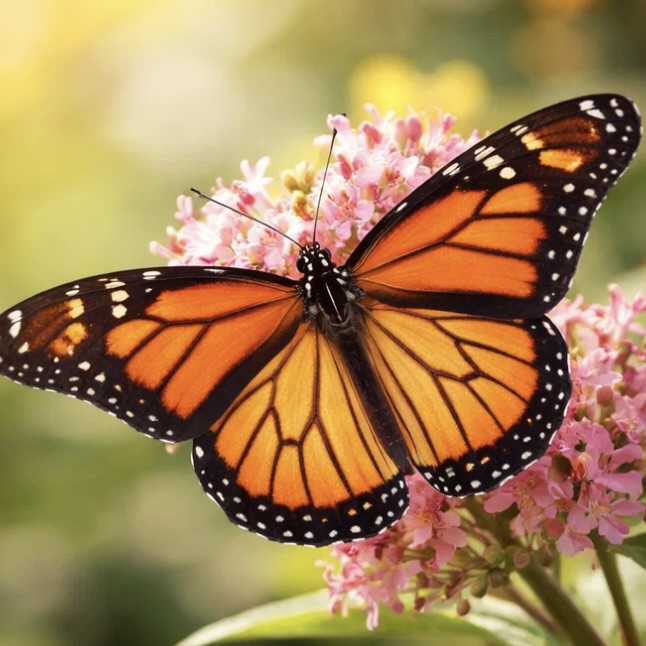
How One Northwestern Ontario Town is Saving the Monarch Butterfly
If you’ve ever driven through Northwestern Ontario in the summer, you’ve seen it: Milkweed. For decades, it’s been dismissed as just another roadside weed or a nuisance in the garden. But in Melgund Township, a new project is turning that “weed” into a local superpower.
Art Borups Corners is launching Milkweed to Market, a community-driven. climate entrepreneurship initiative starting in May 2026. This isn’t your average gardening club. It’s a mix of environmental activism, high-end art, and small-town entrepreneurship—all centered around the survival of the iconic Monarch butterfly.
The Butterfly Battle at the Revell Site
While the project officially kicks off this spring, the team behind it has already been busy in the legal trenches. Youth and artists from Art Borups Corners recently submitted a formal intervention to the Canadian Impact Assessment Registry regarding the proposed Deep Geological Repository (DGR) for Canada’s Used Nuclear Fuel Project at the Revell Site.
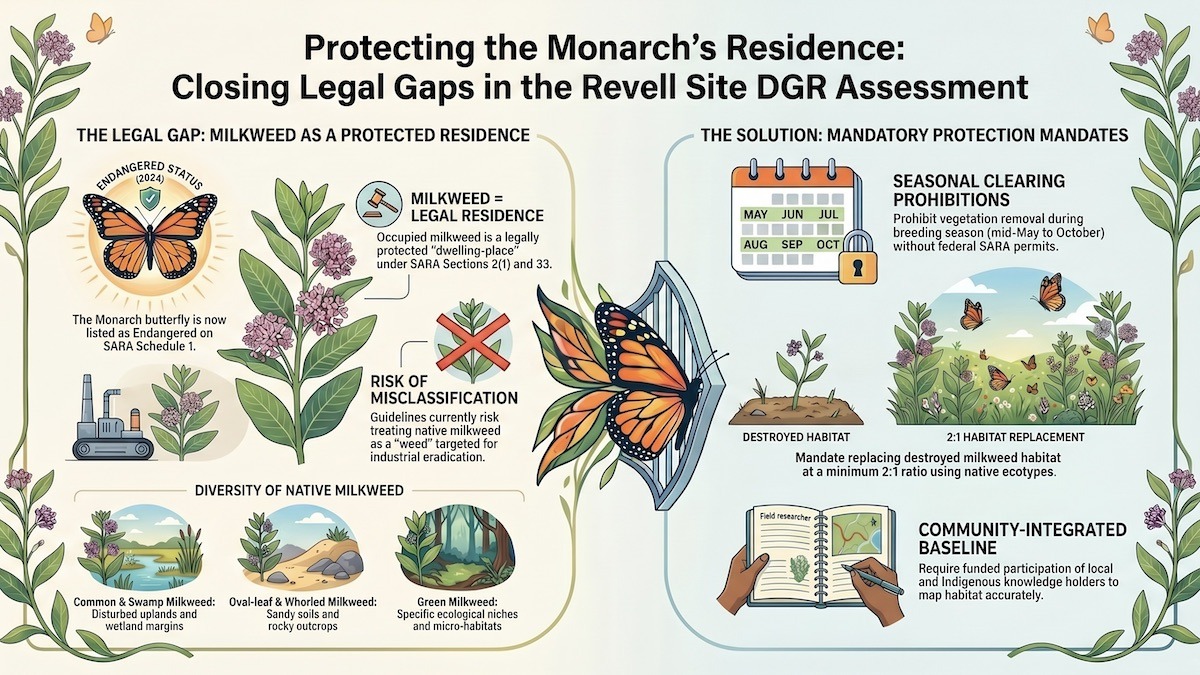
Why? Because the Monarch was officially listed as Endangered in 2023. Under federal law, their “residence” is protected. And since Monarchs literally cannot survive without milkweed, the project argues that every milkweed patch is essentially a federally protected home. They are challenging the government and developers to stop treating milkweed as a “noxious weed” and start seeing it as critical infrastructure for the planet.
Milkweed to Market: How it Works
The “Milkweed to Market” project is designed to mirror the natural life cycle of the plant itself. It follows a three-year “Roots to Bloom” timeline, starting with a heavy focus on community involvement and land-based learning.
- Phase 1: The Planting (Spring/Summer): Residents will establish milkweed patches at the Dyment Recreation Hall and surrounding greenspaces. These aren’t just gardens; they are “living laboratories” where locals can track pollinator activity and collect real-world data.
- Phase 2: The Harvest (Fall): Once the season ends, the community gathers to harvest the stalks. Using traditional techniques, they’ll learn artisanal papermaking—boiling and beating the plant fibers to create high-quality, textured paper.
- Phase 3: The Enterprise (Winter): That handmade paper gets turned into cards and art pieces to be sold at local markets, teaching “green economy” skills and supporting local creators.
Why Milkweed? (It’s Cooler Than You Think)
Aside from being the only thing Monarch caterpillars eat, milkweed is a bit of a biological marvel. Did you know its floss is more buoyant and warmer than cotton? During WWII, it was actually used to stuff life jackets!
By bringing these facts to the forefront, the project aims to bridge the gap between scientific data and local pride. It’s about “creative placemaking”—taking a public park and turning it into a hub where climate action feels like a fun Saturday afternoon rather than a daunting global crisis.
Filling the Data Gaps
One of the most important parts of this project involves arts-based and Community-Based Participatory Research. Currently, there is a massive lack of data on how many Monarchs actually call this part of Northwestern Ontario home.
Mapping local growth and documenting butterfly sightings, the people of Melgund, Dyment, and Borups Corners are becoming “citizen scientists.” They are providing the grounded, site-specific evidence needed to hold large-scale industrial projects accountable.
Get Involved!
The journey begins on May 1, 2026, at the Dyment Recreation Hall community space and the Art Borups Corners Arts and Land Lab Whether you want to get your hands dirty in the garden, learn the chemistry of papermaking, or help document local wildlife, there is a spot for you.
This project proves that you don’t need a massive government budget to make a difference—sometimes, all you need is a little bit of imagination and a “weed” that’s worth its weight in gold.
Want to support the cause? The Local Services Board of Melgund recreation department can even provide charitable tax receipts for donations. Let’s make sure the Monarchs have a place to land for generations to come.