Format: Short Film / Anthology Episode | Est. Length: 10-12 minutes
Imagine this story as a standalone entry in a gritty anthology series titled The Green Line, which explores the volatile intersection of environmental conservation, rural poverty, and corporate corruption in the Pacific Northwest. Each episode functions as a high-tension character study, utilizing the vast, unforgiving landscapes of British Columbia to mirror the internal moral struggles of its protagonists. The series maintains a recurring focus on the "new guard" of environmentalists clashing with "old guard" local power structures, creating a cohesive narrative world where the stakes are both deeply personal and globally ecological.
In a sweltering, cramped trailer, the rhythmic, maddening click of a broken fan underscores the rising tension between a young, data-driven director and her complacent, aging board president. Outside, the forest is dying from a beetle infestation, but inside, the rot of financial fraud is proving to be far more immediate.
A young conservationist risks her career to expose a corrupt board and an illegal logging operation using an illicit survey drone. When a wildfire threatens her community, her unauthorized footage becomes the only evidence of a massive conspiracy.
The episode explores the theme of institutional decay, specifically how "tradition" and "the way we've always done it" can serve as a mask for criminal negligence and self-interest. It highlights the friction between modern, transparent management and the "old boys' club" of rural politics, framing the environment as a victim of both corporate greed and administrative apathy.
The secondary theme is the high cost of integrity. Melissa’s victory is not a clean one; she must destroy her own organization to save the land it was meant to protect, illustrating that true conservation often requires the dismantling of the very systems designed to facilitate it.
The primary stakes involve the legal survival of the Alpine Heritage Trust and the physical safety of the local community facing an unmanaged wildfire. For Melissa, her professional future and personal safety are at risk as she challenges powerful local figures like Greg and Simon. For the antagonists, the stakes are criminal prosecution and the loss of a multi-generational power base in the town.
The external conflict is a three-way struggle between Melissa, the corrupt board led by Simon, and the predatory logging company owned by Greg. Internally, Melissa battles the isolation of her position, forced to choose between the safety of silence and the danger of whistleblowing. The forest itself acts as a ticking-clock antagonistic force, with the beetle-killed timber serving as a literal tinderbox ready to ignite.
Melissa, the new director of a struggling BC conservation NGO, discovers that her board president, Simon, has been misappropriating restricted grant funds to pay his own salary. Her attempts to modernize the organization and map a deadly beetle infestation are blocked by the board, who prefer to maintain a "Miscellaneous" accounting style and ignore the environmental crisis. Tensions peak when a local logger, Greg, offers a $50,000 bribe to clear-cut protected land, a deal the board greedily accepts to cover their financial tracks.
Realizing the board is complicit in illegal logging, Melissa goes rogue, hiring a field biologist to conduct an unauthorized drone survey of the eastern ridge. The drone captures visceral evidence of Greg’s illegal clear-cutting and discovers a smoldering fire ignited by his machinery. Melissa uses the footage to bypass the board and coordinate an emergency fire response, ultimately exposing the fraud and the illegal logging at a public town hall. While the board is ousted and Greg faces prosecution, Melissa is left to rebuild a shattered organization amidst the blackened ruins of the forest.
Melissa begins as a frustrated, tech-savvy idealist who believes in "agile management" and ends as a battle-hardened whistleblower who has learned that data is a weapon. Her arc is one of disillusionment followed by decisive action, moving from a position of administrative subservience to moral authority. Simon is the seventy-one-year-old board president whose psychological state is defined by a sense of entitlement and a refusal to adapt, eventually collapsing into pathetic desperation when his fraud is exposed. Greg is the predatory antagonist, a man of "diesel and tobacco" who views the forest only as a resource to be extracted and the NGO as a hurdle to be bribed. Cathy serves as the pragmatic, underemployed ally who provides the technical means for Melissa’s rebellion, representing the overlooked expertise of the rural working class.
In the sweltering heat of a portable trailer, Melissa confronts Simon about a $10,000 discrepancy in the books while a broken fan clicks incessantly in the corner. Simon dismisses her concerns as "overthinking," revealing a deep rift between Melissa’s modern ethics and the board’s "business as usual" attitude. The tension escalates when Melissa demands a drone survey to map the beetle-killed forest, only to be shut down by Simon who prioritizes "democratic process" over ecological urgency.
While digging through dusty filing cabinets late at night, Melissa discovers that restricted grant money was used to pay Simon’s stipend, confirming her fears of systemic fraud. She realizes the NGO is a house of cards and that the illegal logging she suspects on the eastern ridge is being intentionally ignored by the leadership. Desperate and isolated, she calls an old contact, Cathy, to arrange an off-the-books drone flight to gather the evidence the board refuses to authorize.
During an emergency board meeting, Greg enters with a $50,000 "donation" and a proposal to clear-cut the ridge, which the board greedily accepts over Melissa’s fierce objections. Realizing the bribe is meant to cover the missing grant funds, Melissa accuses the board of complicity and storms out to meet Cathy for the illicit survey. High above the forest, the drone captures footage of Greg’s illegal clear-cut and, more terrifyingly, a thermal signature revealing a smoldering fire in the deadwood.
As the fire erupts into a massive blaze fueled by the beetle-killed pines, Melissa and Cathy race down the mountain to alert the authorities, only to realize the board never approved an evacuation plan. Melissa bypasses the board entirely, feeding her drone data directly to Indigenous fire keepers and provincial crews to save the town from the advancing flames. The smoke-filled climax sees Melissa standing her ground at the incident command post, ignoring Simon’s desperate calls as the forest burns and the evidence is secured.
At a packed town hall meeting, Melissa uses the projector to display the drone footage of the illegal logging and the spreadsheet detailing the board’s financial crimes. The community erupts in fury, leading to the immediate resignation of the board and a criminal investigation into Greg’s company. The episode ends with Melissa standing in the blackened ruins of the forest, realizing that while she saved the organization’s soul, the land itself will take a lifetime to recover.
The episode begins with a sense of stifling, claustrophobic frustration, mirrored by the stagnant heat and the rhythmic clicking of the fan. As Melissa discovers the fraud, the mood shifts into a cold, clinical determination, which then explodes into a frantic, high-stakes thriller during the drone flight and fire discovery. The final movement is one of righteous but somber resolution, leaving the audience with a feeling of "pyrrhic victory"—the truth has been told, but the cost is visible in the charred landscape.
If expanded into a multi-episode arc, the first season would follow Melissa’s grueling attempt to rebuild the Alpine Heritage Trust from the ground up while facing social ostracization from townspeople loyal to Greg and Simon. The overarching narrative would explore the "re-greening" of the burn scar, using the forest's slow recovery as a metaphor for the town's attempt to heal its fractured social fabric.
The season would culminate in a legal battle against Greg’s parent corporation, revealing that the corruption in the Alpine Heritage Trust was merely a small part of a much larger provincial network of resource exploitation. Melissa would evolve from a local director into a regional advocate, navigating the dangerous waters of corporate espionage and political lobbying to protect the remaining old-growth stands.
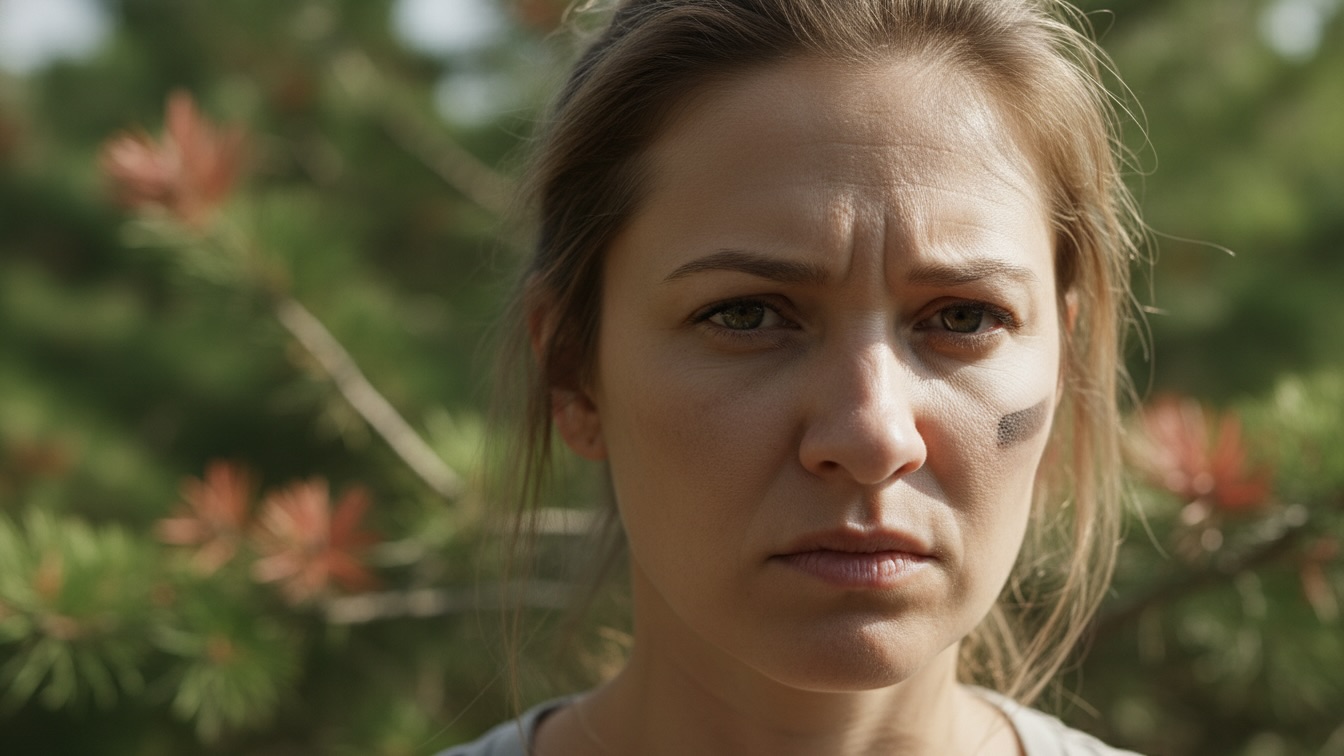
The visual style is "Naturalistic Grittiness," characterized by handheld camera work and a shallow depth of field to emphasize Melissa’s feeling of being trapped. The color palette in the office scenes should be sickly and desaturated—yellows, grays, and browns—contrasting sharply with the vibrant, terrifying oranges and deep blacks of the wildfire sequence.
The tone is a blend of "Rural Noir" and "Environmental Thriller," comparable to films like Wind River or Dark Waters. The sound design is crucial, utilizing the repetitive "click" of the fan in the early scenes to build anxiety, eventually giving way to the roar of the fire and the high-pitched hum of the drone.
The target audience is adults aged 25-55 who gravitate toward prestige dramas with social and environmental themes. This includes viewers of series like Succession (for the institutional infighting) and Yellowstone (for the rural power dynamics), as well as audiences interested in climate-focused narratives and "whistleblower" thrillers.
The pacing follows a "pressure cooker" structure, with a slow, deliberate build in the first half that focuses on the psychological weight of the office politics. The midpoint discovery of the fire acts as a catalyst, shifting the tempo into a high-speed, 1:1 real-time feel for the drone and evacuation sequences. The final three minutes return to a slow, contemplative pace, allowing the emotional weight of the aftermath to land with the audience.
The drone footage should be a combination of actual high-altitude aerials and digital thermal overlays to ensure a realistic "survey" aesthetic. Practical smoke effects and ash-covered sets will be necessary for the final scenes to provide a visceral sense of the fire's impact without relying solely on CGI.
Filming should ideally take place in a real Pacific Northwest interior location during the late summer to capture the authentic hazy light and dry environment described in the text. The "double-wide trailer" office is a key set that must feel lived-in, cramped, and authentically dated to contrast with the high-tech nature of the drone equipment.


