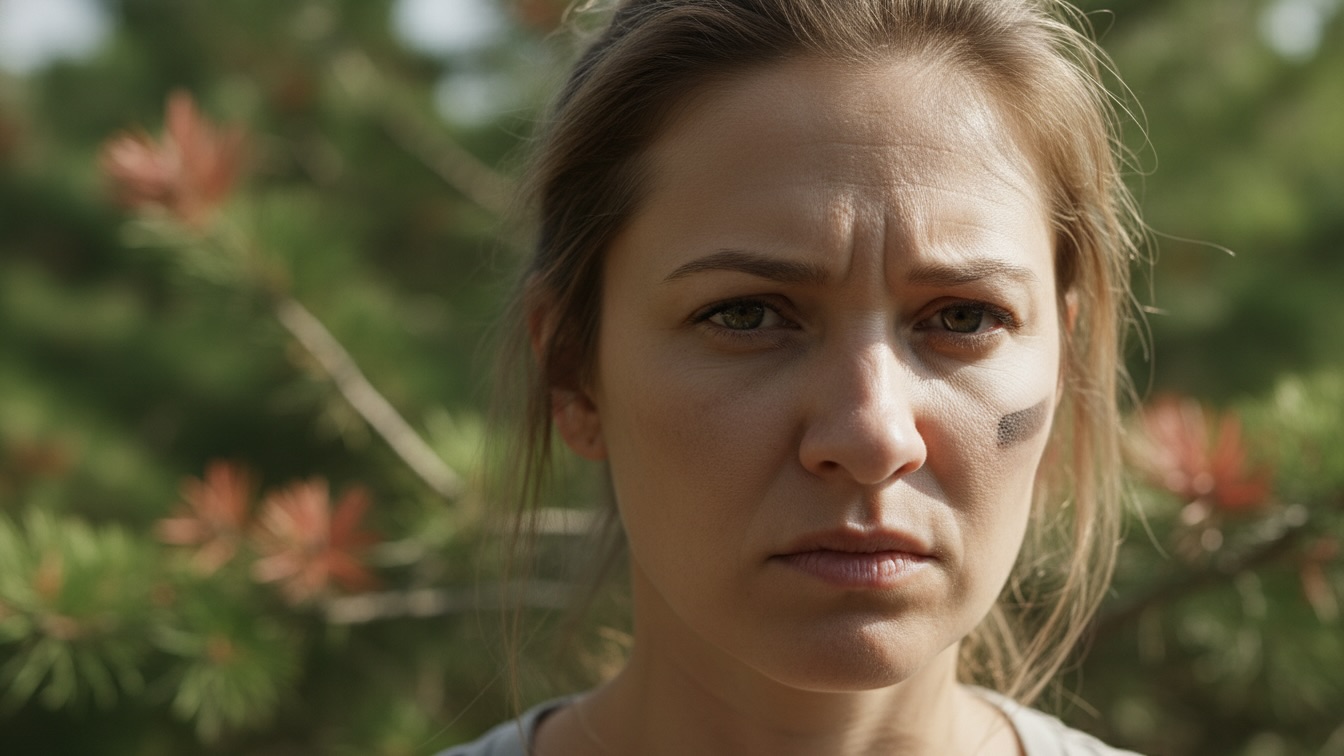
Melissa wiped soot from her cracked phone screen, watching the drone footage load as the valley filled with smoke.
The oscillating fan in the corner of the Alpine Heritage Trust office had a broken motor. It clicked every time it rotated left. Click, sweep, sweep, click. Melissa sat at the battered metal desk, her jaw tight, listening to it. The air in the room was thick. It was late July in British Columbia, and the heat trapped inside the portable trailer was heavy and stagnant. She pressed the heel of her hand against her right eye.
"You're overthinking it," Simon said. He was sitting on the sagging faux-leather couch by the window. He had a styrofoam cup of lukewarm coffee resting on his knee.
"I am not overthinking a federal compliance issue, Simon," Melissa said. She didn't look at him. She kept her eyes on the Excel spreadsheet glowing on her laptop. The screen had a diagonal crack running from the top left corner to the center.
"It's just numbers on a page, Mel."
"It's a legal requirement."
Simon sighed. The sound was wet and tired. He was seventy-one, a retired hardware store owner who had been the board president of the NGO for fifteen years. He still wore a tie to the office, even though the office was a double-wide trailer parked behind a gas station.
"We've always done it this way," Simon said. He took a sip of his coffee. He winced.
Melissa's right foot started tapping against the peeling linoleum floor. She had graduated top of her cohort at the Vancouver Non-Profit Incubator three months ago. They had taught her agile resource management, digital transparency, and crisis communication. They had not taught her how to explain basic accounting to a man who still used a paper ledger.
"You cannot put ten thousand dollars under 'Miscellaneous'," Melissa said. She turned the laptop around so he could see the screen. "The federal auditors will flag this immediately. We lose our charitable status. We lose everything."
"We've never been audited."
"That doesn't mean we won't be."
"You're making a mountain out of a molehill," Simon said. He set the coffee cup down on the floor. "We have bigger problems."
He wasn't wrong about that. The summer heat was bad, but the bark beetles were worse. The infestation had spread through the eastern ridge of the protected zone faster than anyone predicted. The pine trees were turning rust-red, dying from the inside out.
"I know we have bigger problems," Melissa said. Her stomach turned over. She felt a dull ache settling at the base of her skull. "That's exactly why we need the drone survey. We need to map the dead zones before the fire risk gets any higher."
"Drones are expensive."
"Not if we reallocate the community outreach budget."
"The board won't like that."
"The board needs to wake up," Melissa snapped.
She immediately regretted it. Simon's face hardened. He didn't like being challenged, and he definitely didn't like being challenged by a thirty-year-old woman he still viewed as a secretary with a fancy title.
"I'll call an emergency meeting," Simon said stiffly. "For next Tuesday."
"Next Tuesday? Simon, the trees are dying right now."
"It's a democratic process, Melissa. We have to give notice."
Melissa closed her laptop. The plastic lid snapped shut with a loud crack. The fan clicked in the corner. She stood up, her thighs sticking to the cheap fabric of the desk chair.
"Fine. Next Tuesday."
She spent the next four days digging through the physical files. The filing cabinets were bent, the drawers sticking on their tracks. She pulled out folders from 2021, 2022, 2023. The paperwork was a disaster. Invoices were missing. Receipts were faded to the point of being blank.
It was on Friday night, sitting alone in the trailer with a half-eaten sandwich, that she found the discrepancy.
She was cross-referencing the bank statements with the provincial grant applications. The Trust had received a forty-five-thousand-dollar grant two years ago specifically earmarked for wetland restoration.
She traced her finger down the printed bank statement. Her fingernail caught on a staple. There were no expenditures for wetland restoration. No equipment rentals, no contractor payments, no soil testing fees.
Instead, there were regular, bi-weekly transfers to the main operating account.
Melissa's breath hitched. She pulled up the payroll records.
The numbers matched perfectly. They had used the restricted grant money to pay salaries. Including Simon's "modest" presidential stipend.
"Oh my god," she whispered.
Her chest felt tight. The air in the room suddenly seemed thinner. This wasn't just incompetence. This was fraud.
She leaned back in her chair and stared at the ceiling. A water stain in the shape of a kidney hovered above the fluorescent light fixture.
If the province found out, they would demand the money back. The NGO would be bankrupt in a week.
She needed air. She pushed away from the desk, grabbed her keys, and walked out into the humid night. The gravel crunched under her boots. The smell of dry dust and hot asphalt hung in the air.
She looked up toward the eastern ridge. Even in the dark, she knew the red trees were up there, millions of beetles chewing through the wood, turning the forest into a giant tinderbox.
And worse, she knew what else was up there. Greg's logging trucks.
She had seen them three days ago, grinding their gears up the logging road that skirted the edge of the Trust's land. They were supposed to be operating on the Crown land a mile north. But the boundary lines in the deep bush were difficult to enforce without GPS tracking.
Without a drone survey.
She pulled her phone out of her pocket. The cracked screen dug into her thumb. She scrolled through her contacts and found Cathy's name. Cathy was a field biologist she had met at a regional conference. She was currently underemployed, living out of her truck, and doing contract work for the forestry service.
Melissa hesitated. Her thumb hovered over the call button.
If she went around the board, she was risking her job. If she confronted Simon with the financial mess, he would bury it. Or bury her.
She hit call. It rang four times.
"Hello?" Cathy's voice was raspy, like she had been sleeping.
"Cathy. It's Melissa. From the Trust."
"Do you know what time it is?"
"I need a favor," Melissa said. Her voice was shaking, just a little. "A big one. And it needs to be off the books."
The emergency board meeting on Tuesday was a disaster before it even started.
Twelve people crammed into the tiny conference room at the back of the trailer. The air conditioning unit in the window rattled loudly, blowing out air that smelled like mold and wet dog.
Melissa sat at the head of the folding table. Her palms were sweating. She wiped them on her jeans.
Simon sat at the opposite end. He looked comfortable. He was chatting with Marjorie, a retired school teacher who brought stale blueberry muffins to every meeting.
"Let's call this to order," Simon said, tapping a pen against his coffee mug.
Melissa stood up. She had printed out the financial summaries. She didn't hand them out yet. They sat in a neat stack in front of her.
"We need to talk about the eastern ridge," Melissa said. "The beetle kill is accelerating. We need the drone survey this week."
"We discussed this, Melissa," Simon said. His tone was patronizing. He looked at the rest of the board. "The quotes we got were astronomical."
"Because you asked for commercial LiDAR mapping," Melissa said, her voice rising slightly. "We just need basic aerial photography. I found a contractor who can do it for three thousand dollars."
Marjorie raised her hand. "Three thousand is a lot of money, dear. We need to fix the roof on the visitor center."
"The visitor center won't matter if the forest burns down," Melissa said.
Before she could continue, the door to the trailer opened.
Greg walked in.
He was a large man, wearing a flannel shirt rolled up to the elbows and work boots caked in dry mud. He smelled strongly of diesel fuel and chewing tobacco. He owned the regional lumber mill and the logging company that operated on the adjacent Crown land.
Melissa frowned. "This is a closed board meeting."
"I invited him," Simon said quickly. He stood up. "Greg has a proposal for us."
Greg didn't sit down. He stood by the door, his thumbs hooked into his belt loops. He looked around the room, his eyes lingering on the peeling wallpaper and the stained ceiling.
"I'll cut to the chase," Greg said. His voice was deep, gravelly. "I know you folks are struggling. The whole town knows it. I also know you're worried about the dead pines up on the ridge."
Melissa's jaw tightened. She felt a sharp pain behind her left eye. "What's your point, Greg?"
"My point is, I can help. I've got crews up there right now. We're clearing the deadwood on the Crown land. I can push my machinery over the boundary line, clear out your beetle kill, and haul it away. Won't charge you a dime."
Marjorie gasped softly. "Oh, that's wonderful."
"No," Melissa said instantly.
Everyone looked at her.
"We are a conservation trust," Melissa said, speaking slowly, deliberately. "We do not allow commercial logging machinery on protected land. It destroys the understory. It ruins the soil integrity."
"It's dead wood, little lady," Greg said. He smiled, but it didn't reach his eyes.
"It's habitat," Melissa shot back. "And you're not offering this out of the goodness of your heart. You want the timber."
"The timber is garbage. It's blue-stained from the beetles," Greg said. He took a step forward. "I'm offering to do you a favor. And I'm willing to make a substantial anonymous donation to the Trust's general operating fund to prove my good faith."
He pulled a folded piece of paper from his shirt pocket and tossed it onto the table. It slid across the cheap wood veneer and stopped in front of Simon.
Simon picked it up. He unfolded it. His eyes widened.
"Greg," Simon said, his voice breathless. "This is... this is very generous."
Melissa walked around the table. She snatched the paper out of Simon's hand. It was a check. For fifty thousand dollars.
Her stomach dropped. Fifty thousand. Exactly enough to cover the misappropriated grant money and then some.
She looked at Simon. He was staring at her, his eyes begging. He knew. He knew about the missing money, and he was using this bribe to cover his tracks.
"We can't accept this," Melissa said. Her voice was flat.
"We absolutely can," Simon said, standing up. His face was flushed. "I motion we accept the donation and allow Greg's crews access to the eastern ridge."
"I second," Marjorie said immediately.
"You can't vote on this!" Melissa yelled. The sudden volume of her voice shocked the room into silence. She pointed at Greg. "He's already over the line. I saw his trucks. He's illegally logging our land right now, and he's paying you off to look the other way!"
"That's a hell of an accusation," Greg said. His smile was gone.
"Prove me wrong," Melissa challenged. "Let me run the drone survey."
"There will be no survey," Simon said. He was shaking. "We are taking a vote. All in favor?"
Eleven hands went up.
Melissa stared at them. The heat in the room was unbearable. She felt a drop of sweat run down the back of her neck. These people didn't care about the forest. They cared about their own comfort.
"You're all complicit," Melissa said quietly.
She threw the check back onto the table. She picked up her laptop, grabbed the stack of financial summaries, and walked out of the room.
She didn't go home. She went to the local library, sat in a plastic chair in the corner, and connected to the public Wi-Fi.
She opened the federal environmental protection portal. Her hands were shaking so badly she kept typing the wrong password. She finally got in.
She used her incubator training. She drafted an emergency injunction request, citing suspected illegal logging on federally subsidized conservation land. She attached the GPS coordinates of the boundary line.
When she clicked submit, the screen loaded for what felt like an eternity. A little blue circle spun and spun.
Finally, the confirmation page appeared.
She leaned forward and rested her forehead against the cool edge of the table. She had just declared war on her own board of directors.
Cathy's truck was a disaster zone. The floorboards were covered in empty paper coffee cups, crumpled fast-food wrappers, and small plastic bags filled with soil samples. The dashboard was coated in a fine layer of gray dust.
Melissa sat in the passenger seat, her knees pulled together to avoid a pile of muddy heavy-duty straps.
"You sure about this?" Cathy asked.
Cathy was thirty-two, with sunburned cheeks and hair chopped short with what looked like kitchen scissors. She was chewing gum aggressively.
"Just drive," Melissa said.
It was six a.m. The sky was a pale, bruised purple. The air was already humid, thick with the smell of pine resin and damp earth.
They jolted up the deactivated logging road. The truck's suspension groaned over deep ruts. Melissa gripped the grab handle above the door, her knuckles white.
"If the board finds out I'm doing this, I lose my provincial contracts," Cathy said, navigating a massive pothole.
"They won't find out," Melissa said.
"They will if Greg catches us. His guys are out here early."
"Just get us to the ridge."
They parked behind a thick stand of Douglas firs, about a half-mile from the boundary line. The bugs were immediate and relentless. Mosquitoes swarmed Melissa's face the second she stepped out of the truck. She swatted at them, already sweating through her t-shirt.
Cathy pulled a large hard plastic case from the truck bed. She popped the latches. Inside was a high-end commercial drone, borrowed from the incubator's tech library.
"Alright," Cathy said, syncing her tablet to the controller. "Let's see what your boy Greg is up to."
The drone buzzed to life. The sound was high-pitched, like an angry hornet. It lifted off the dirt road, kicking up a small cloud of dust, and shot straight up into the canopy.
Melissa leaned over Cathy's shoulder, staring at the glare on the tablet screen.
The camera fed back a live, bird's-eye view of the forest. The green canopy quickly gave way to a massive swath of rust-red. The dead pines looked like a wound on the landscape.
"Look at that fuel load," Cathy muttered. "It's a tinderbox down there."
"Go east," Melissa said. "Toward the property line."
Cathy pushed the joystick forward. The drone skimmed over the dead trees.
Then, they saw it.
The boundary line was supposed to be a dense wall of old-growth timber. Instead, there was a massive, jagged scar cut directly into the Trust's land. The earth was churned into deep, muddy tracks. Three yellow mechanical harvesters were parked in a clearing, their massive metal claws resting in the dirt.
"Oh, wow," Cathy said softly. "He's deep in. That's at least three acres over the line."
Melissa's chest tightened. "Take pictures. Record the video. Get the GPS coordinates stamped on the files."
"I'm doing it."
Melissa watched the screen. The destruction was visceral. They hadn't just cut the dead trees; they had clear-cut everything. Healthy firs, ancient cedars, all ripped out of the ground. The understory was crushed.
"He lied to them," Melissa said, her voice shaking with anger. "He told the board he just wanted to clear the deadwood."
"Loggers don't leave good timber behind," Cathy said cynically.
Suddenly, Cathy frowned. She tapped the screen.
"What is that?" she asked.
Melissa leaned closer. "What?"
"On the thermal camera. Look."
Cathy switched the view. The screen went gray, with heat signatures showing up as bright orange and red. The mechanical harvesters glowed faintly orange, retaining heat from the previous day's work.
But a hundred yards south of the machinery, deep in the thickest part of the dead pine stand, there was a bright, pulsing white spot.
"Is that a machine?" Melissa asked.
"No," Cathy said. Her voice dropped. The chewing gum stopped. "That's too hot to be an engine block."
Cathy switched back to the optical camera and zoomed in.
At first, it just looked like a gray smudge against the red needles. Then, the smudge moved. It drifted upward, catching the morning light.
Smoke.
Melissa's stomach bottomed out.
"Fire," she breathed.
"It's small," Cathy said, her fingers flying over the controls. "Probably a spark from the harvester treads hitting a rock yesterday. Smoldered all night in the dry duff."
"It's in the deadwood," Melissa said. Panic started to claw at her throat.
"Yeah. And the wind is picking up."
Melissa pulled out her phone. She had one bar of service. She dialed Simon's number. It went straight to voicemail.
"Dammit, Simon, answer your phone," she hissed, hanging up and dialing again. Voicemail.
She looked around. The air suddenly felt different. The humidity was burning off, replaced by a dry, electric tension. She could smell it now. The faint, acrid scent of burning pine pitch.
"Cathy, bring it back. We need to go."
"Wait," Cathy said. "I need to map the perimeter of the fire so we can give it to forestry."
"We don't have time!"
"I need thirty seconds."
Melissa paced the dirt road. She bit her thumbnail. Her foot tapped frantically against the ground. She looked at the sky. The purple was gone, replaced by a harsh, flat blue.
"Got it," Cathy said. She brought the drone back down fast. It landed hard, bouncing once before settling.
Cathy grabbed it by the landing gear and shoved it into the back of the truck without bothering to put it in the case.
"Get in!" Cathy yelled.
Melissa jumped into the passenger seat. Cathy slammed the truck into reverse, spun the tires in the dirt, and threw it into drive. They launched down the mountain, the suspension bottoming out hard.
Melissa dialed the provincial wildfire reporting hotline.
"Hello? Yes, I'm reporting a fire. Alpine Heritage Trust land. Eastern ridge. Coordinates..." She grabbed the tablet from Cathy's lap and read out the numbers.
"We're dispatching a helicopter, ma'am," the dispatcher said. "Is there an evacuation protocol in place for the immediate area?"
Melissa froze.
An evacuation protocol. She had drafted one her first week on the job. She had put it in front of the board three times. Simon had refused to approve it, saying the printing costs for the signage were too high.
"No," Melissa said, her voice hollow. "There is no protocol."
The sky turned the color of an old bruise. By noon, the sun was a harsh orange disc cut through a thick layer of brown smoke.
Melissa stood at the incident command post, which was just a hastily erected pop-up tent in the gravel parking lot of the local high school. The smell of smoke was inescapable. It coated the back of her throat and stung her eyes. She coughed, spitting a fleck of black soot onto the ground.
She hadn't slept. She was wearing the same jeans from the day before, now stained with ash and sweat.
Around her, chaos moved in organized bursts. Provincial fire crews in yellow shirts loaded gear into trucks. Radios squawked constantly, a chaotic overlap of static, coordinates, and terse commands.
"They're holding the line at the creek," a voice said.
Melissa turned. It was Thomas, one of the local Indigenous fire keepers she had called directly after the provincial hotline. He looked exhausted, his face smeared with char, but his posture was relaxed.
"You're sure?" Melissa asked. Her voice cracked.
"We back-burned the brush along the southern edge," Thomas said, unscrewing a plastic water bottle. "Took away the fuel. The wind shifted an hour ago. It's pushing it back into the burn scar. It's not going anywhere."
Melissa let out a breath she felt like she had been holding for twelve hours. Her shoulders dropped. "Thank god."
"Your drone data saved us about three hours of guesswork," Thomas noted, taking a long drink. "We knew exactly where the hot spots were. Good call."
"Yeah," Melissa said quietly. "Good call."
She looked down at her phone. The screen was nearly unreadable through the web of cracks and a thick layer of dust. She had seventeen missed calls from Simon. Three from Marjorie. And one voicemail from Greg.
She didn't listen to any of them.
Two days later, the fire was officially declared contained. It had burned forty acres of the Trust's land, wiping out a massive section of the old-growth boundary.
The town hall meeting was scheduled for Thursday evening. The community center was packed. The air conditioning was failing against the body heat of two hundred angry, frightened residents.
Melissa stood at the front of the room, near a pull-down projector screen.
Simon sat at a folding table to her left, along with the rest of the board. He looked older than seventy-one tonight. His skin was gray, his suit jacket wrinkled. He kept dabbing his forehead with a crumpled tissue.
The room was loud. People were shouting over each other, demanding answers about the fire, about the lack of warning, about the smoke that had filled their homes.
Melissa walked to the microphone. She tapped it twice. A sharp feedback whine cut through the noise, silencing the crowd.
"My name is Melissa," she said. Her voice was steady. She didn't feel steady. Her hands were shaking behind her back, but her voice was cold iron. "I am the Executive Director of the Alpine Heritage Trust."
"Why wasn't there an evacuation plan?" a man in the back yelled.
"Because the board refused to approve one," Melissa said instantly.
A murmur rippled through the crowd. Simon gripped the edge of the table.
"Now wait just a minute," Simon started, leaning toward his own microphone.
Melissa cut him off. "I have the meeting minutes to prove it. I submitted the safety protocols three times in the last two months. They were denied to save eighty dollars in printing fees."
The murmur grew louder.
"But that is not why we are here tonight," Melissa said. She turned to the laptop on the podium and pressed a button.
The projector clicked on. The massive screen behind her illuminated with the drone footage. The high-definition video showed the illegal logging cut. It showed the mechanical harvesters deep inside the protected zone. It showed the destruction of the healthy timber.
Gasps echoed in the room.
"This footage was taken hours before the fire started," Melissa said, projecting her voice over the rising anger of the crowd. "The fire originated directly adjacent to this illegal logging operation. An operation run by Greg's timber company."
Greg wasn't in the room. He had conveniently left town for a "business trip" the day the fire started.
"Simon," a woman in the second row yelled. "Is this true? Did you know they were logging the Trust land?"
Simon stood up. He looked trapped. He opened his mouth, but no words came out.
Melissa hit the next slide.
The screen changed from the forest to a spreadsheet. It was the financial audit she had completed. She had highlighted the missing forty-five thousand dollars in bright yellow.
"The board knew," Melissa said. She looked directly at Simon. She felt no pity. Only exhaustion. "They knew because Greg offered them fifty thousand dollars to ignore it. A bribe meant to cover up the fact that this board has been illegally using provincial grant money to pay their own stipends."
The room exploded.
People were on their feet, yelling. Marjorie put her face in her hands and started crying. Simon sank back into his chair, looking at the spreadsheet as if it were written in an alien language. He looked small.
Melissa stepped away from the podium. She didn't need to say anything else. The community would handle it from here.
She walked out the side door of the community center, escaping into the cool evening air. The smell of smoke was still there, woven into the fabric of the town, but it was fading.
An hour later, she drove her sedan up the dirt road toward the eastern ridge. The provincial crews had cleared the road.
She parked and walked past the yellow caution tape.
The landscape was unrecognizable. The trees were black skeletons standing against the twilight sky. The ground was covered in a thick layer of gray ash. It looked like the surface of the moon. It smelled like wet char and burned earth.
She stopped at the edge of the burn scar. The heat still radiated from the ground, warming the soles of her boots.
She had won. Simon had already drafted his resignation letter before she left the building. The rest of the board would follow by morning. The province was stepping in. Greg's company was facing massive federal fines and a criminal investigation.
But as she looked out over the ruined forest, she didn't feel victorious.
The Trust was financially gutted. The trust of the community was shattered. She was going to have to rebuild the entire organization from the ground up, fighting for every dollar, every grant, every shred of credibility.
She kicked a blackened rock with the toe of her boot. It crumbled into dust.
She stepped over a blackened log, her boot sinking into the deep ash, and listened to the low, mechanical rumble of a chainsaw starting up somewhere across the ridge.
“She stepped over a blackened log, her boot sinking into the deep ash, and listened to the low, mechanical rumble of a chainsaw starting up somewhere across the ridge.”


