Format: Short Film / Anthology Episode | Est. Length: 10-12 minutes
Imagine a world where the climate crisis is no longer a slow burn but a sudden, violent physiological rejection of the urban sprawl by the earth itself. This story serves as a claustrophobic entry point into a larger anthology series that explores the "Great Unmaking," where the thin veil between civilization and a vengeful nature finally tears.
The Heat Index is a standalone installment of The Breaking Point, an anthology series centered on the final hour of various ecological and social systems. Each episode focuses on a different localized "rupture"—from the failure of the deep-sea cables to the literal awakening of urban soil—connected by a shared timeline of global collapse. In this world, the environment is not a passive victim but an active, terrifying protagonist that has decided to stop accommodating human life.
The episode opens on the blistering, silent stillness of a three-acre park where the only sound is the rhythmic, metallic thwack of a machete against dying wood. As the temperature hits ninety-eight degrees, the protagonist realizes the city’s constant hum has vanished, replaced by a low-frequency thrumming vibrating through the very soles of their boots.
As a record-breaking heatwave paralyzes the city, a desperate non-profit director and a mysterious volunteer witness the local landscape begin to physically reject the concrete world around it. They must abandon their life's work and flee before the shifting shadows and a total grid failure swallow them whole.
The primary theme is the futility of preservation in the face of inevitable systemic collapse. It explores the "martyr complex" of environmental activism, questioning whether the effort to save a dying world is an act of heroism or a refusal to accept reality. The narrative suggests that when the environment reaches its breaking point, the only thing left to save is human connection.
The secondary theme is isolation within an urban environment. Despite being in the heart of a major city, the characters are trapped in a vacuum of silence and heat, highlighting how quickly infrastructure can fail and leave individuals to face a primal, ancient force. The genre blends eco-horror with psychological drama, using the "shadow mass" as a physical manifestation of collective environmental grief.
For Riley, the stakes are existential; the park is her entire identity, and its destruction represents the total failure of her life’s purpose. For Stef, the stakes are rooted in a traumatic cycle of loss, as he watches the same forces that destroyed his father’s land now claim the city. On a broader level, the characters face immediate physical peril as the environment becomes hostile, threatening to trap them in a "black hole" of shadows and heat as the city’s power grid collapses.
The external conflict is the "Heat Index" itself—an oppressive, supernatural temperature spike that causes wood to burst and shadows to move independently of light. This is compounded by the indifferent bureaucracy of the City Council, which threatens to defund the park, and the failing urban infrastructure (the grid) that leaves the characters vulnerable. Internally, Riley struggles with her stubborn refusal to abandon a lost cause, while Stef battles the cynicism born from watching the world be paved over for profit.
Riley and Stef are the last two people left tending to a small, dying urban park during a catastrophic heatwave that has silenced the nearby 405 freeway. While Riley obsessively focuses on the park’s failing budget and the need for new irrigation, Stef senses a deeper, more ominous change in the atmosphere, noting that the light has turned a "cataract white" and the shadows have become unnervingly solid. During a brief ritualistic break, they share oranges and a rare moment of vulnerability, revealing their shared history of loss and their desperate need for the park to survive as a final bastion against the encroaching concrete.
The tension breaks when a massive oak branch spontaneously shatters from the heat, and Riley’s phone displays a final, garbled emergency alert about imminent grid failure. As the "shadow mass" begins to pool like ink around the trees and the ground starts to vibrate with a rhythmic heartbeat, Stef realizes the land is no longer something they can save. They engage in a frantic race to Stef’s rusted truck as the park literally begins to fold into itself, escaping into a darkened city where the lights have finally gone out.
Riley (23): The high-strung, stubborn director of a failing non-profit who views the park as her "entire life." At the start, she is a pragmatic martyr, obsessed with spreadsheets and irrigation lines; by the end, she is forced into a state of raw vulnerability, realizing that her work was a Band-Aid on a gunshot wound. Her arc is one of radical acceptance—letting go of the land to hold onto a person.
Stef (Late 20s): A stoic, efficient volunteer with a mysterious past and a deep, intuitive connection to the land. He begins as a "ghost" who provides labor without personal detail, but he eventually reveals a history of displacement and grief. His arc moves from silent observer to active protector, using his recognition of environmental collapse to save Riley from her own stubbornness.
* The Dying Green: Riley and Stef work in the oppressive 98-degree heat, establishing the eerie silence of the city and the physical toll of their labor. Riley attempts to find a cell signal to check on a grant, only to realize the world outside the park has gone quiet and the light is shifting into a hazy, unnatural white. The beat ends with the realization that the water in their cooler has turned into a lukewarm, chemical soup, signaling the end of their resources.
* The Fountain Ritual: Sitting on a dry concrete fountain, Riley and Stef share a rare moment of human connection that serves as the emotional midpoint. They discuss the "thrumming" in the ground and the futility of their work, with Stef revealing his father’s lost farm and Riley admitting her fear of the park becoming a luxury condo lot. This beat establishes the "shadow mass" as a growing physical presence that begins to pool around them, unmoving even as the sun shifts.
* The Breaking Point: While sharing oranges in the lean-to, the tension between the characters peaks just as the environment reaches its limit. A massive oak branch snaps with the sound of a gunshot, and the shadows begin to swirl like smoke, moving independently of the trees. Riley receives a final, static-filled emergency alert on her phone about a total grid failure, forcing her to realize that the heat is not just a weather event, but a physical rejection of the city.
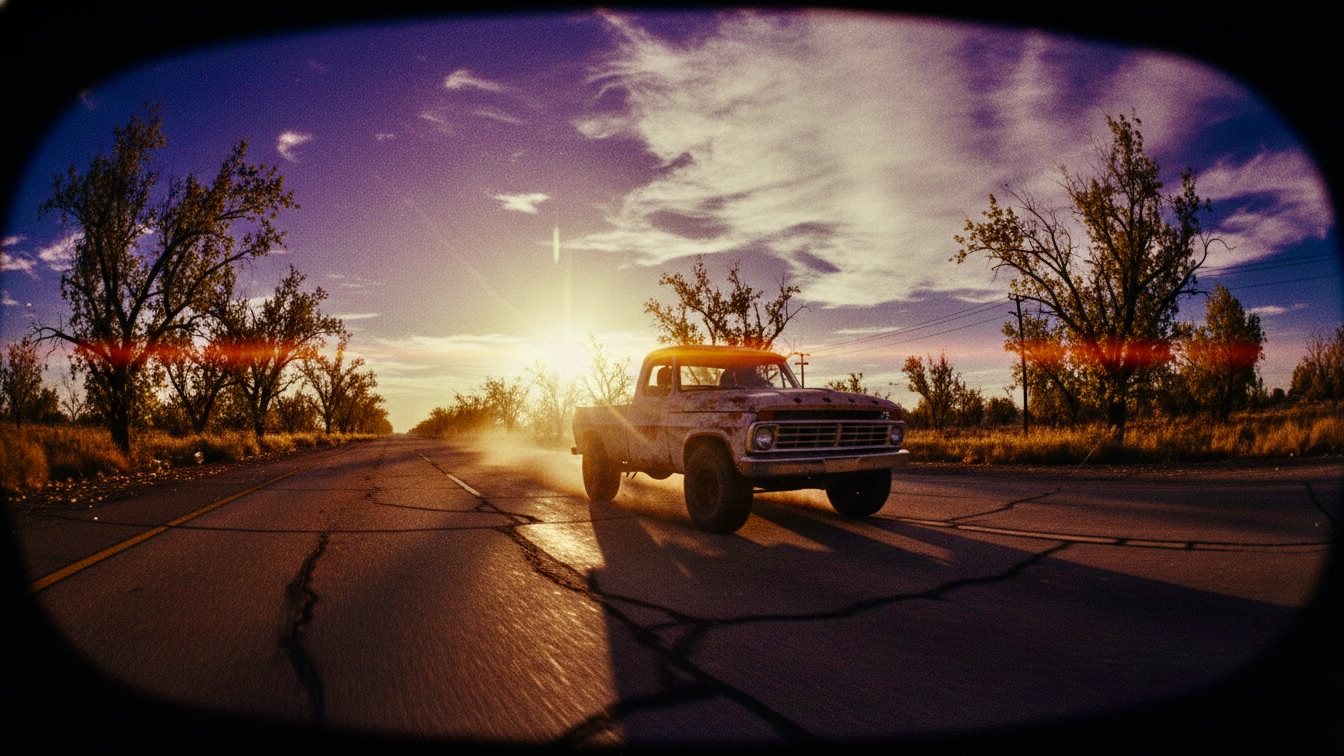
* The Escape: Stef grabs Riley, initiating a frantic run through a forest that is now actively hostile, with branches scratching at them and the ground feeling like sinking sand. They reach Stef’s rusted truck just as the shadow mass begins to swallow the park whole, turning it into a black void in the middle of the industrial district. The truck barely starts, and they fishtail out of the lot as the high-pitched ringing of the earth’s "vibration" reaches a deafening crescendo.
* The Final Blackout: Driving through a city of stalled cars and "ghostly" citizens illuminated only by phone screens, Riley and Stef witness a massive transformer explosion that plunges the skyline into total darkness. Riley leans against the hot window glass, realizing the "team building" was never about the park, but about finding someone to hold onto during the end of the world. The episode ends on the two of them driving into the dark, carrying only the scent of orange peels and the memory of a forest that no longer exists.
The episode begins with a sense of Oppressive Stagnation, characterized by the heavy, wet-towel heat and the slow, rhythmic labor of the characters. As the "weird light" and "shadow mass" appear, the mood shifts into Uncanny Dread, where the audience feels that the environment is "wrong" on a molecular level. The midpoint offers a brief moment of Melancholic Intimacy during the fountain scene, providing a human anchor before the final act descends into Frantic Terror. The story concludes on a note of Nihilistic Connection, where the loss of the world is balanced by the survival of the two protagonists.
If expanded, the season would follow Riley and Stef as they navigate the "Post-Grid" landscape, discovering that the "shadow mass" seen in the park is appearing in urban centers worldwide. Each subsequent episode would introduce new characters in different biomes—a coastal city facing a "rejection" by the rising tide, or a mountain town where the permafrost is releasing ancient, sentient gasses. Riley and Stef would serve as the "connective tissue" characters, moving through these ruptures while searching for a rumored "Green Zone" where the earth hasn't yet turned hostile.
The thematic escalation of the season would move from "Survival" to "Reconciliation," as the characters learn that the only way to stop the shadows is to stop trying to "manage" nature and instead find a way to live within its new, violent boundaries. The season finale would involve Riley returning to the site of her park, now a thriving, alien jungle, to make a final peace with the land she tried to save.
The visual style is "Elevated Eco-Horror," utilizing a high-contrast, desaturated color palette that emphasizes the "hazy white" sky and the "bruised purple" of the finale. The camera work should be intimate and handheld, creating a sense of claustrophobia even in wide-open spaces, with frequent use of heat-haze distortion to make the environment feel unstable. The shadows should be rendered with a slight "ink-in-water" digital effect, making them look more solid and fluid than natural shadows.
Tonal influences include the atmospheric dread of Arrival and the gritty, grounded desperation of Children of Men. The sound design is critical, featuring a constant, low-frequency "thrum" that increases in volume throughout the episode, punctuated by the sharp, unnatural sounds of wood snapping and the high-pitched "ringing" of the grid failure.
The target audience is adults aged 25-45 who enjoy "prestige" speculative fiction and anthology series like Black Mirror, The Last of Us, or Severance. It appeals to viewers interested in climate fiction (Cli-Fi), psychological thrillers, and stories that prioritize character-driven emotional stakes over traditional action-adventure tropes.
The 10-12 minute runtime follows a classic three-act structure compressed into a "slow-burn-to-explosion" tempo. The first 5 minutes are dedicated to building the atmosphere and the relationship between Riley and Stef (Act I). The next 3 minutes focus on the "Fountain Ritual" and the escalation of the supernatural elements (Act II). The final 4 minutes are a high-tempo sequence of the branch snapping, the escape, and the final blackout (Act III).
The "shadow mass" requires a sophisticated blend of practical lighting and VFX; the production should use high-intensity "white-out" lighting to create the cataract-sky effect while using black-velvet or light-absorbing materials on set to ground the "solid" shadows. The heat should be conveyed through practical means—heavy glycerin for sweat, real dust for the "grey mud," and the use of anamorphic lenses to capture the atmospheric distortion.
The location is a critical production element; the "three acres of dying oak" must feel isolated yet surrounded by the invisible presence of the city. The "lean-to" and "concrete fountain" should be built as practical sets to allow for the physical interaction of the characters and the "thrumming" vibration effects. The final driving sequence can be achieved through a mix of "poor man's process" for the truck interior and stock/VFX for the darkening city skyline.


