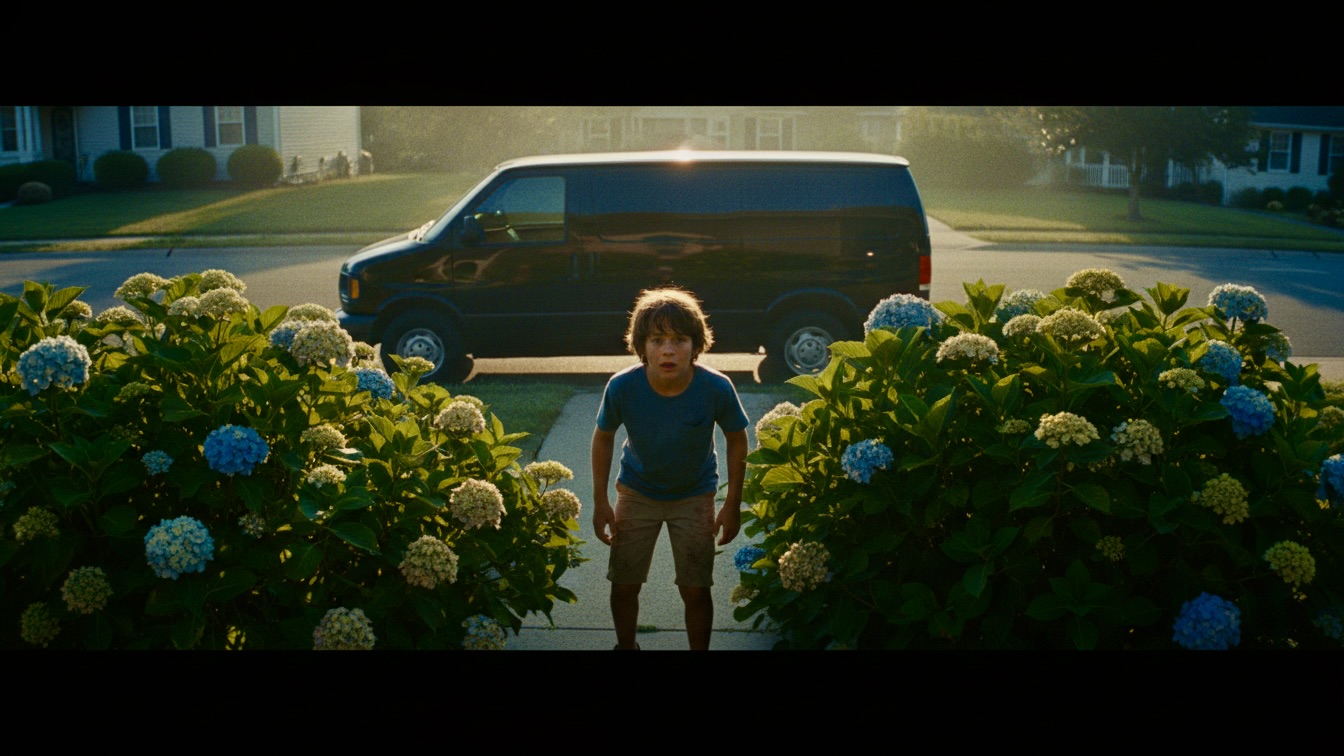
Imagine a world where every click is a confession and every silence is a suspicion. This story serves as a chilling entry point into a near-future anthology where the "Social Contract" has become a digital leash, turning ordinary suburban homes into quiet battlegrounds for the soul of privacy.
Format: Short Film / Anthology Episode | Est. Length: 10-12 minutes
Set in a near-future Canada where the "Emergencies Act" has evolved into a permanent state of digital oversight, the series The Social Contract explores the erosion of civil liberties through the eyes of everyday citizens. Each episode focuses on a different household grappling with "Data Integration" nodes, tracking how the state’s "timely access" policy creates a culture of fear, self-censorship, and underground resistance.
A twelve-year-old boy watches his father obsessively fold a newspaper while a mysterious black van idles outside their home, and the "camera off" light on his tablet flickers a menacing red.
When a suburban boy discovers a government surveillance device secretly installed in his basement, he must use an underground "ghost" program to save his father from having his life frozen by the state. As the digital walls close in, a family must choose between the safety of compliance and the danger of the truth.
The primary themes revolve around the fragile nature of the "Social Contract" and the invasive reality of modern surveillance. It explores the psychological toll of living in a "high-interest" neighborhood where dissent is quantified as a data point.
Secondary themes include the loss of innocence as Leo realizes his parents cannot protect him from the state, and the necessity of intergenerational resistance. Mrs. Gable represents the historical memory of authoritarianism, while Leo represents the technical future of liberty.
The immediate stake is the financial survival of the family, as David’s bank accounts face a permanent freeze due to "Civic Disillusionment." On a broader level, the family’s freedom and safety are at risk; if Leo fails to mask the data, the occupants of the black van will escalate from observation to intervention. The ultimate stake is the preservation of the family unit against a system designed to isolate and categorize individuals based on their digital compliance.
The external conflict is the "Data Integration" initiative—a faceless, bureaucratic surveillance apparatus represented by the silent black van and the pulsing red node. Internally, the family suffers from a breakdown of the "stability" they once relied on, leading to David’s paralyzing anxiety and the children’s loss of security. David’s internal struggle between his desire for order and his growing realization that the rules have been rigged against him provides the emotional friction of the episode.
In the sweltering heat of an Ottawa summer, twelve-year-old Leo watches his father, David, succumb to a quiet panic as the government appeals a ruling on expanded surveillance powers. When a windowless black van begins monitoring their house and a mysterious pulsing node appears on their home router, Leo and his sister Maya realize their household has been flagged for "Data Integration." The tension peaks when Leo discovers the node is mirroring their every move, leading to a "Pending Review" status on their father’s bank accounts for the crime of "Civic Disillusionment."
Driven by a need to protect his family, Leo sneaks out to meet their elderly neighbor, Mrs. Gable, who reveals herself as a survivor of past authoritarian regimes with the tools to fight back. She provides Leo with a "ghost" USB drive designed to flood the surveillance node with mundane, compliant data. Leo successfully infiltrates the basement and deploys the drive just as his father discovers the digital threat, ultimately clearing the flag and forcing the black van to retreat. The family is left safe for the moment, but they are forever changed, realizing that "stability" is a facade they must now actively maintain through deception.
Leo (12): A tech-literate and observant boy who moves from passive observation to active resistance; he starts the story feeling trapped like a fly against a screen and ends as the family’s digital protector.
David (40s): A law-abiding accountant whose belief in the "social contract" is shattered; he begins in a state of vibrating, paralyzed anxiety and ends with a renewed, albeit cautious, resolve to protect his family outside the system.
Maya (14): A cynical, street-smart teenager who provides the necessary exposition on "Data Integration"; she transitions from a defensive "ninja" persona to a vulnerable collaborator in Leo’s mission.
Mrs. Gable (90s): The "bird-watching" neighbor who serves as a bridge to historical resistance; she is the wise mentor who provides the "ghost" program, revealing that the current crisis is merely a new iteration of an old human pattern.
The Kitchen Pressure Cooker: The episode opens in a stiflingly hot kitchen where David’s shaking hands and the flickering red light on Leo’s tablet establish an atmosphere of pervasive, invisible dread. The heat acts as a physical manifestation of the political tension, making the simple act of eating cereal feel heavy and claustrophobic.
The Van Appears: A windowless black van idles in front of the house, prompting David to retreat into a state of fear while Leo decides to investigate the basement. The van’s silent presence serves as the inciting incident, shifting the threat from a theoretical government policy to a physical reality on their doorstep.
The Discovery of the Node: In the basement, Leo and Maya find a pulsing red device zip-tied to their router, realizing their entire digital life is being mirrored to an unknown government server. Maya explains the terrifying reality of "Data Integration," stripping away Leo's remaining sense of safety within his own home.
The Network Scan: Leo uses the old basement computer to confirm the device is sending packets of data, but he hits a "titanium" firewall that prevents him from seeing the destination. This midpoint beat establishes the technological gap between the children and the state, forcing Leo to seek outside help.
The Escape: Leo squeezes through a utility window and crawls through the hydrangea bushes to avoid the van’s cameras, reaching Mrs. Gable’s porch. This sequence emphasizes the physical stakes and Leo's transition from a digital observer to a physical actor in the resistance.
The Mentor’s Gift: Mrs. Gable explains the reality of "lists" and "questions," handing Leo a silver thumb drive containing a "ghost" program to feed the state junk data. Her revelation that "geography doesn't change human nature" provides the thematic backbone for the episode's climax.
The Basement Infiltration: Leo returns to the basement and frantically tries to plug in the drive while David’s heavy footsteps descend the stairs, creating a race against time. The tension is heightened by the physical struggle of the hardware installation and the looming threat of parental discovery.
The Bank Statement Reveal: The "ghost" program activates, but not before Leo and Maya see their father’s bank account flagged for "Civic Disillusionment," confirming the stakes are total financial ruin. This turning point reveals that the government's intervention is already in its final stages.
The Data Flip: The orange light of the "ghost" drive replaces the red pulse, and the screen transforms David’s subversive searches into mundane queries about apple pies and lawn mowers. The visual shift in the data stream represents the family's first successful act of digital camouflage.
The Confrontation: David enters and sees the "Active" status of his account, finally understanding that his children have saved him from a system he no longer recognizes. The emotional climax occurs as David stops shaking, accepting that his role as a father now requires a different kind of strength.
The Van Departs: Leo watches from the utility window as the black van finally pulls away, signaling a temporary victory in an ongoing digital war. The departure of the van provides a brief catharsis, though the underlying threat remains unresolved.
The New Normal: The family gathers in the kitchen, deciding to abandon their devices for a "real" conversation, signaling their transition into a life of conscious, coordinated resistance. They leave the basement with the orange light still pulsing, a secret sentinel guarding their newfound defiance.
The episode begins with Stifling Paranoia, characterized by the physical heat and David’s nervous tics. It transitions into Frantic Discovery as the children uncover the node, followed by High-Stakes Tension during Leo’s outdoor mission. The climax offers a moment of Cold Terror when the bank flag is revealed, finally resolving into Resolute Solidarity as the family unites against the external threat.
If expanded, the season would follow Leo and Maya as they help Mrs. Gable distribute "ghost" drives to other families in the neighborhood, creating a "dark" mesh network that bypasses government nodes. The overarching narrative would track the government’s escalation from passive data collection to active "social credit" enforcement, forcing the family to eventually decide whether to flee or lead a local insurrection.
The thematic escalation would move from individual privacy to collective action, exploring how a community maintains its humanity when every digital interaction is a potential betrayal. David’s arc would involve him using his accounting skills to hide the neighborhood’s financial transactions, while Leo becomes the primary architect of their digital camouflage.
The visual style utilizes a "claustrophobic suburban" aesthetic, with tight framing and high-contrast lighting to emphasize the oppressive summer heat and the feeling of being watched. The color palette shifts from the sickly yellows and oranges of the sun-drenched kitchen to the cold, ghostly blues and pulsing reds of the basement, creating a visual binary between the "normal" world and the digital battlefield.
The tone is a blend of Black Mirror’s technological dread and the "kids-on-a-mission" energy of Stranger Things, but grounded in a gritty, realistic political landscape. Cinematic influences include the paranoiac thrillers of the 1970s, such as The Conversation, where the horror stems not from monsters, but from the realization that one is never truly alone.
This episode is aimed at a mature YA and adult audience (Ages 16-45) who are interested in techno-thrillers, political dramas, and stories about digital privacy. It appeals to viewers who enjoy "near-future" speculative fiction that feels uncomfortably close to current headlines regarding surveillance and government overreach.
The pacing is a "slow burn" that rapidly accelerates once Leo enters the basement. The first five minutes establish the atmospheric dread, while the final seven minutes function as a high-tempo heist sequence, utilizing a three-act structure: The Observation (Setup), The Infiltration (Conflict), and The Ghost (Resolution).
The "Red Light Node" should be a practical prop with a programmable LED to allow for the specific "pulse" and "strobe" effects described in the script, ensuring the light feels like a character in the room. The basement set should be designed with heavy shadows and metallic textures to contrast with the bright, over-saturated look of the suburban exterior.
The black van should be filmed with high-reflectivity paint to emphasize its "mirror" quality, making it difficult for the audience to see inside, thereby heightening the sense of an anonymous, faceless antagonist. Sound design will play a critical role, using low-frequency hums and mechanical whirs to represent the invisible weight of the surveillance state.


