Format: Short Film / Anthology Episode | Est. Length: 10-12 minutes
Imagine this story as a standalone entry in a prestige dystopian anthology series titled The Ledger, which explores the chilling intersection of predatory bureaucracy and medical ethics in a near-future society. Each episode functions as a self-contained "file" from the archives of a collapsing social contract, focusing on how human life is quantified, commodified, and discarded by institutional systems. The series utilizes a gritty, hyper-realistic aesthetic to ground its speculative horrors, forcing the audience to confront the logical extremes of current legislative trends.
Detective Jenkins stands in a sweltering apartment over the body of a fifteen-year-old girl, only to be told by a bored technician that her death was a state-sanctioned medical procedure. The discovery of a half-eaten bag of gummies next to a lethal IV line sets the stage for a harrowing investigation into "compassionate" homicide.
A veteran detective uncovers a horrific conspiracy where a school counselor fast-tracks vulnerable students for state-assisted suicide to secure administrative bonuses. She must choose between her career and a desperate, rogue mission to save the next child on the ledger.
The primary theme is the dehumanization of the individual within a bureaucratic machine, specifically how "autonomy" can be weaponized by the state to eliminate high-cost citizens. It explores the perversion of compassion, where death is rebranded as a "healthcare outcome" to solve fiscal deficits and social friction. The story serves as a critique of institutional overreach and the cold, mathematical logic that can take hold when human life is viewed through the lens of a budget spreadsheet.
Secondarily, the story examines the breakdown of the family unit under state intervention, highlighting the isolation of the youth and the stripping of parental rights in the name of "privacy." It questions the validity of "consent" when it is cultivated in a vacuum of isolation and psychological manipulation. The emotional core of the episode rests on the tension between the sterile, legalistic language of the state and the raw, visceral reality of human grief.
For Jenkins, the stakes are her career, her freedom, and her moral soul; she risks a federal "domestic terrorism" charge and the loss of her pension to stop a legal but lethal system. For the victims like Eli, the stake is life itself, as they are manipulated into permanent solutions for temporary psychological distress. On a societal level, the stakes involve the precedent of state-sanctioned culling of the marginalized for budgetary gain, threatening the very foundation of the right to life.
The external conflict is a race against time to stop the "expedited" euthanasia of Eli Victor, pitted against the bureaucratic wall of Bill 88 and the sociopathic manipulation of Gareth Rossi. Internally, Jenkins struggles with the realization that the system she serves—the police force and the provincial government—is the very monster she is hunting, forcing her to transition from a law enforcer to a lawbreaker. The antagonistic force is not just Rossi, but a systemic "machine" of school boards, medical proxies, and legislative clauses that provide legal cover for murder.
Detective Marie-Anne Jenkins investigates the death of Chloe Miller, a fifteen-year-old who underwent state-assisted suicide without her parents' knowledge under the "Privacy Override" of Bill 88. Jenkins’s investigation leads her to school counselor Gareth Rossi, who she discovers has fast-tracked six other marginalized students for the same procedure. Upon hacking the school board’s files, Jenkins uncovers a "MAID Utilization Bonus" where the school receives $50,000 for every high-needs student removed from the psychiatric roster via euthanasia.
When her Captain orders her to stand down due to the political sensitivity of the law, Jenkins goes rogue to save Eli Victor, a student currently at an unmarked clinic for an expedited procedure. She breaks into the facility, stops Rossi from initiating the lethal dose at gunpoint, and rescues the boy. Realizing the system is too corrupt to fight from within, she leaks the incriminating financial ledgers to the national press, effectively ending her career to expose the state-sanctioned slaughterhouse.
Marie-Anne Jenkins: A weary, veteran detective who begins as a cynical but dutiful servant of the law and ends as a whistleblowing fugitive. Her arc is one of radicalization, moving from professional detachment to a visceral, moral rebellion against a system she no longer recognizes as just. By the end, she accepts the destruction of her life as the price for saving a single child.
Gareth Rossi: A chillingly calm school counselor who views himself as a progressive savior of "youth autonomy" while actually serving as a predatory middleman for state-sanctioned culling. He is a narcissist who uses therapeutic language to mask a total lack of empathy and a drive for professional efficiency. He represents the "banality of evil" in a modern, linen-shirt-wearing package.
Tom Miller: A grieving, blue-collar father whose raw, animalistic pain serves as the emotional catalyst for Jenkins. He starts as a broken victim and ends as a man who has lost everything but finds a moment of redemptive protection when helping Jenkins save Eli. His character highlights the devastating human cost of the "Privacy Override" laws.
Eli Victor: A terrified, vulnerable teenager who represents the "next on the list." His arc is a harrowing descent from a manipulated "mature minor" seeking an exit to a child screaming for his mother as the reality of death approaches. He is the living proof that the "autonomy" Rossi preaches is a fragile, coerced illusion.
The Discovery: Jenkins enters a stifling apartment to find Chloe Miller dead by IV, only to be met with the cold indifference of a medical technician citing Bill 88. She realizes the girl's parents were never notified, sparking a sense of wrongness that transcends standard police work. The oppressive heat of the room mirrors the suffocating nature of the bureaucracy she is about to face.
The Father's Grief: At the precinct, Jenkins interviews Tom Miller, whose violent outburst of grief reveals that Chloe was being isolated from him by her school counselor. Tom’s description of Rossi’s "affirmation" tactics paints a picture of psychological grooming rather than healthcare. Jenkins realizes this isn't a suicide; it's a state-facilitated hit designed to bypass the family unit entirely.
The Confrontation: Jenkins confronts Gareth Rossi in his sterile, air-conditioned office, where he smugly defends his actions as "facilitating autonomy." She realizes the scale of the horror when she sees his records: six dead kids in eight months, all marginalized and isolated. The tension peaks as Rossi threatens her with the very laws she is sworn to uphold, claiming his actions are fully protected.
The Smoking Gun: After Tom is arrested for assaulting a board member, Jenkins steals a secure iPad and discovers the "MAID Utilization Bonus" ledger. She sees the literal price tag on the heads of marginalized children, confirming the school board is profiting from their deaths. This is the midpoint where Jenkins realizes the entire hierarchy is complicit in a financial culling scheme.
The Stand Down: Captain Miller orders Jenkins to drop the case, citing the "Notwithstanding clause" and threats of federal domestic terrorism charges. Jenkins sees the fear in her mentor's eyes and realizes she must go rogue to save the next victim, Eli Victor. She steals a hacking tool from evidence, marking her final break from the department and her entry into criminality.
The Rescue: Jenkins and Tom track Eli to an unmarked industrial clinic, where they face off against private security in a tense standoff. They burst into the room just as Rossi is about to trigger the lethal IV pump on a sobbing, terrified Eli. Jenkins destroys the machine with a single gunshot, physically stopping the "healthcare" in its tracks and reclaiming the boy’s life.
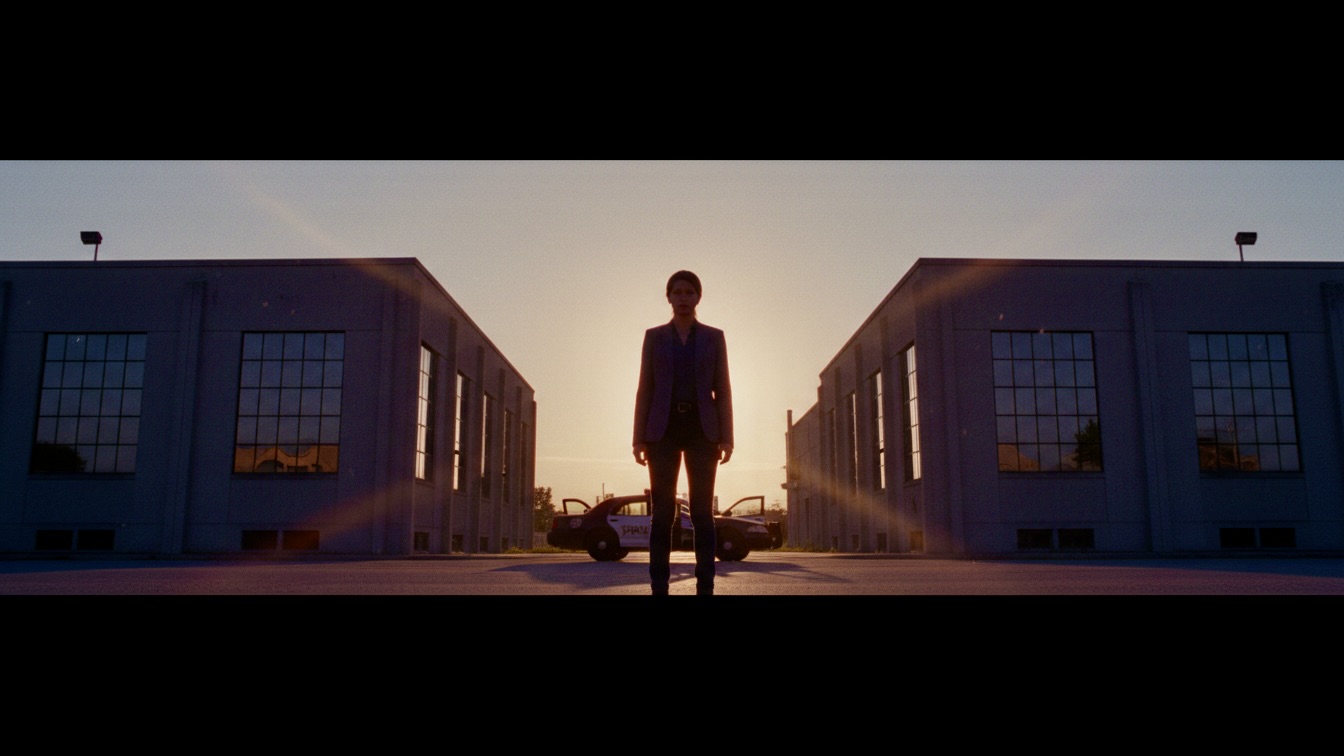
The Leak: While Tom comforts the rescued Eli, Jenkins arrests Rossi and sends the incriminating financial files to every major news outlet. She knows the upload bar represents the end of her life as a detective but the beginning of the end for the program. The episode closes on the silence of the industrial district as the sun sets on her career and the truth begins to spread.
The episode begins with a cold, clinical detachment that slowly boils over into a frantic, high-stakes thriller. The audience should feel a growing sense of claustrophobia and moral nausea as the layers of the "compassionate" system are peeled back to reveal the greed underneath. The final act provides a cathartic but bittersweet release, as the immediate life is saved but the protagonist’s future is destroyed, leaving the viewer with a lingering sense of systemic dread.
If expanded, the season would follow Jenkins as a fugitive or a disgraced whistleblower navigating a legal system that views her as a terrorist. Each subsequent episode would reveal different "offsets" in other sectors—elderly care, foster systems, and veteran affairs—where the state uses MAID to balance budgets. The season would explore the underground networks of parents and activists fighting to reclaim their children from the state's "compassion."
The overarching narrative would culminate in a national trial or a grassroots uprising against the "Compassion Clinics." Jenkins would evolve from a lone investigator into the face of a movement, forced to confront the reality that the law and morality have become diametrically opposed in the modern state. The season finale would center on the legislative battle to repeal Bill 88, with Jenkins testifying from an undisclosed location.
The visual style is "Industrial Noir," characterized by harsh, high-contrast lighting and a palette of jaundiced yellows and sterile whites to emphasize the July heat and clinical coldness. Camera work should be handheld and intimate during the scenes of grief, shifting to static, wide, and oppressive shots when depicting institutional spaces. Tonal influences include the bureaucratic dread of Children of Men and the gritty, moral weight of Sicario.
The sound design is crucial, utilizing a persistent, low-frequency hum to create a sense of environmental pressure. The contrast between the sweltering, decaying apartment and the sleek, minimalist school/clinic offices is vital for the visual storytelling. Tonal comparables include the "White Bear" episode of Black Mirror for its sense of inescapable systemic cruelty and Spotlight for its methodical unmasking of institutional corruption.
The target audience is adults (18-45) who enjoy socially conscious thrillers and dystopian fiction with a heavy emphasis on ethical dilemmas. It appeals to viewers of "prestige" television who are interested in contemporary debates regarding medical ethics, parental rights, and state power. The story is designed to provoke discussion and discomfort, making it ideal for viewers who seek out narrative-driven social commentary.
The pacing is a "slow burn" for the first six minutes, focusing on the procedural horror and investigation, before shifting into a "high-velocity" thriller for the final six minutes. The 10-12 minute runtime necessitates a lean act structure: Act I (The Discovery/The Father), Act II (The Investigation/The Ledger), and Act III (The Race/The Leak). The tempo should feel increasingly breathless as Jenkins moves closer to the clinic.
The primary production challenge is the "July Heat" aesthetic, requiring heavy use of sweat continuity, heat haze filters, and a soundscape dominated by the hum of struggling air conditioners. The contrast between the sweltering, decaying apartment and the sleek, minimalist school/clinic offices is vital for the visual storytelling. These two primary locations should feel like different worlds—one human and suffering, the other sterile and predatory.
The destruction of the IV pump in the climax requires a practical spark effect and a shattered prop to ensure the impact feels visceral and final. Minimalist sets for the clinic and office can keep costs down, allowing for a higher budget allocation for the industrial district location and the high-speed cruiser sequences. The use of digital tablets and sleek monitors in Rossi's office should contrast sharply with the analog, gritty reality of Jenkins's police world.


