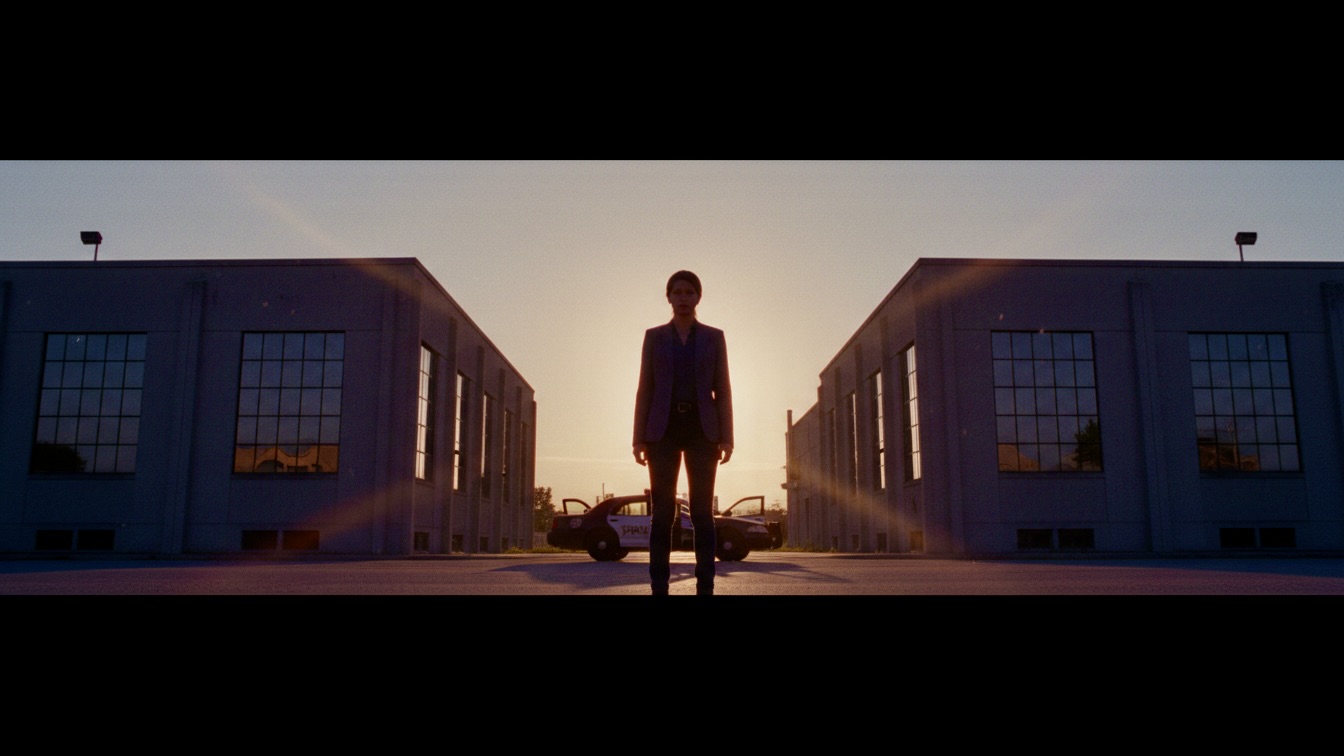
The story follows Detective Marie-Anne Jenkins as she investigates the suspicious death of fifteen-year-old Chloe Miller, who was found euthanized in her apartment. Jenkins discovers that the death was a state-sanctioned procedure under "Bill 88," which allows school counselors to act as medical proxies for minors seeking Medical Assistance in Dying (MAID) without parental notification. The investigation reveals that the counselor, Gareth Rossi, has facilitated the deaths of multiple marginalized students. Jenkins uncovers a corrupt financial scheme where the school board receives budget bonuses for every high-needs student removed from the system through these expedited deaths. Despite a direct order from her captain to stand down, Jenkins rescues a young boy named Eli from a secret clinic and leaks the incriminating evidence to the national media.
One of the most prominent themes is the dehumanization of the individual within a bureaucratic and medicalized framework. The state views human lives, specifically those of vulnerable or expensive youth, as data points on a ledger rather than sentient beings with potential. This is evidenced by the "MAID Utilization Bonus," which transforms the act of ending a life into a fiscal strategy for balancing school budgets. The language used by the technician and Rossi—terms like "hardware retrieval" and "healthcare autonomy"—serves to sanitize the reality of death and strip away the emotional weight of the tragedy.
The narrative also explores the aggressive erosion of parental rights and the family unit in favor of state-mandated care. Bill 88 acts as a legal wedge, allowing the school to isolate children from their primary support systems by pathologizing parental disagreement or even simple ignorance of a child's internal struggles. By framing the father as a toxic element without his knowledge, the system creates a self-fulfilling prophecy of isolation. This isolation makes the minor more susceptible to the suggestion of permanent relief, effectively weaponizing the child's vulnerability against her own survival.
Finally, the story critiques the corrupt nature of institutional power and the banality of evil found in administrative compliance. Captain Miller represents the moral rot of those who recognize an injustice but refuse to act due to the threat of losing their status or pension. The conflict between Jenkins’s moral compass and the Captain’s legalistic cowardice highlights the theme that true justice often requires breaking the very laws designed to protect the status quo. The story suggests that when the law becomes an instrument of death, the only ethical path is one of active subversion.
Detective Marie-Anne Jenkins serves as the moral anchor in a world that has traded empathy for efficiency. She is characterized by a weary but resolute sense of duty, one that extends beyond the letter of the law to a deeper, more primal understanding of right and wrong. Her physical reactions—the weight pressed against her chest and the bile in her throat—indicate a character who is still deeply connected to her humanity despite the desensitizing nature of her profession. Unlike her colleagues, she refuses to accept the rehearsed cadence of the state’s justifications, choosing instead to look at the raw, acidic sweat of pure grief in the victims' families.
Her motivation shifts from a standard police investigation to a desperate crusade as she realizes the scale of the systemic betrayal. Jenkins is not merely seeking a killer; she is fighting a philosophy that has commodified the lives of the marginalized. Her background in cybercrimes suggests a high level of competence and a willingness to use the backdoor to find the truth, reflecting a character who knows how to navigate the machine in order to dismantle it. This technical skill, combined with her physical courage in the final confrontation, marks her as a versatile and formidable protagonist.
The internal conflict Jenkins faces is the realization that her badge, which she has worn for years, is now being used to protect the very monsters she is hunting. This epiphany leads to her ultimate transformation from a law enforcement officer into a whistleblower. By leaking the documents, she knowingly sacrifices her career and her future security to ensure that the slaughterhouse is exposed. This act of self-immolation for the sake of the innocent provides her character arc with a tragic yet heroic conclusion, as she chooses moral integrity over institutional loyalty.
The narrative utilizes an oppressive and visceral tone that mirrors the stifling heat of the July setting. The constant references to the malfunctioning air conditioning, the baked drywall, and the smell of bleach create a sensory experience of decay and stagnation. This physical heat serves as a metaphor for the escalating tension and the moral rot festering within the city's institutions. The prose is lean and sharp, favoring direct observations that highlight the cold, clinical nature of the state’s actions against the messy, wet reality of human suffering.
Pacing is handled with a sense of mounting urgency, beginning with a slow, investigative crawl and accelerating into a high-stakes race against time. The transition from the quiet, sterile bedroom of Chloe Miller to the chaotic, violent confrontation at the high school parking lot marks a shift in the narrative’s energy. This acceleration reflects Jenkins’s own increasing desperation as she realizes the clock is ticking for the next victim. The use of short, punchy sentences during the climax heightens the adrenaline and emphasizes the life-or-death nature of her intervention.
Narrative voice remains grounded in a cynical realism, yet it allows for moments of profound psychological insight. The contrast between Gareth Rossi’s practiced, perfectly symmetrical expression and Tom Miller’s raw, animal sound of grief highlights the stylistic divide between the predators and the prey in this society. By focusing on these sharp sensory details—the metallic clack of a gun or the glare from the computer monitor—the author anchors a high-concept political allegory in a tangible, frighteningly believable world. This stylistic choice ensures that the story’s critique of policy never loses sight of the human cost involved.


