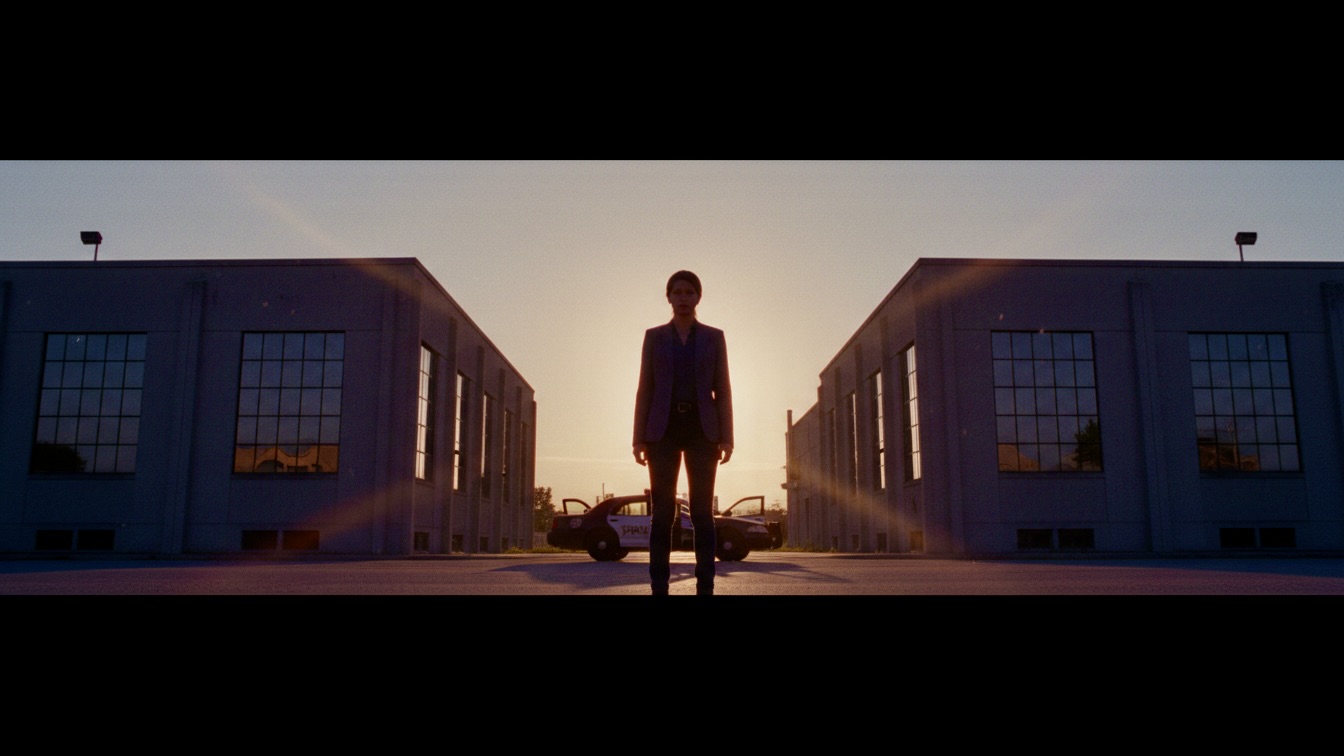
The state mandated death, but the digital tablet was missing the one signature that actually mattered.
The air conditioning in the apartment had been shut off for two days. July heat baked the drywall, trapping the smell of bleach and old laundry in the narrow hallway. Detective Marie-Anne Jenkins stood in the doorway of the bedroom. Her shirt stuck to her spine.
The girl on the bed looked small. Just fifteen. She wore an oversized band t-shirt and flannel pajama pants. A plastic IV line snaked from her left arm to a sterile, state-issued medical disposal bag hanging from an aluminum stand.
"Time of death was 0800 yesterday," the MAID technician said. He was twenty-three, maybe twenty-four, wearing a polo shirt with the provincial health logo. He tapped the screen of his iPad. "Standard protocol. Peaceful transition."
Jenkins looked at the desk in the corner. A half-eaten bag of sour gummies sat next to an open math textbook. The laptop was closed, covered in worn stickers.
"Who called it in?" Jenkins asked. Her voice sounded flat in the quiet room.
"Automated system," the tech said. He didn't look up from his screen. "The IV pump sends a ping to the central server when the dosage is complete. I just come for the hardware retrieval and the final sign-off."
Jenkins stepped into the room. The floorboards creaked. The light filtering through the cheap plastic blinds was harsh, casting sharp, unnatural shadows across the girl's face. It felt wrong. A physical weight pressed against Jenkins's chest, a sudden drop in air pressure.
"Show me the consent form," Jenkins said.
The tech sighed, shifting his weight. He held out the iPad.
Jenkins scrolled through the digital document. Medical Assistance in Dying. Form 4. Expedited track. The patient's signature was there, a messy digital scrawl.
"Where are the parents' signatures?" Jenkins asked.
"Not required," the tech said. "Section B, Subsection 4. Bill 88. Privacy Override."
Jenkins stared at the blank field. "She's a minor."
"Mature minor," the tech corrected. His voice took on the rehearsed cadence of a customer service rep. "She initiated a social transition at school six months ago. Under Bill 88, if parental notification poses a risk to the minor's mental health during a gender transition, the school counselor acts as the legal medical proxy."
"The school counselor signed off on her death?" Jenkins's jaw clicked tight.
"They signed off on her healthcare autonomy," the tech said, finally looking up. He looked annoyed. "It's state-approved, Detective. I don't know why dispatch even sent homicide."
"Because a fifteen-year-old is dead in a locked apartment and her parents don't know," Jenkins said. She shoved the iPad back into his chest. "Pack up your gear. Don't touch the desk."
Jenkins walked out of the room, her stomach turning over. The heat in the hallway was suffocating. She pulled her phone from her pocket and hit the speed dial for dispatch.
"Yeah, Jenkins here. I need a forensics unit at the Westside complex. And find me the contact info for the parents of a Chloe Miller."
The drive back to the precinct offered no relief. The cruiser's AC blew hot dust and Freon. The streets were blindingly bright, the asphalt shimmering with heat waves.
When Jenkins pushed through the glass doors of the station, the noise hit her like a wall. Phones ringing, officers shouting across desks, the low hum of the massive server towers in the back.
"Jenkins!" Desk Sergeant Miller yelled from the front cage. "Interview room two. You've got a situation."
Jenkins didn't ask questions. She walked down the linoleum hallway, the fluorescent lights buzzing overhead. She opened the door to room two.
A man in a faded work shirt was pacing the length of the small room. His face was red, his hands shaking. When the door opened, he spun around.
"Where is she?" he demanded. His voice cracked. "The uniforms came to my job. They said she's gone. Where is my daughter?"
"Mr. Miller," Jenkins said, keeping her voice low. She stepped inside and closed the door. "I'm Detective Jenkins. Please, sit down."
"Don't tell me to sit down!" Tom Miller slammed his hand against the metal table. The sound echoed off the cinderblock walls. "Where is Chloe?"
"She's at the medical examiner's office," Jenkins said. She didn't dress it up. There was no point.
Tom's knees buckled. He caught himself on the edge of the table, his breath coming in jagged gasps. "They said it was suicide. They said it was state-assisted. That's a lie. Chloe wouldn't do that. She wouldn't."
"Mr. Miller, did you know your daughter was seeing a counselor at school?"
Tom looked up, his eyes bloodshot. "She started seeing that new guy. Rossi. Gareth Rossi. She was just stressed about exams. She wanted to cut her hair short, change her style. I told her fine, whatever you want. But then she got secretive."
"Did she ever express suicidal ideation to you?"
"Never!" Tom shouted, spit flying from his lips. "She was making plans for the summer. We were supposed to go camping next week. She wasn't suicidal until she started talking to him. He told her she was trapped. He told her she was in a toxic environment because I wouldn't use some new pronouns I didn't even know about!"
Jenkins watched the man break down, his heavy shoulders shaking as he sobbed into his hands. The shadow mass in the room grew denser. The state called it healthcare. The tech called it autonomy. But looking at the father, smelling the raw, acidic sweat of pure grief, Jenkins knew exactly what it was.
It was a murder scene.
Jenkins pulled a notepad from her pocket. She clicked her pen. The sound was sharp in the small room.
"Tell me everything you know about Gareth Rossi," Jenkins said.
The glare from the computer monitor burned Jenkins's eyes. It was 3:00 PM. The precinct was loud, but she had tuned out the static. She was deep in the provincial medical database, bypassing the standard search filters using a backdoor login she kept from her time in cybercrimes.
She typed in the school district code. She typed in Gareth Rossi's certification number.
The search wheel spun. The screen flashed white, then populated a list.
Jenkins leaned closer to the monitor. Her breath hitched.
Six names.
Chloe Miller wasn't an isolated case. Over the last eight months, six other teenagers from the same school district had been approved for expedited MAID. All of them under eighteen. All of them flagged as marginalized—foster kids, kids in the shelter system, or kids transitioning under the radar of their parents.
All of them signed off by Gareth Rossi.
Jenkins grabbed her keys off the desk. She didn't tell her captain where she was going.
The high school was a modern fortress of glass and exposed concrete, sitting at the edge of the suburbs. In the dead of summer, the parking lot was mostly empty, save for a few administrative vehicles and maintenance trucks. Heat radiated off the blacktop, blurring the lines of the building.
Jenkins walked through the automatic sliding doors. The air conditioning hit her, freezing the sweat on her neck. The silence inside the school was unnatural, a heavy, hollow quiet that made her footsteps sound too loud.
She found the clinical wing on the second floor. The door to Rossi's office was open.
Gareth Rossi sat behind a sleek, minimalist desk. He was in his early thirties, wearing a tailored linen shirt and clear-framed glasses. He was sipping a green smoothie from a reusable metal straw, typing casually on a dual-monitor setup.
Jenkins knocked on the doorframe.
Rossi looked up. He smiled, a practiced, perfectly symmetrical expression. "Can I help you?"
"Detective Jenkins," she said, stepping into the room. She didn't offer her hand. She stood in front of the desk, blocking his view of the door. "I'm investigating the death of Chloe Miller."
Rossi's smile didn't falter, but his eyes tracked her movements. He set the smoothie down. "A tragedy. I was devastated to hear the news this morning. Chloe was a bright kid."
"She was fifteen," Jenkins said.
"She was a mature minor in severe psychological distress," Rossi countered smoothly. His voice was calm, dripping with therapeutic condescension. "We center the youth's lived experience here, Detective. Chloe was trapped in an unsupportive home. Her father was hostile to her transition."
"Her father didn't even know she was transitioning until today," Jenkins snapped.
"Because she didn't feel safe telling him," Rossi said. He leaned back in his ergonomic chair. "Bill 88 exists for a reason. To protect vulnerable youth from reactionary parents. When a child is experiencing terminal dysphoria and depression, and their home environment is toxic, we have a duty of care to provide a safe, affirming exit."
Jenkins stared at him. Her hands curled into fists at her sides. "You fast-tracked a teenager for euthanasia because she was depressed."
"I facilitated her bodily autonomy," Rossi said, his tone sharpening slightly. "Death is a valid healthcare outcome when the alternative is prolonged, unmitigated suffering. It's legal, it's regulated, and it's compassionate. You're looking for a crime where there is only care, Detective."
Jenkins leaned over the desk, invading his personal space. She smelled mint and expensive cologne. "Six kids, Rossi. Six kids in eight months. You're not providing care. You're running a slaughterhouse."
Rossi's expression went entirely blank. He reached for his mouse and clicked the screen to sleep. "If you don't have a warrant, Detective, this conversation is over. My actions are fully protected under provincial law."
Jenkins held his gaze for three seconds, letting the silence stretch until it became suffocating. Then she turned and walked out.
She was halfway down the stairs when her radio crackled.
"Dispatch to Jenkins. We have a 10-10 in progress at the Westside High School parking lot. Caller reports a male assaulting a school board official."
Jenkins broke into a sprint.
She burst through the front doors into the blinding heat. Across the lot, near a row of electric vehicle chargers, two figures were grappling against the side of a white Tesla.
It was Tom Miller.
He had a man in a suit pinned against the car, his massive fist coming down in short, brutal arcs. Blood splattered across the white paint. The man in the suit was screaming, his arms raised weakly to protect his face.
"Tom!" Jenkins yelled, drawing her taser. She closed the distance in seconds. "Tom, back away!"
Tom didn't stop. He grabbed the man by the collar, slamming him against the glass window of the car. The glass spider-webbed. "Give me the files!" Tom roared. "Give me my daughter's transcripts!"
Jenkins holstered the taser and tackled Tom around the waist. The impact drove the air from her lungs. They hit the hot asphalt together. The pavement scraped the skin off her forearms, but she held on, pinning his arms behind his back.
"Stop!" Jenkins hissed in his ear. "Tom, stop! You're going to catch a federal charge!"
Tom struggled for a second, then went entirely limp. He pressed his face into the burning blacktop and started to sob again, a raw, animal sound.
The board member scrambled away, clutching his bleeding nose. A leather briefcase lay spilled on the ground next to him, an iPad and several thick manila folders scattered across the pavement.
Jenkins pulled her cuffs from her belt and locked them around Tom's wrists. She pulled him to his feet.
"I'm arresting you, Tom," she said softly. "I have to. It's the only way I can protect you right now."
As she walked him to her cruiser, Jenkins looked back at the spilled folders. The top one was labeled: Student Psychiatric Transcripts - Sealed.
She looked at the bleeding board member, who was busy dialing his phone, not paying attention to the files.
Jenkins walked back, scooped up the iPad and the folders, and shoved them under her arm before anyone could stop her.
The holding cell in the basement of the precinct smelled like bleach and old copper. Jenkins sat on the metal bench opposite Tom. The heavy steel door was locked from the inside.
Tom was staring at the floor, his breathing shallow. The blood on his knuckles had dried into dark crusts.
Jenkins didn't speak. She sat with her back against the cinderblock wall, the stolen iPad resting on her knees. She had bypassed the lock screen using a standard administrative default code she guessed on the second try. School board IT was notoriously lazy.
She opened the first folder. It was Chloe's counseling transcript.
Jenkins read the screen. The clinical language was sterile, masking the horror underneath.
Session 4: Client expresses feeling burdensome to family. Client states, "I just want it to stop." I validated this feeling. Discussed the reality of permanent relief options. Client seemed hesitant. I reinforced that seeking an exit is an act of supreme autonomy.
Session 6: Client expressed desire to reconcile with father. I advised against this. Reminded client that father's lack of immediate affirmation is a form of psychological violence. Isolation from toxic family units is necessary for transition. Client agreed to proceed with Form 4.
Jenkins felt bile rise in her throat. Rossi hadn't just approved the MAID request. He had cultivated it. He had taken a confused, depressed teenager, cut her off from her support system, and actively steered her toward death.
She kept swiping. She opened the other files. The six other kids.
The pattern was identical. Rossi isolated them, amplified their distress, and presented state-sanctioned suicide as the only brave, autonomous choice left.
But why? Jenkins swiped out of the transcripts and opened the main directory. She found a folder labeled Fiscal Year Budget Projections.
She opened a spreadsheet. Columns of numbers filled the screen. She scrolled to the right, looking for the mental health allocations.
There it was. A line item labeled: Special Needs & Mental Health Offset - MAID Utilization Bonus.
Jenkins froze. She traced the row with her finger. For every student removed from the long-term psychiatric care roster via MAID, the provincial health board kicked back a fifty-thousand-dollar budget surplus directly to the school's discretionary fund.
They were balancing the budget. The school board was financially incentivizing the death of their most expensive, high-needs students to pad their administrative bonuses.
Jenkins's phone vibrated violently against her hip. The sudden noise made her jump. She pulled it out.
An unknown number.
"Jenkins," she answered.
"Is this the police?" a woman's voice asked. She sounded frantic, breathless. "I need help. My son. Eli. He didn't come home from summer school."
Jenkins stood up. The iPad slid onto the metal bench. "Who is this?"
"Sarah Victor. Eli is... he's trans. He's been having a hard time. I got an alert from the school's portal ten minutes ago. It said his medical proxy status had been updated. I don't know what that means. The school won't answer the phone."
Jenkins's stomach dropped. "Does Eli see a counselor named Gareth Rossi?"
"Yes," the woman choked out. "How did you know?"
"Mrs. Victor, stay at your house. Do not leave. I will find him."
Jenkins hung up. She grabbed the iPad and sprinted out of the holding cell, leaving Tom behind. She took the stairs two at a time, bursting into the main bullpen.
She ran straight to the Captain's office. The door was closed. She didn't knock. She shoved it open.
Captain Miller looked up from his desk, annoyed. "Jenkins. What the hell are you doing? I've got the school board screaming at me about you assaulting an official and stealing property."
"They're killing kids for budget bonuses," Jenkins said. She slammed the iPad onto his desk. "Look at this. Look at the ledger. Rossi is pushing transitioning and marginalized kids into MAID, and the province is paying the school for it. They just grabbed another one. A boy named Eli. We have to shut down the clinic right now."
The Captain didn't look at the iPad. He looked at Jenkins. His face was unreadable. He sighed, leaning back in his chair.
"Drop it, Jenkins."
Jenkins stared at him. The ambient noise of the precinct seemed to drop away, leaving only a high-pitched ringing in her ears. "What did you say?"
"I said drop it," the Captain repeated, his voice low and hard. "I got a call from the Mayor's office ten minutes ago. Bill 88 is protected under the Notwithstanding clause. It is immune from Charter scrutiny. The medical proxy transfers are legal. The funding offsets are classified provincial health logistics. If you touch this, you're not just breaking protocol, you're violating federal privacy laws."
"A kid is going to die today!" Jenkins shouted.
"It is legally classified as healthcare!" the Captain shouted back, standing up. "You go after this, and they will strip your badge, take your pension, and throw you in federal prison for domestic terrorism against a medical facility. Stand down. That is a direct order."
Jenkins looked at the man she had worked under for eight years. She saw the fear in his eyes. He knew it was wrong. But he was too scared of the machine to stop it.
"Understood," Jenkins said quietly. Her voice was dead.
She reached out, grabbed the iPad off his desk, and walked out of the office.
She didn't go back to her desk. She walked straight to the evidence locker. She flashed her badge at the clerk.
"I need the confiscated drive from the Petrov cyber bust," Jenkins said. "Case 409."
The clerk frowned. "That's a restricted hacking tool, Jenkins."
"Captain's orders," she lied, her face perfectly calm. "We need it to crack a burner phone."
The clerk shrugged and handed over a small, black USB drive.
Jenkins took it, turned, and headed back down to the basement holding cells.
Jenkins unlocked the holding cell. Tom looked up, confused.
"Get up," Jenkins said. "We're going."
"Where?" Tom asked, rubbing his wrists.
"To stop it from happening to someone else."
They walked out to the cruiser. The sun was beginning to set, casting long, bloody streaks of orange and red across the hazy summer sky. The heat hadn't broken. It felt heavier now, pregnant with a storm that wouldn't come.
Jenkins plugged the black USB drive into the cruiser's tactical laptop. She booted the intrusion software. It was a brute-force algorithm designed to crack encrypted databases. She pointed it at the provincial Compassion Clinic server.
Code rained down the screen. The laptop's fan whirred loudly.
"What are you doing?" Tom asked from the passenger seat.
"Finding the drop site," Jenkins muttered. "They don't do expedited MAID at the hospitals. Too much foot traffic. They use unmarked secondary clinics."
The screen flashed green. A matched hit.
An address popped up. It was in the industrial district, down by the old shipping ports.
Jenkins threw the cruiser into drive and hit the sirens.
The drive was a blur of neon lights and braking cars. Jenkins pushed the cruiser to eighty miles an hour down the city streets, weaving through the evening traffic. Tom gripped the door handle, his knuckles white, but he didn't say a word. He knew exactly what was at stake.
They hit the industrial district twenty minutes later. The roads here were cracked and empty, lined with massive, windowless warehouses and chain-link fences.
Jenkins cut the sirens and the headlights as they approached the address.
It was a low, flat concrete building. No signs. No medical crosses. Just a steel door and a security camera. Two men in tactical black uniforms stood by the entrance. Private corporate security.
Jenkins parked the cruiser out of sight behind a dumpster.
"Stay here," she told Tom.
"No," Tom said. He opened his door. "I'm coming."
Jenkins looked at him. She didn't argue. She drew her Glock 19 from her holster and racked the slide. The metallic clack was loud in the heavy, humid air.
They walked up to the entrance. The two security guards immediately stepped forward, their hands resting on their holstered weapons.
"Private facility. No entry," the first guard said. He was massive, his eyes hidden behind mirrored sunglasses despite the fading light.
Jenkins didn't slow down. She raised her gun, aiming dead center at the guard's chest.
"Police," Jenkins said, her voice dropping to a terrifying, absolute calm. "Move away from the door, or I will put you on the concrete."
The guard hesitated, looking at her badge, then at the gun. He raised his hands slowly and stepped aside.
"Open it," Jenkins ordered.
The second guard swiped a keycard. The heavy steel door clicked and swung open.
Jenkins pushed inside, sweeping the gun left and right. The interior was a jarring contrast to the outside. It was bright, sterile, and smelled overwhelmingly of lavender and rubbing alcohol.
She moved down the hallway, kicking open doors. Empty waiting rooms. Supply closets.
Then she heard it. A muffled, panicked voice coming from the end of the hall.
Jenkins ran. She hit the double doors at the end of the corridor with her shoulder, bursting into a large, white clinical room.
In the center of the room was a reclining medical chair. A teenager was strapped into it. He had choppy, dyed hair and was wearing a baggy hoodie. A clear IV line was taped to the back of his hand, connected to a digital pump on a stand.
He was crying hysterically, pulling against the leather restraints on his wrists.
"I changed my mind!" the boy sobbed. "Please! I don't want to! I want my mom!"
Standing next to the pump, holding a tablet, was Gareth Rossi.
Rossi looked up, his eyes widening in shock as Jenkins leveled her weapon at his head.
"Step away from the machine," Jenkins commanded.
"You're out of your jurisdiction, Detective!" Rossi shouted, his calm facade shattering entirely. His face twisted into a mask of righteous fury. "He signed the consent! The proxy is active! You are interfering with a legal medical procedure! You're a fascist denying this child his fundamental right to peace!"
Rossi reached for the digital start button on the IV pump.
Jenkins didn't hesitate. She fired.
The gunshot was deafening in the small room. The bullet smashed into the digital interface of the IV pump, shattering the screen and plastic casing into a hundred flying pieces. Sparks showered over the floor. The machine died instantly.
Rossi screamed, dropping his tablet and covering his ears.
Jenkins crossed the room in three strides. She grabbed Rossi by the throat and slammed him against the sterile white wall. She pressed the hot muzzle of her gun under his jaw.
"Give me one reason," Jenkins whispered, her eyes burning into his.
Rossi whimpered, his hands going up in surrender.
Behind her, Tom was already at the chair. He tore the leather straps off the boy's wrists and ripped the IV line out of his hand.
Eli collapsed into Tom's arms, sobbing uncontrollably. Tom held the boy tight, burying his face in Eli's shoulder, rocking him back and forth. "I got you. You're safe. You're safe."
Jenkins kept her gun on Rossi. With her free hand, she pulled out her phone. She didn't call dispatch. She didn't call her Captain.
She opened her email. She attached the financial ledgers, the budget offsets, and the transcripts she had downloaded from the school board's iPad.
She typed in the addresses for the top five national news outlets.
She looked at Rossi, who was trembling against the wall, and then at Eli, who was alive.
Jenkins hit send.
The upload bar filled quickly. The documents were out. The scandal would ignite by morning. The province would burn, the school board would be indicted, and her career was officially over.
Jenkins holstered her weapon, pulled out her cuffs, and ratcheted them violently onto Rossi's wrists.
“As the distant wail of approaching sirens finally cut through the heavy summer night, Jenkins looked down at her vibrating phone, watching the first panicked response from the Mayor's office light up the cracked screen.”


