Format: Short Film / Anthology Episode | Est. Length: 10-12 minutes
This episode serves as a cornerstone for The Lower Tiers, an anthology series exploring the surreal and brutal realities of a near-future urban collapse where the line between civilization and savagery has blurred into a series of desperate transactions. Each installment follows a different resident of the city’s underbelly, weaving a tapestry of interconnected survival stories that examine the cost of maintaining one's humanity when the environment demands its total surrender. The series utilizes a gritty, hyper-realist lens to transform the mundane decay of a modern metropolis into a labyrinthine purgatory where hope is the rarest currency.
Paul wakes up on a grimy subway floor, battered and shoeless, only to find a vibrant sunflower growing through a crack in the concrete—a defiant anomaly in a world of filth. This small spark of life is interrupted by Daniel, a weathered survivor who promises Paul a meal at the mythical, underground "Copper Pot."
A mugged and broken man navigates a brutal urban wasteland to reach a legendary sanctuary for the hungry. He soon discovers that in a world of scarcity, even charity comes with a devastating, transactional price.
The primary theme is the commodification of human survival and the death of altruism in the face of absolute scarcity. The story explores the "transactional" nature of relationships, where love and help are viewed as contracts that are terminated the moment they cease to be profitable. Paul’s journey represents the transition from a "broken" man who still feels moral conflict to a "survivor" who accepts the cold, mechanical reality of his environment.
Secondary themes include the persistence of nature in hostile environments and the deceptive nature of hope. The sunflower and the Copper Pot both serve as symbols that are ultimately subverted; the flower is a lonely, doomed accident, and the sanctuary is merely a grim industrial front. The episode suggests that in a broken city, the only way to endure is to become as hard and unyielding as the concrete itself.
For Paul, the stakes are both physical and spiritual: he must find food to survive the day, but he also risks losing the last remnants of his moral identity. If he fails to reach the Copper Pot, he faces starvation or death at the hands of the city's predatory factions. However, the ultimate cost is his capacity for trust and empathy, which are stripped away by Daniel’s betrayal and the hollow reality of the sanctuary.
The external conflict is driven by the hostile urban environment, including the punishing heat, the predatory "block monitors" who demand tolls, and the desperate junkies who resort to violence for scraps. Daniel serves as a complex antagonist, acting first as a mentor and then as a betrayer, personifying the city's ruthless survival instinct. Internally, Paul struggles with the memory of Chloe, whose rejection haunts him as a reminder of his perceived "brokenness" and his inability to function in a transactional world.
Paul, a man stripped of his belongings and dignity, is led through a sweltering, hostile city by a cynical guide named Daniel toward a legendary underground kitchen known as the Copper Pot. Along the way, he witnesses the casual brutality of the street—from the theft of a sleeping man’s money to a violent confrontation with junkies—only to be betrayed by Daniel in the dark tunnels beneath the city. Left for dead in the dark, Paul is driven by the primal scent of food to complete the journey alone.
Upon reaching the Copper Pot, Paul discovers the "myth" is a grim, industrial front for a mob-run soup kitchen serving tasteless broth to the desperate. The "five-star meal" was a lie, and the sanctuary is just another cog in the city’s transactional machine. Paul finishes his meal in silence, finally shedding his last remnants of hope and emerging back into the blinding sun as a man fully integrated into the city’s cold, unfeeling heart.
Paul (Protagonist): At the start, Paul is a "broken" man, physically injured and emotionally paralyzed by the loss of his partner, Chloe. He is a passive observer of the city's cruelty, clinging to symbols like the sunflower as a sign of lingering hope. By the end of the episode, his psychological arc concludes with him becoming a hardened survivor, his eyes narrowed and his expression flat, having traded his vulnerability for a cold, transactional understanding of life.
Daniel (Antagonist): Daniel is a veteran of the streets, wearing a heavy army jacket in ninety-degree heat as a suit of armor. He is a pure pragmatist who views empathy as a liability and survival as the only metric of success. His arc is static; he exists to facilitate Paul’s "education" in the reality of the city, ultimately proving his own philosophy by betraying Paul for a mere twenty dollars.
Chloe (Supporting/Flashback): Appearing only in Paul’s memories, Chloe represents the "civilized" world that has discarded Paul. Her flat, transactional termination of their relationship serves as the catalyst for Paul’s internal crisis. She is the voice in his head that labels him "broken," a label he eventually accepts and transforms into a survival mechanism.
Beat 1: The Defiant Bloom. Paul wakes on a grimy subway floor, his body broken by a recent mugging and his spirit crushed by the memory of Chloe's rejection. He notices a single sunflower blooming through a crack in the concrete, a defiant anomaly in the oppressive heat and filth of the station. This small spark of life is interrupted by Daniel, a weathered survivor who promises Paul a meal at the mythical "Copper Pot" to save him from dying on the platform.
Beat 2: The Toll of the City. Emerging into the punishing August heat, Paul follows Daniel through a landscape of shuttered stores and predatory "block monitors" who demand a steep toll for passage. To pay the fee, Daniel robs a passed-out businessman in a park, forcing Paul to confront the moral cost of his potential salvation. Despite his disgust, Paul accepts a share of the stolen money and a melting ice pop, his first taste of sustenance in days, as they sit amidst the city's decay.
Beat 3: The Salami Skirmish. The journey turns violent when they are cornered by desperate junkies in an alleyway, leading to a brutal display of Daniel's combat prowess as he breaks a man's arm over a discarded sandwich. They flee into a dark maintenance shaft to escape further pursuit, where the damp silence is broken by Daniel’s sudden, cold-blooded betrayal. Daniel bludgeons Paul with a flashlight and steals his remaining money, leaving him to die in the dark while declaring that survival is the only true transaction.
Beat 4: The Reality of the Pot. Driven by the scent of roasting meat, a battered Paul crawls through the sludge to find the iron door of the Copper Pot, only to discover the "myth" is a grim, industrial soup kitchen. Instead of a five-star meal, he is served a bowl of thin, salty water while enforcers watch over a room full of hollow-eyed diners. Paul finishes his tasteless soup in silence, finally shedding his last remnants of hope and emerging back into the city as a man fully integrated into its cold, transactional heart.
The episode begins in a state of Despair and Fragility, mirrored by the flickering fluorescent lights and Paul’s physical pain. As the journey begins, the mood shifts to Oppressive Tension, driven by the sweltering heat and the constant threat of violence on the surface. The midpoint offers a brief, Bittersweet Relief during the ice pop scene, which is quickly shattered by the Terror and Betrayal of the tunnel sequence. The finale lands in a state of Numb Nihilism, leaving the audience with a sense of cold clarity rather than catharsis.
If expanded, the season would follow Paul’s ascent through the city’s hierarchy as he uses the "transactional" lessons learned in this episode to become a block monitor himself. His journey would serve as the narrative spine, connecting various anthology characters who encounter him at different stages of his moral decay. The overarching plot would involve Paul discovering a conspiracy behind the Copper Pot’s food supply, forcing him to choose between his newfound status and a final, suicidal act of genuine altruism.
The thematic escalation of the season would move from individual survival to systemic corruption. As Paul rises in power, he encounters Chloe again, now a high-level administrator for the very forces that keep the city in a state of artificial scarcity. Their reunion would test the series' central thesis: whether a "broken" man can ever truly be mended, or if the city eventually consumes everyone who dares to look for a sunflower in the dark.
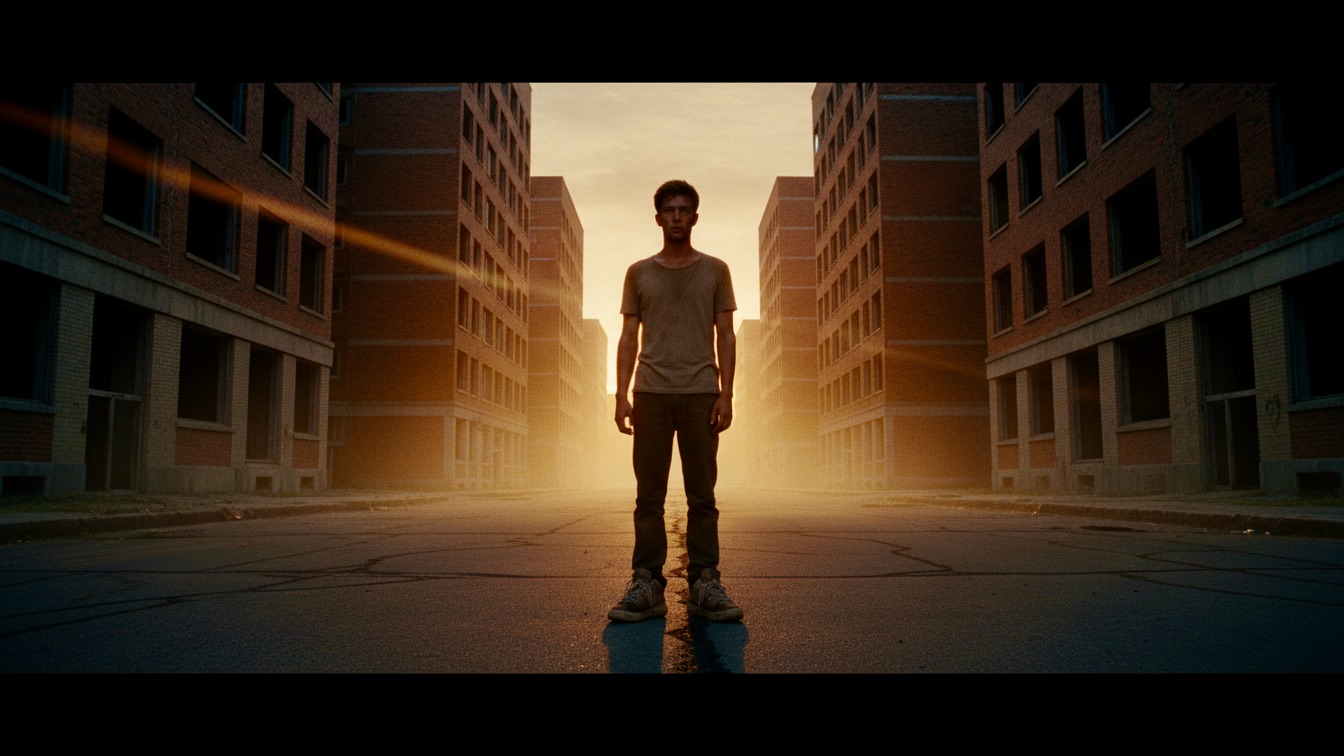
The visual style is "Industrial Neo-Noir," characterized by a high-contrast, "dirty" cinematography that emphasizes the grime and heat of the setting. A heavy yellow and orange color grade will be used for the surface scenes to create a sense of suffocating warmth, while the underground sequences will utilize sickly greens and deep blacks. Handheld camera work will provide a sense of jittery urgency during the street scenes, shifting to static, wide shots in the Copper Pot to emphasize the industrial scale and the insignificance of the individuals within it.
The tone is unflinching and cynical, drawing inspiration from the gritty realism of Children of Men and the urban decay of Taxi Driver. Sound design will play a crucial role, with the constant, low-frequency hum of the city and the mechanical roar of industrial fans creating a pervasive sense of unease. Tonal comparables include the "Long, Bright Dark" atmosphere of True Detective and the hopeless, transactional world-building of The Wire.
The target audience is adults (18-45) who gravitate toward prestige "grimdark" dramas and speculative fiction. It appeals to viewers who enjoy social commentary disguised as survival thrillers, similar to fans of Black Mirror or The Last of Us. The episode is designed for a streaming environment where high-concept, atmospheric storytelling and moral ambiguity are prioritized over traditional heroic arcs.
The 10-12 minute runtime necessitates a brisk, three-act structure with minimal exposition. Act I (The Subway) establishes the stakes and the "myth" within the first 2 minutes. Act II (The Surface) is a high-tempo sequence of escalating threats, culminating in the tunnel betrayal at the 8-minute mark. Act III (The Copper Pot) slows the pacing significantly, using a somber, rhythmic tempo to emphasize the crushing reality of the finale.
The production requires a heavy emphasis on practical effects and detailed production design to sell the "filth" of the city without relying on CGI. The "sunflower" must be a practical prop that stands out vividly against the desaturated, grimy background of the subway set. Makeup is critical, specifically the "sweat and grime" aesthetic for Daniel and the progressive bruising on Paul’s face to track the physical toll of his journey.
The Copper Pot location should be a genuine industrial basement or boiler room to capture the stifling heat and scale described in the text. Lighting the tunnel sequence will require a balance between the "absolute dark" of the narrative and the visibility required for the audience, utilizing the flashlight as the primary, high-contrast light source. The use of a real rotisserie oven on set will provide the necessary visual and atmospheric cues to contrast the "myth" of the food with the reality of the broth.


