Format: Short Film / Anthology Episode | Est. Length: 10-12 minutes
Imagine a high-octane anthology series titled Infrastructure, where each episode dissects the collapse of a different public utility through the eyes of the unsung professionals tasked with holding the world together. This story serves as a visceral entry point, set in a world where "unprecedented" environmental disasters have become the weekly norm and the safety nets of the state have rotted through. The series explores the tension between human resilience and systemic decay, following characters who must choose between the protocols that fail them and the radical actions required to save lives in an era of cascading failures.
Taylor stands in a flooded basement office, watching the "Emergency Coordination Center" transform into a literal bathtub as the town’s levee fails in real-time.
An overworked emergency coordinator must bypass a negligent provincial bureaucracy to save a town from a catastrophic dam failure. As the infrastructure crumbles, Taylor risks their career and life to rescue those abandoned by the system.
The primary theme is the lethal failure of institutional accountability, exploring how "fiscal responsibility" and bureaucratic "optics" translate into human negligence during a crisis. It highlights the disconnect between the people on the ground experiencing the "unprecedented" and the distant decision-makers who view survival through the lens of a balance sheet.
Secondary themes include the concept of the "New Normal," where the characters must navigate a world that has outpaced its own design. It is a story about the transition from being a cog in a broken machine to becoming a radicalized agent of change, emphasizing that in a failing system, heroism often looks like a crime.
For Taylor, the stakes are both professional and existential; failure means not only the loss of their career and credentials but the physical erasure of their community and the deaths of vulnerable citizens like the Mortons. For the town of Melgund Creek, the stakes are total annihilation, as the breach of the aging dam threatens to turn their homes into a permanent part of the riverbed.
The external conflict is the relentless, rising floodwater and the structural collapse of the town's aging infrastructure, specifically the 4th Street bridge and the dam. The primary antagonistic force is the systemic indifference represented by Director Morton, whose refusal to authorize aid creates a man-made disaster on top of a natural one. Internally, Taylor battles the trauma of past failures and the crushing weight of a hierarchy that demands obedience while offering no support.
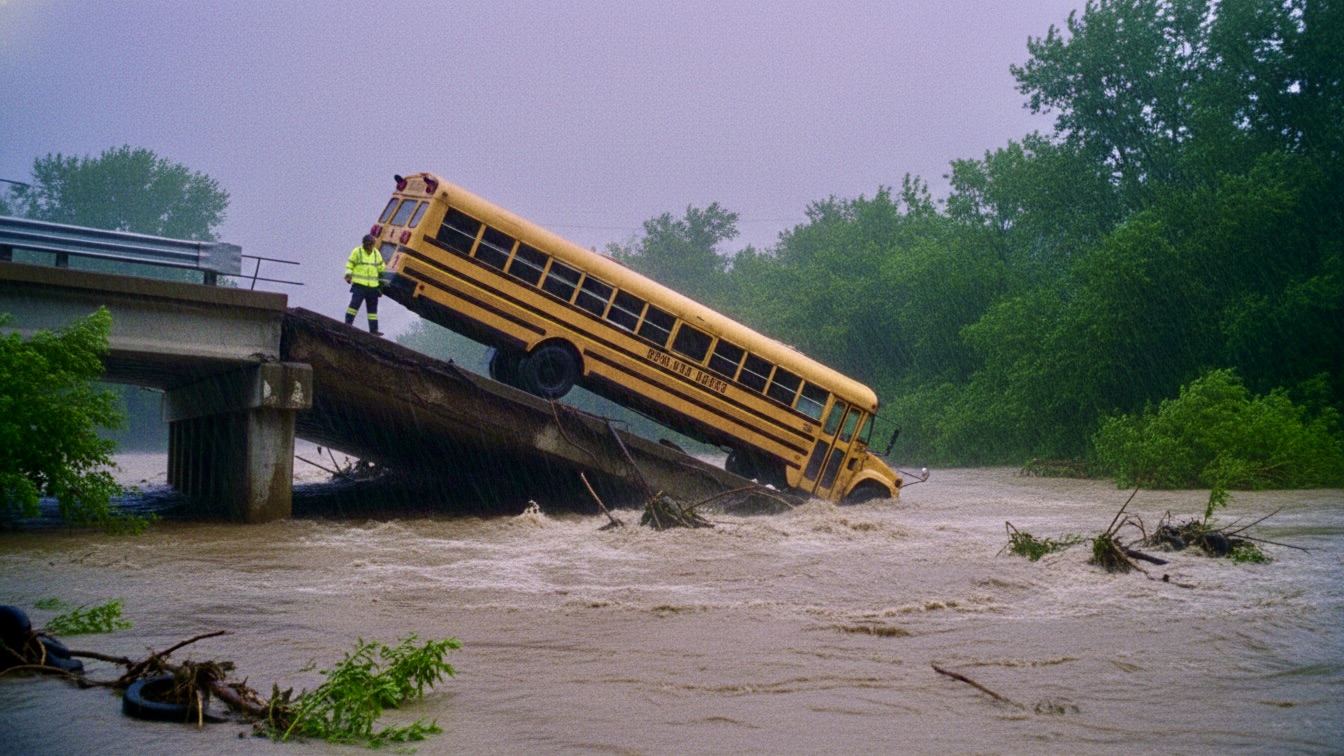
Taylor, an emergency coordinator, struggles to manage a catastrophic flood in Melgund Creek while fighting a local mayor more concerned with liability than lives. After a harrowing rescue of children from a school bus on a swaying, doomed bridge, Taylor realizes the provincial government has no intention of sending aid, citing budget constraints and political optics. The town hall is abandoned for a high school gym, which quickly becomes a refugee camp plagued by failing systems and rising water.
Defying direct orders and the threat of professional ruin, Taylor steals a search-and-rescue helicopter to save an elderly couple trapped on their roof as the town's aging dam finally breaches. Though the rescue is a harrowing success that nearly costs Taylor their life, they return to find the provincial director taking credit for the save on the news. The episode ends on a chilling note as a secondary surge of water, triggered by a landslide, targets the town's final remaining bridge and refuge.
Taylor: A cynical but deeply committed emergency coordinator who transitions from a frustrated rule-follower to a "revolutionary" by necessity. At the start, Taylor is exhausted by the "unprecedented" nature of the flood; by the end, they are a radicalized survivor who has found power in direct action. Their psychological arc is defined by the realization that the system they serve is the very thing preventing them from doing their job.
Riley: A 22-year-old tech-savvy assistant who provides a grounded, Gen Z perspective on the apocalypse. Riley serves as Taylor's moral anchor and logistical support, maintaining a calm demeanor that masks a sharp, biting understanding of the systemic failures around them. They represent the generation that has never known a stable world, making them uniquely suited for the chaos.
Director Morton: The personification of bureaucratic indifference, Morton is a man who views human lives through the lens of a balance sheet. He represents the "fiscal responsibility" that leads to infrastructure neglect, prioritizing his career and the province's budget over the lives of the citizens he is meant to protect. He is not a mustache-twirling villain, but a man who truly believes that following protocol is more important than the people the protocol is supposed to serve.
Beat 1: Taylor and Riley realize the Town Hall basement is flooding, forcing a desperate relocation of the Emergency Coordination Center to the local high school. The move establishes the scale of the disaster and the immediate threat to the town's command structure as the water literally chases them out. This beat sets the tone of a losing battle against a rising tide.
Beat 2: Mayor Hanson confronts Taylor about the 4th Street bridge, prioritizing the economic cost of closure over the safety of the citizens. Taylor shuts him down with a biting remark about standing in his own liability, asserting authority as the water rises around their feet. This moment marks Taylor’s first break from the traditional hierarchy of the town.
Beat 3: A school bus stalls on the swaying bridge, leading to a high-tension rescue where Taylor must smash the glass and evacuate children seconds before the structure vanishes into the river. The bridge collapse serves as the midpoint climax, raising the physical stakes and proving that the infrastructure is no longer reliable. Taylor’s narrow escape from the falling bus establishes the life-or-death nature of the crisis.
Beat 4: At the high school refugee camp, Taylor learns the province is refusing aid due to "fuel costs," leading to a heated, threatening phone call with Director Morton. The realization that they are truly alone and that the dam is failing forces Taylor to abandon the chain of command entirely. This beat serves as the internal turning point where Taylor decides to go rogue.
Beat 5: Taylor drives through a fence at the municipal airport and convinces a sympathetic pilot to fly an unauthorized rescue mission for the elderly Mortons. The helicopter sequence provides a bird's-eye view of the town's total destruction and the dam's imminent, catastrophic failure. The visual of the dam breaching provides a massive, earth-shaking climax to the episode’s physical threat.
Beat 6: Taylor barely survives the rescue as the house dissolves beneath them, only to return to the high school and see Morton taking credit for the success on the news. The episode ends on a cliffhanger as a secondary surge of water targets the town's final bridge, leaving Taylor to face a new, even deadlier threat. The final shot is Taylor’s face hardening as they realize the fight for the town has only just begun.
The episode begins with a mood of "damp frustration" and bureaucratic annoyance, which quickly escalates into heart-pounding dread during the bridge rescue. The middle act is defined by a cold, simmering rage against the system, leading to a cathartic but terrifying climax in the helicopter as the dam breaks. The final mood is one of bitter irony and renewed urgency, leaving the audience with a sense of "survivalist defiance" rather than relief.
A full season would follow Taylor as they navigate the aftermath of the Melgund Creek flood, dealing with the long-term displacement of the townspeople and the legal fallout of their "theft" of the helicopter. The overarching narrative would involve Taylor and Riley uncovering a larger conspiracy of infrastructure neglect and corruption within the provincial government, leading to a whistleblowing climax that threatens the entire administration.
The season would also track the psychological toll on the community, exploring how a town rebuilds when the institutions meant to protect it have fundamentally failed. Each episode would introduce a new challenge—outbreaks of disease in the camps, resource wars over clean water, or the arrival of predatory "reconstruction" corporations—escalating the stakes from local survival to a battle for the town's future.
The visual style is "Gritty Realism" meets "Disaster Noir," utilizing a desaturated color palette of grays, browns, and muddy greens to emphasize the oppressive nature of the flood. Handheld camera work during the rescues will create a sense of frantic immediacy, while wide, static shots of the flooded town will highlight the isolation and scale of the loss. The lighting will be naturalistic and dim, reflecting the power outages and the "dirty wool" sky.
The tone is inspired by the tension of Chernobyl and the atmospheric dread of The Last of Us, balancing the absurdity of bureaucracy with the visceral reality of environmental collapse. Sound design will be crucial, with the constant, rhythmic thud of rain and the low-frequency groan of shifting metal serving as a relentless, unsettling score. The dialogue is sharp and cynical, providing "gallows humor" to break the tension of the life-or-death stakes.
The target audience includes fans of high-stakes procedural dramas and environmental thrillers, specifically the 25-45 demographic that gravitates toward "prestige" survival stories. It appeals to viewers interested in social commentary regarding climate change, infrastructure, and the tension between individual action and institutional failure. The show’s focus on "real-world" heroes like emergency coordinators provides a fresh perspective for fans of traditional first-responder dramas.
The 10-12 minute runtime requires a relentless, "real-time" feel, with minimal transitions between the three acts. The first four minutes establish the chaos and the bridge crisis, the middle four minutes focus on the bureaucratic betrayal and the decision to go rogue, and the final four minutes cover the helicopter rescue and the cliffhanger ending. The pacing is designed to mimic the rising water—starting slow and annoying, then becoming a fast-moving, unstoppable force.
The production will require significant practical water effects and a "flooded" set for the town hall and high school interiors to maintain tactile realism. The bridge and dam collapses are best handled through high-quality CGI integrated with practical debris, while the helicopter sequences will require a mix of green-screen studio work and location aerial footage to ensure safety and visual impact.
A key consideration is the "sewage" element in the high school; using practical mud and darkened water will enhance the "rancid vibes" described in the script without the health risks of actual waste. The school bus rescue should be filmed on a tilting platform to simulate the bridge's instability, providing the actors with a physical environment to react to, ensuring the performances remain grounded in the physical reality of the disaster.


