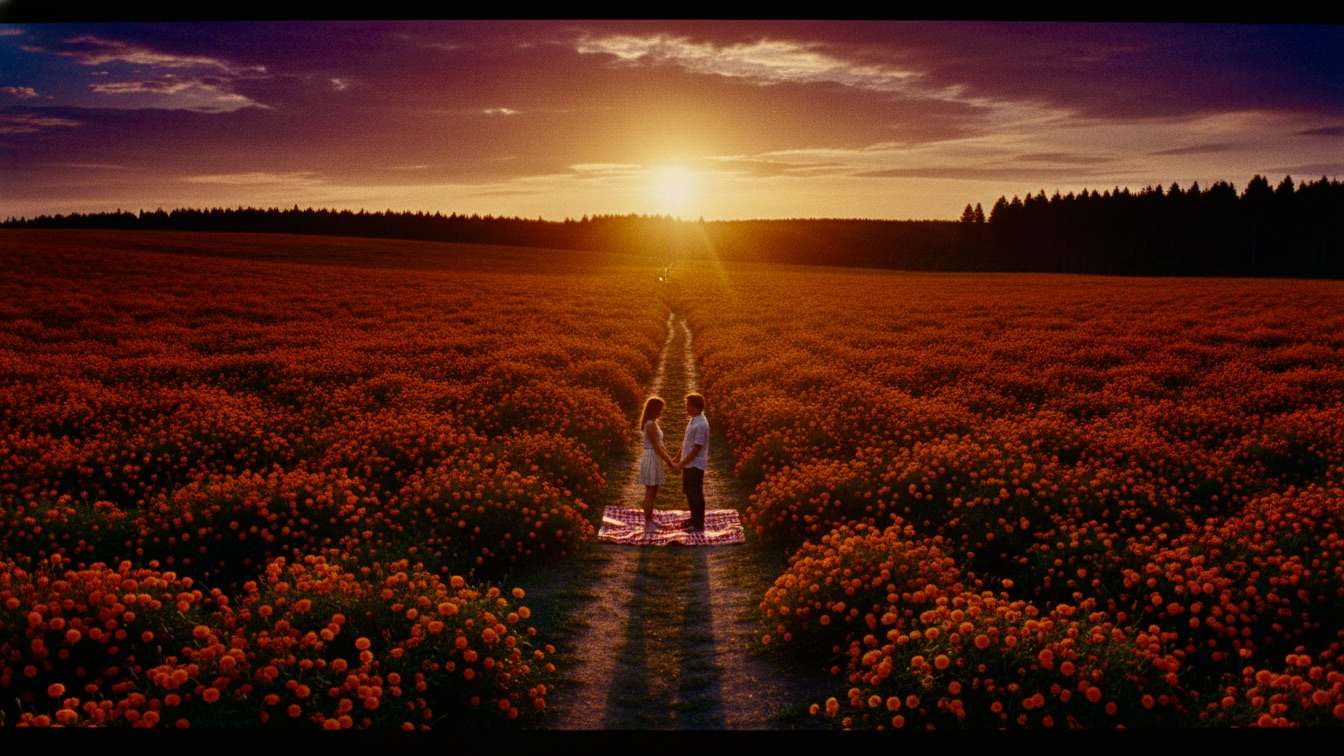
Wendy and Alek are trapped in a supernatural time-space loop during a final picnic meant to bring closure to their failing marriage. Every time either attempts to walk more than ten steps away from their picnic blanket, the individual is instantly teleported back to the center. As their frustration mounts, they discover that the surrounding meadow of marigolds reacts physically to their spoken truths and lies. Superficial statements or deceptions cause the flowers to wither and emit a foul odor, while profound emotional confessions make the blooms glow and produce a sweet fragrance. By confronting their deepest fears, hidden betrayals, and mutual feelings of inadequacy, the couple manages to manipulate this magical environment. Their shared vulnerability ultimately forces the meadow to open a new path, allowing them to escape the loop and walk forward together into an uncertain but shared future.
The overarching theme of the narrative revolves around emotional stagnation and the literal manifestation of cyclical relationship conflicts. The ten-step spatial loop serves as a brilliant metaphor for a couple trapped in toxic, repetitive arguments where neither party can truly escape or move forward. This magical realism element forces the characters to confront the reality that physical distance cannot resolve internal, emotional entanglements. The couple is trapped by mutual unresolved baggage, making the supernatural cage a direct reflection of a fractured psychological state.
Another prominent theme is the dichotomy between mechanical efficiency and human vulnerability. The text critiques the modern tendency to treat relationships like backend code or logistical problems to be optimized, a mindset heavily embodied by the husband. True connection is shown to be inherently messy, inefficient, and deeply emotional, contrasting sharply with the sterile, white-walled life of isolation he envisions. The narrative suggests that avoiding this messiness leads to a robotic existence devoid of authentic human experience.
Finally, the story explores the transformative power of radical honesty. The bio-reactive marigolds act as an emotional lie detector that accepts only the deepest, most uncomfortable truths. Surface-level observations and defensive lies yield decay, symbolizing how deceit and avoidance rot a relationship from the inside out. Only through painful, mutual confessions can the couple generate the light and growth necessary to forge a new path forward.
Wendy enters the narrative in a state of profound emotional exhaustion and detachment. She is initially desperate to finalize the divorce, seeking the cold comfort of air conditioning and legal documents to end her suffering. Her desire to flee the picnic blanket highlights her avoidance strategy, preferring a clean break over the messy reality of confronting a failing marriage. She feels entirely invisible within her relationship, a ghost haunting her own life while her husband focuses exclusively on his career.
As the magical loop forces her to stay, Wendy's defensive shell begins to crack, revealing a deep reservoir of resentment and sorrow. She is the first to intuit the emotional nature of the supernatural cage, shifting from a desire to escape to a willingness to experiment with vulnerability. Her confession about secretly planning a separate life demonstrates her own complicity in the marriage's demise. Ultimately, her courage to speak her deepest truths initiates the healing process, allowing her to reclaim her agency and her connection.
Alek is characterized by his hyper-rational, optimization-focused approach to life and relationships. He views the world through the lens of a software engineer, constantly seeking to debug problems and eliminate friction. This analytical mindset serves as a psychological defense mechanism, protecting him from the chaotic, unpredictable nature of human emotions. He initially treats the supernatural loop as a mere glitch, attempting to brute-force a solution through physical exertion rather than introspection.
Beneath his cold, efficient exterior, Alek harbors profound insecurities about his own humanity. He uses his demanding career to mask his fear that he lacks the innate ability to be a functional, emotionally present partner. His eventual breakdown and confession reveal a man terrified of the very isolation he has been actively constructing. By letting go of his need for control and embracing the messy reality of his feelings, he undergoes a significant psychological breakthrough.
The author employs a claustrophobic and oppressive tone early in the narrative, mirroring the suffocating nature of the couple's marriage. The relentless, pushing heat of the sun and the flat, endless sea of orange marigolds create a sensory environment that feels both vast and incredibly confining. This environmental hostility perfectly encapsulates the psychological tension between the characters, making the reader feel the weight of mutual resentment. The pacing in these early sections is frantic, punctuated by the jarring, instantaneous resets of the spatial loop.
As the characters transition from hostility to vulnerability, the narrative's tone and sensory details shift dramatically. The harsh, aggressive glare of the sun gives way to the softer, bruised purple and gold of twilight, signaling an end to the emotional warfare. The magical elements are described with striking sensory contrasts, such as the foul stench of rotting vegetables against the sweet scent of rain on hot pavement. These vivid olfactory and visual cues serve to ground the supernatural occurrences in a deeply visceral reality.
The dialogue is another strong stylistic component, characterized by sharp, sarcastic exchanges that gradually dissolve into raw, hesitant confessions. The author captures the specific, weary cadence of a couple who have fought the same battle countless times. As the story progresses, the dialogue loses its performative edge, becoming quieter and more profound. This linguistic evolution mirrors the psychological journey from defensive posturing to genuine, heartbreaking intimacy.


