The story begins in the oppressive heat of a summer night, where Malaya lies awake mourning her father, who disappeared from their lives three months prior. Her solitude is shattered when her brother, Lenny, arrives home in a mangled car, covered in blood and smelling of the wreckage. When the police arrive shortly after, Lenny convinces Malaya to provide a false alibi, claiming they were watching movies together all night. This lie creates a suffocating tension within the household, especially as Malaya observes her mother’s exhaustion and Lenny’s transparent attempts to hide his injuries.
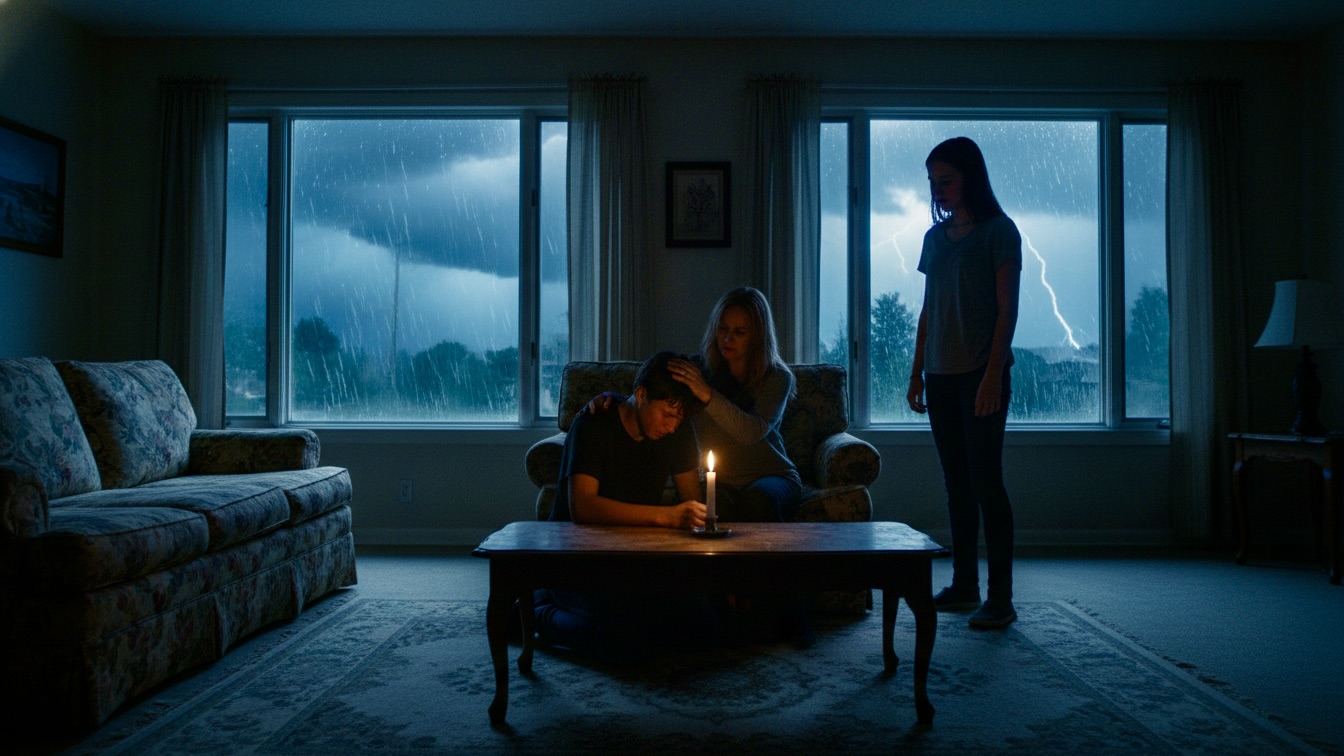
Driven by a need for the truth, Malaya visits the site of the reported hit-and-run on Elm Street, where she discovers the gruesome reality of the accident. The sight of blood on the pavement and shattered glass forces her to realize that her silence is a form of rot. She returns home to find Lenny packing his bags to flee the state, leading to a heated confrontation. As a violent storm knocks out the power, their mother returns home and discovers the deception. Malaya finally breaks her silence, leading to Lenny’s tearful confession and their mother's firm decision that he must face the legal consequences of his actions.
A central theme of the narrative is the corrosive nature of secrets and the heavy burden of false loyalty. Malaya initially believes that lying for Lenny is an act of love designed to preserve what remains of her broken family. However, the author illustrates how this deception manifests as a physical weight, described as a "grey weight" that makes the air hard to breathe. The story suggests that protecting a loved one from the consequences of their actions is not true support, but rather a way of allowing moral rot to spread through the home.
The cycle of trauma is another profound element, as the family is already reeling from the death of the father in a vehicular accident. Lenny’s reckless behavior and subsequent hit-and-run mirror the very tragedy that destroyed his family's stability. By fleeing the scene, Lenny risks becoming the same kind of "monster" that took his father away. The narrative explores how grief can lead to self-destruction if it is not processed, as seen in Lenny’s decision to quit swimming and engage in dangerous street racing.
Finally, the story examines the intersection of truth and redemption through the metaphor of light and darkness. The power outage caused by the storm forces the characters into a literal and figurative darkness where they can no longer hide from one another. The single candle lit by the mother represents the beginning of the healing process, even though it reveals a painful reality. The ending posits that while the truth will lead to further hardship, it is the only foundation upon which a family can truly begin to mend.
Malaya serves as the moral center of the story, though she is initially compromised by her desire to protect her brother. Her psychological state is defined by hyper-vigilance, evidenced by her counting the bumps on the ceiling and her acute sensitivity to the sounds of the house. She is a child forced into an adult role, carrying the "grey weight" of a secret that threatens to crush her. Her journey from complicity to confession marks her transition into a person of integrity who understands that true love requires accountability.
The trauma of her father's death has left her feeling as though the house is a "giant cave where sound went to die." This explains her willingness to lie initially, as she is terrified of further loss and the total collapse of her family unit. However, her visit to Elm Street acts as a psychological turning point where her empathy for the victim outweighs her fear for her brother. By the end of the chapter, she finds a sense of relief in the truth, even if that truth brings new challenges.
Lenny is a character defined by his inability to cope with the loss of his father, leading him to abandon his identity as a champion swimmer. He exhibits signs of avoidant behavior and intense panic, choosing to run away from his mistakes rather than face them. His desperation to flee the state shows a profound fear of abandonment and a misplaced belief that his absence would be easier for his mother to bear than his incarceration. He is a broken figure who requires the firm moral hand of his family to stop his downward spiral.
His actions are a manifestation of "unspoken grief," as he fills the void left by his father with high-risk behavior and the company of "bad kids." When he hits the man on the bike, he is not just hitting a stranger; he is reenacting the trauma that killed his father. His eventual breakdown in his mother's lap indicates that he is still a child at heart, overwhelmed by a world he no longer knows how to navigate. He represents the destructive power of guilt when it is allowed to fester in secret.
The mother is a portrait of quiet resilience and exhaustion, working two jobs to keep the family afloat after her husband’s death. She is initially depicted as being too tired to see the cracks in her children’s stories, but she possesses a core of "cold steel" when the truth is revealed. Her reaction to Lenny’s crime is deeply colored by her own trauma as a widow of a car crash victim. She cannot tolerate the idea of her son becoming the person who caused her own greatest tragedy.
By insisting that Lenny turn himself in, she chooses the path of justice over the path of convenience, proving her strength as a parent. She understands that allowing Lenny to run would be a death sentence for his character and their family's integrity. Her gesture of stroking Lenny's hair while telling him he must face the police shows a complex blend of maternal love and unwavering moral standards. She is the anchor that finally stops the family from drifting further into chaos.
The pacing of the story is expertly crafted to mirror the rising tension of a psychological thriller. The narrative begins with a slow, stagnant feeling that reflects the oppressive summer heat and the stillness of grief. Once Lenny arrives, the tempo quickens, utilizing short, punchy sentences to convey Malaya’s racing heart and the urgency of the police encounter. The final confrontation during the storm brings the pacing to a crescendo, using the external chaos of the weather to match the internal emotional eruption of the family.
Sensory details are used with great effect to create a visceral experience for the reader. The author moves beyond simple visual descriptions to include the smell of "hot metal, burning rubber, and iron," which evokes the violence of the crash. The sound of the air conditioner "chewing on metal" and the "hollow sound" of a rolling soda can add to the atmosphere of decay and instability. These details ground the psychological drama in a physical reality that feels grimy and authentic.
The narrative voice is intimate and focused, staying close to Malaya’s perspective to emphasize her isolation and internal conflict. The tone is somber and heavy, never allowing the reader to forget the "empty boots" of the deceased father that haunt the entryway. By using the metaphor of the "grey weight" and the "monster" of the lie, the author translates complex emotional states into tangible concepts. This stylistic choice makes the psychological stakes of the story clear, relatable, and deeply moving.


