Format: Short Film / Anthology Episode | Est. Length: 10-12 minutes
Imagine this story as a standout installment of The Signal, an anthology series exploring the psychological erosion of the human spirit in the digital age. Each episode places a protagonist in a high-stakes, isolated environment where their reliance on technology becomes a literal matter of life and death. The series functions as a modern "eco-tech" thriller, examining the violent withdrawal symptoms of a society that has forgotten how to exist in the physical world without a digital mirror.
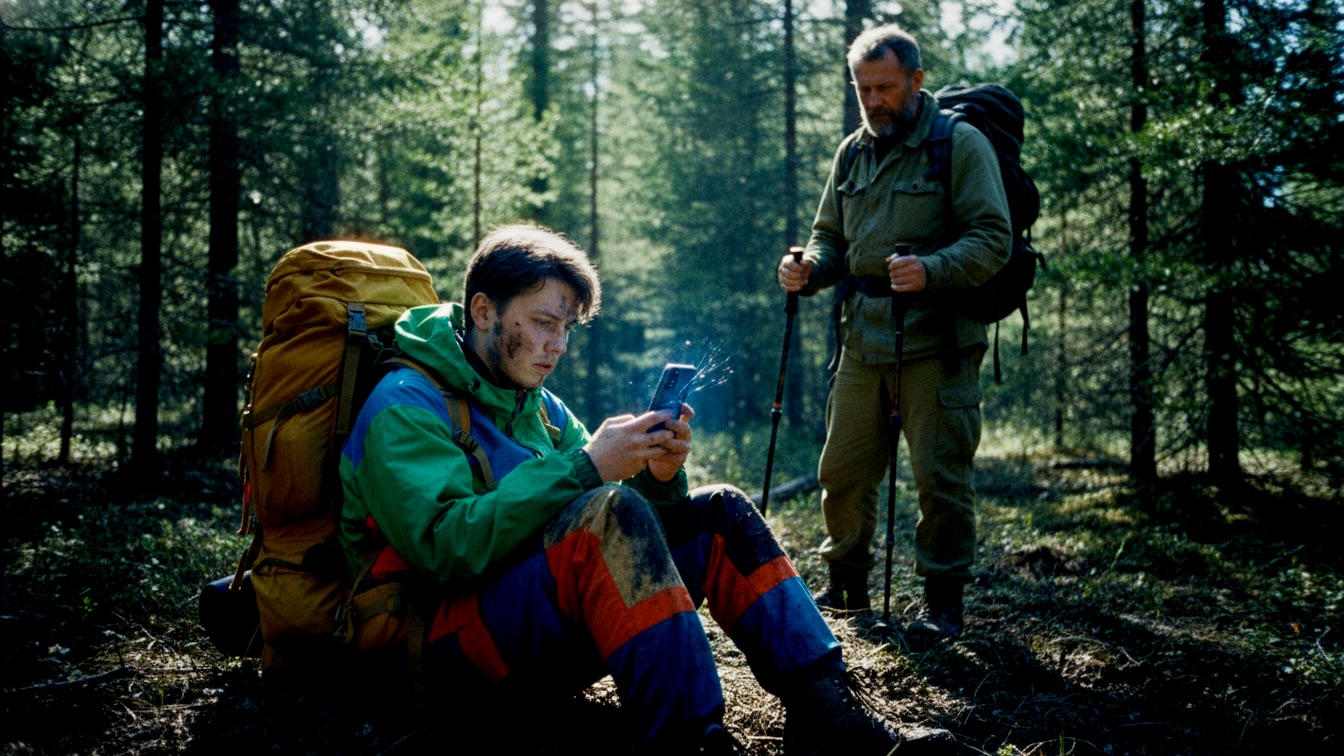
A frantic counselor collapses into freezing Boreal mud, ignoring the roar of a departing helicopter to thrust a cracked smartphone toward a bruising sky like a desperate sacrifice to a dead god.
A social-media-addicted therapist leads a wilderness detox program only to suffer a life-threatening breakdown when separated from their digital tether. In the heart of a storm, they must choose between a raw human connection with an ex-lover or the hollow, intoxicating glow of a screen.
The primary theme is the parasitic nature of digital validation and how it hollows out the capacity for genuine intimacy. It explores the "behavioral sink" of the dopamine loop, contrasting the visceral, painful reality of the physical world—blood, mud, and cold—with the curated, numbing safety of the digital one.
The story also examines the "Anxious-Avoidant Trap" through the lens of Sam and Jordan’s failed relationship. It posits that while technology provides a constant stream of noise for the anxious, the wilderness provides a dangerous silence for the avoidant, leaving both parties unable to meet in the middle.
For Sam, the stakes are both physical survival and psychological integrity; the addiction threatens to permanently sever their ability to relate to other humans in real-time. For Jordan, the stakes involve the emotional labor of saving someone who may be fundamentally unreachable, risking their own hard-won peace to provide a lifeline that Sam might ultimately discard for a notification.
The external conflict is the hostile Boreal environment—the mud, the freezing sleet, and the isolation—which acts as a catalyst for the internal struggle. The primary antagonist is Sam’s own neurochemistry, a dopamine-starved brain that perceives a lack of internet access as a literal threat to existence. This creates a friction-filled dynamic with Jordan, whose "off-the-grid" purism acts as a judgmental mirror to Sam's pathetic state of withdrawal.
Sam and Jordan, ex-partners with opposing views on connectivity, lead a group of troubled teens into the Canadian wilderness for a mandatory digital detox. While Jordan thrives in the harsh, muddy environment, Sam spirals into a physical and psychological withdrawal, culminating in a reckless attempt to climb a slick shale cliff during a violent sleet storm just to find a single bar of cell service.
The attempt ends in a violent fall and a debilitating leg injury, forcing Jordan to rescue Sam and seek shelter in a cramped yellow nylon tent. Inside, the two reach a breaking point of raw honesty, stripping away years of resentment to find a moment of true, unmediated human connection. However, as the rescue helicopter lifts them back toward civilization the next morning, the return of a cell signal proves that the addiction is far stronger than the momentary human epiphany.
Sam (Protagonist): A high-functioning addict of digital validation who uses social media to mask a deep-seated fear of being unperceived. At the start, Sam is a vibrating nerve ending of anxiety, unable to focus on the safety of the group; by the end, despite a moment of profound clarity in the tent, they succumb entirely to the "hit" of the returning signal, showing a tragic lack of permanent growth.
Jordan (Deuteragonist): An avoidant survivalist who uses the wilderness as a shield against the messy demands of emotional intimacy. Jordan begins as a stoic, judgmental figure who lacks empathy for the "digital" generation, but ends as a vulnerable caretaker who realizes their own silence was a form of abandonment.
Benji & Chloe (Supporting): Members of the Wilderness Therapy cohort who serve as mirrors for Sam’s condition. Benji’s physical "scrolling" tics and Chloe’s superficial concerns highlight the generational reach of the addiction Sam is supposed to be curing.
The Drop: Sam hits the freezing mud as the helicopter departs, immediately prioritizing a desperate signal check over the safety of the group or their own freezing feet. Jordan effortlessly navigates the terrain, highlighting the immediate power imbalance and Sam’s total lack of presence in the physical world. The scene establishes the "phantom vibration syndrome" that will haunt Sam throughout the trek.
The Trek: As the group moves through the oppressive, clawing forest, Sam’s internal withdrawal manifests as physical irritability and a heated argument with Jordan over "avoidance tactics." Benji collapses in the mud, suffering a panic attack that Sam recognizes as a reflection of their own starving brain. The tension peaks as the sky turns black and a violent spring storm begins to lash the clearing.
The Breaking Point: Driven by irrational desperation, Sam abandons the group during the chaos of setting up camp to climb a slick, thirty-foot shale wall in search of a signal. Jordan screams for Sam to get down, but the addiction is louder than the storm, leading to a moment of absolute despair when the phone remains dead. Sam’s boot slips on the ice, leading to a violent twelve-foot fall into a thicket of thorns.
The Yellow Tent: Jordan hauls a bleeding, screaming Sam into the cramped shelter, where the noise of the storm is muffled by thin yellow nylon. As Jordan treats a jagged leg wound with iodine, the physical pain strips away Sam’s defenses, leading to a brutal verbal confrontation about their failed relationship. They move from anger to a moment of raw, touch-based reconciliation, holding each other as the storm rages outside.
The Extraction: At dawn, the Boreal forest is silent and beautiful, and Sam appears grounded and present for the first time, sharing a soft smile with Jordan. They are loaded into the rescue helicopter, and as they climb above the tree line, the silence is shattered by a cascading waterfall of notification pings. The grounded Sam vanishes instantly, replaced by the addict who lunges for the phone and ignores Jordan’s voice.
The Final Frame: The helicopter flies toward the horizon while Sam stares into the cracked, glowing screen, their face illuminated by a sickly blue light. Jordan watches from the seat next to them, the headset crackling with a silence that is now permanent. The camera pulls back to show the vast, beautiful wilderness being ignored for the sake of a few pixels.
The episode begins with high-frequency anxiety and sensory overload, creating a feeling of frantic claustrophobia despite the vast setting. It transitions into a high-stakes survival thriller during the storm, peaking with the visceral, white-hot pain of Sam’s injury. The midpoint in the tent shifts the mood to a somber, intimate chamber drama, providing a brief respite of warmth and hope before the finale delivers a cold, cynical gut-punch that leaves the audience feeling hollow.
If expanded, the season would follow Sam’s gradual descent as they attempt to balance a professional life in therapy with a private life that is increasingly unravelling due to digital obsession. Each episode would introduce a new "client" or "cohort" whose specific digital pathology—from crypto-paranoia to influencer dysmorphia—mirrors Sam’s own, creating a hall of mirrors effect that questions the validity of modern mental health treatment.
The season finale would see Sam reaching a point of total digital psychosis during a high-profile media event, leading to a permanent exile from the "connected" world. Jordan would serve as the recurring foil and "ghost," the person Sam constantly reaches for through a screen but can never truly hold onto because the digital "mirror" always comes first.
The visual style is "Aggressive Realism," utilizing handheld cameras and tight, shallow-focus close-ups to emphasize Sam’s internal agitation and the tactile filth of the forest. The color palette transitions from the muddy, desaturated grays and greens of the Boreal woods to the sickly, high-contrast blue light of the smartphone screen, which should feel like an alien artifact in the wilderness.
The tone is a blend of The Revenant’s environmental brutality and Black Mirror’s technological cynicism. Sound design is the most critical element, contrasting the deafening, organic roar of the rotors and the storm with the sharp, artificial "ping" of notifications that eventually drowns out human speech.
The target audience is adults (18-45) who are "chronically online" and enjoy psychological thrillers that critique modern social habits. It appeals to viewers of prestige anthology dramas like The White Lotus or Severance, as well as those interested in the intersection of mental health, addiction, and the outdoors.
The pacing is frantic and breathless for the first six minutes, mirroring the rhythm of a panic attack. It slows significantly during the tent sequence to allow the emotional weight of the dialogue to settle, creating a false sense of security. The final two minutes accelerate into a quick, clinical conclusion, mimicking the rapid-fire nature of a social media feed.
The yellow nylon tent is the central visual motif and must be lit to feel both like a sanctuary and a cage, using the yellow fabric to warm the skin tones of the actors against the cold blue exterior. Practical effects for the sleet and mud are essential to ground the performance in physical misery, ensuring the audience feels the cold.
The smartphone interface should be rendered with a subtle, supernatural glow to emphasize its role as Sam's "dead god." The cliff fall requires a stunt coordinator but can be achieved through clever framing to minimize height requirements while maximizing the impact of the landing in the scrub brush.


