Format: Short Film / Anthology Episode | Est. Length: 10-12 minutes
Imagine this story as a standalone installment of a high-concept horror anthology series titled The Static, where each episode explores a different modern anxiety manifesting as a predatory supernatural force. In this world, the psychological weight of the digital age creates "thin places" in suburbia—locations like the Eastside Community Garden where entities feed on the desperate need for silence.
The Static is an anthology series focused on the hidden, parasitic ecosystems that thrive in the cracks of modern urban and suburban life. Each episode features a different protagonist encountering a "fixer" or a "sanctuary" that promises relief from digital burnout, social pressure, or grief, only to reveal a high-stakes cost. The overarching narrative suggests a world where human consciousness is being harvested by entities that mimic our forms but lack our humanity, leaving behind small, physical artifacts like yellow nitrile shards as the only evidence of their existence.
Lucy’s phone dies at 3:14 PM, plunging her into a sensory-overload panic attack as the silence of the suburbs becomes a physical weight. She seeks refuge in a hidden community garden where the air is unnaturally pure and the digital noise of her life instantly vanishes.
A tech-fatigued teenager seeks refuge in a mysterious community garden only to find a gardener who harvests human trauma. She must decide if the crushing weight of her digital life is worth more than her physical survival.
The primary theme is the burden of connectivity and the psychological toll of the "always-on" culture. It explores how the desperation for peace can make an individual vulnerable to predatory forces that offer a false sense of tranquility. The story posits that the "noise" of reality—pain, stress, and chaos—is actually a fundamental component of being alive.
The secondary theme is the deceptive nature of modern "wellness" and isolation. The garden represents a curated, artificial peace that requires the burial of one's history and identity to maintain. By framing the antagonist as a gardener, the story subverts the idea of growth, suggesting that some things are planted not to bloom, but to be consumed.
Lucy risks losing her identity and her physical life to a supernatural entity that feeds on human misery and "weight." If she surrenders her phone and her trauma to Devon, she becomes part of the garden’s literal foundation, feeding the "late bloomers" trapped beneath the soil. For Devon, the stake is the continued sustenance of the garden, which requires a constant influx of human "regrets" to keep the predatory ecosystem thriving.
The internal conflict is Lucy’s profound digital burnout and her desire to escape the overwhelming pressure of her failing phone and social expectations. Externally, she faces Devon, a supernatural predator disguised as a cool, detached peer who uses the promise of tranquility to harvest souls. The environment itself acts as a secondary antagonist, as the garden’s "pure" atmosphere creates a sedative effect that makes it difficult for Lucy to recognize the physical danger she is in.
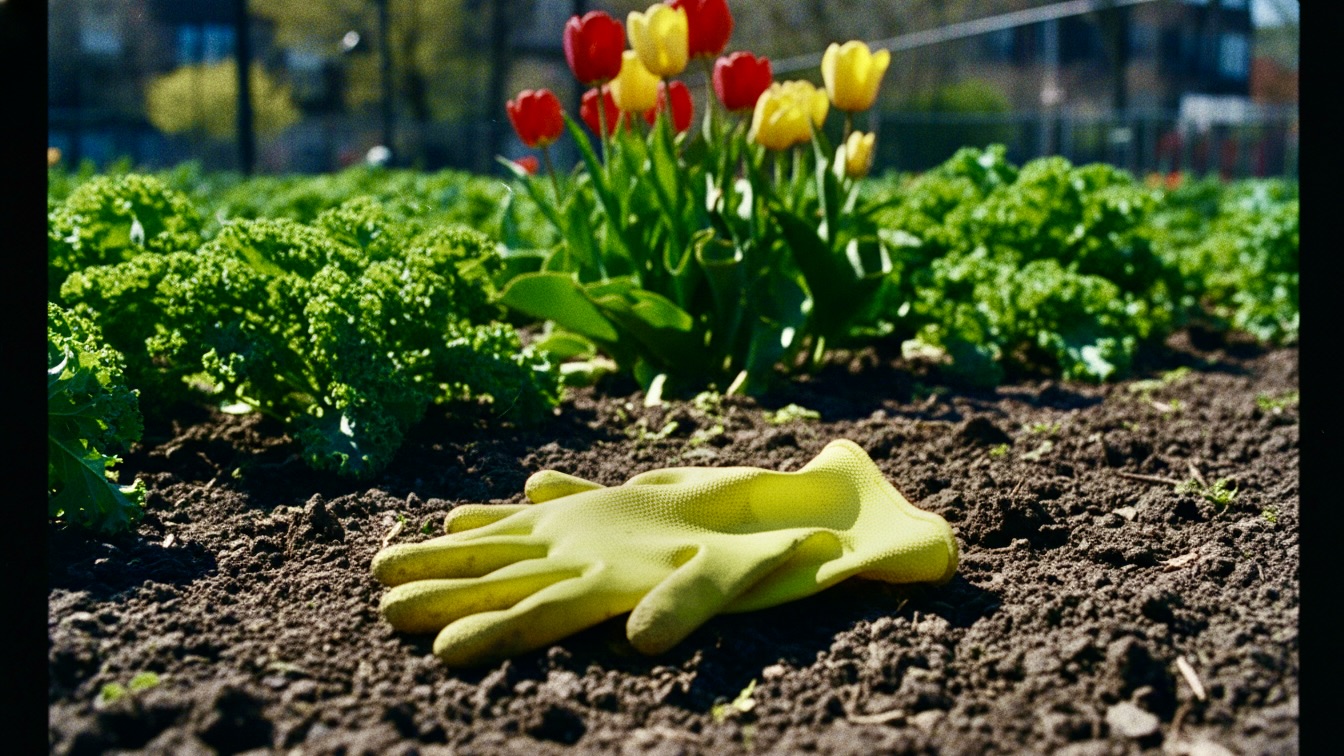
Lucy, overwhelmed by the digital noise of her failing phone and a recent panic attack, stumbles into the Eastside Community Garden, a vacant lot that feels like an atmospheric vacuum. There she meets Devon, a gardener in pristine yellow nitrile gloves who claims to "fix" people by burying their regrets and digital weights in the soil. The air in the garden is unnaturally clear, providing Lucy with an addictive sense of relief that masks the growing strangeness of Devon’s pale, empty eyes and his knowledge of her private thoughts.
As Devon’s demands for her phone turn from helpful suggestions into cold, rhythmic threats, Lucy notices the garden is not growing vegetables, but human remains. She sees a twitching finger emerging from the dirt and realizes the "peace" she feels is the result of the garden consuming its visitors. She narrowly escapes by jumping into a gravel alley, where the return of the world’s noise and pain confirms her survival, though she discovers her phone has been taken and a piece of Devon’s yellow glove is now embedded in her skin.
Lucy: At the start, Lucy is a hyper-anxious, digitally-dependent teenager on the verge of a total psychological collapse, characterized by her white-knuckled grip on a dead phone. By the end, she has undergone a terrifying shift in perspective, accepting the "static" and pain of reality as a vital sign of life. She is a survivor who carries a literal and metaphorical scar from her encounter with the garden.
Devon: An ageless, predatory entity disguised as a nineteen-year-old man, Devon is the "tender" of the garden who mimics human cool to lure in the stressed and weary. He is characterized by his fluid, unnatural movements, pale eyes, and his signature yellow nitrile gloves which never get dirty. He lacks empathy, viewing human trauma as a nutrient-dense fertilizer for the horrors he grows beneath the raised beds.
The Death of the Phone: Lucy’s phone dies in the middle of a suburban street, triggering a sensory-overload panic attack as the silence feels like a physical weight pressing against her eardrums. She wanders into the Eastside Community Garden, where the atmosphere shifts instantly from oppressive noise to a crystalline, unnatural clarity that makes her chest stop feeling tight. The transition is marked by the click of the chain-link gate, signaling her entry into a different reality.
The Meeting: Lucy encounters Devon, a gardener wearing suspiciously clean yellow gloves who claims to "fix" things by burying what people shouldn't be growing. He correctly identifies her broken phone as a source of "weight" and offers to bury it to make her feel lighter forever, smelling of ozone and copper rather than dirt. Lucy is initially seduced by the offer, feeling a dangerous lightness that makes her want to surrender her burdens to him.
The Escalation: Devon’s charm turns clinical and cold as he demands the phone, revealing a hole where a human finger twitches in the dirt, trying to poke through the surface. Lucy realizes the garden is not a sanctuary but a digestive system for the broken, and Devon is its primary tender who needs "more weight" to keep the things below buried. The oxygen in the garden starts to feel thin and mountain-top pure, making Lucy realize she cannot survive in this environment for long.
The Chase: When Lucy refuses to hand over the phone, Devon’s appearance begins to distort, his skin tightening over his skull and his yellow gloves beginning to bleed a radioactive hue. She flees through the garden, scrambling over wooden pallets as the sound of snapping nitrile gloves echoes right behind her ear despite her lead. Devon doesn't run; he simply appears at each turn, his voice sounding like a shovel hitting rock as he offers to "bury the fear."
The Escape: Lucy reaches the back wall and leaps from a ten-foot drop into a gravel alley, the sudden return of city noise and physical pain signaling her return to the real world. Though she is safe, she discovers her phone has vanished from her pocket despite there being no holes in the fabric. She looks down to find her hands shaking and a tiny, jagged piece of bright yellow nitrile stuck deep under her thumbnail.
The episode begins with high-frequency anxiety and sensory claustrophobia, creating a feeling of frantic desperation in the audience. This transitions into a sedative, dreamlike calm as Lucy enters the garden, providing a false sense of relief that slowly curdles into uncanny dread. The final act is a descent into visceral, body-horror terror, ending with a bittersweet return to reality that feels both exhausting and profoundly grounding.
The season follows a low-level investigation by a local journalist who begins noticing a pattern of "missing" people whose last known locations were community gardens, meditation centers, and sensory deprivation tanks. As the season progresses, the journalist discovers that these locations are all connected to a single "landscaping" firm that employs individuals wearing identical yellow nitrile gloves.
The thematic escalation involves the realization that the digital age has made humans so desperate for silence that they are willingly walking into these traps. The season finale would reveal that the "Static" is not just a supernatural phenomenon but a deliberate thinning of reality designed to harvest human consciousness on a massive scale. Lucy would reappear as a recurring character, her "yellow shard" acting as a tracking device or a sensory link to the entity's realm.
The visual style utilizes high-contrast cinematography, shifting from the muddy, oversaturated, and handheld "shaky-cam" look of the suburbs to a hyper-stable, wide-angle, and desaturated palette inside the garden. The garden scenes should look "too perfect," with the greens of the kale and the yellow of the gloves appearing to glow with an internal, unnatural light.
The tone is a blend of It Follows and The Twilight Zone, emphasizing atmospheric dread and the "uncanny valley" over traditional jump scares. The sound design is crucial, moving from a chaotic wall of suburban noise to an unnaturally clean, high-frequency hum inside the garden, and finally to the rhythmic, wet "snap" of the nitrile gloves during the chase.
The target audience is Gen Z and Millennials (ages 18-35) who experience high levels of "digital burnout" and "tech-anxiety." These viewers will resonate with the protagonist's desire to escape the constant noise of notifications and social pressure. The episode appeals to fans of elevated horror and anthology series who enjoy social commentary wrapped in supernatural metaphors.
The episode is paced as a "slow-burn" for the first seven minutes, allowing the audience to feel the same seductive relief that Lucy feels upon entering the garden. The tempo shifts violently at the eight-minute mark when the "finger" is revealed, transitioning into a frantic, high-tempo chase for the final three minutes. The 10-12 minute runtime ensures that the tension remains taut without overstaying the welcome of the central conceit.
The yellow nitrile gloves are the most important visual element and require either a specific fluorescent paint or post-production color grading to ensure they look "radioactive" and unnatural. The "finger in the dirt" should be achieved through practical effects—a prosthetic finger controlled from beneath the garden bed—to maintain the grounded, visceral horror of the scene.
The transition from the suburbs to the garden can be enhanced through a subtle color grade shift and the use of a different lens kit to change the depth of field. Production should prioritize a location that feels isolated despite being in an urban setting, such as a lot surrounded by high, blank walls, to emphasize the feeling of being trapped in a "pure" vacuum.


