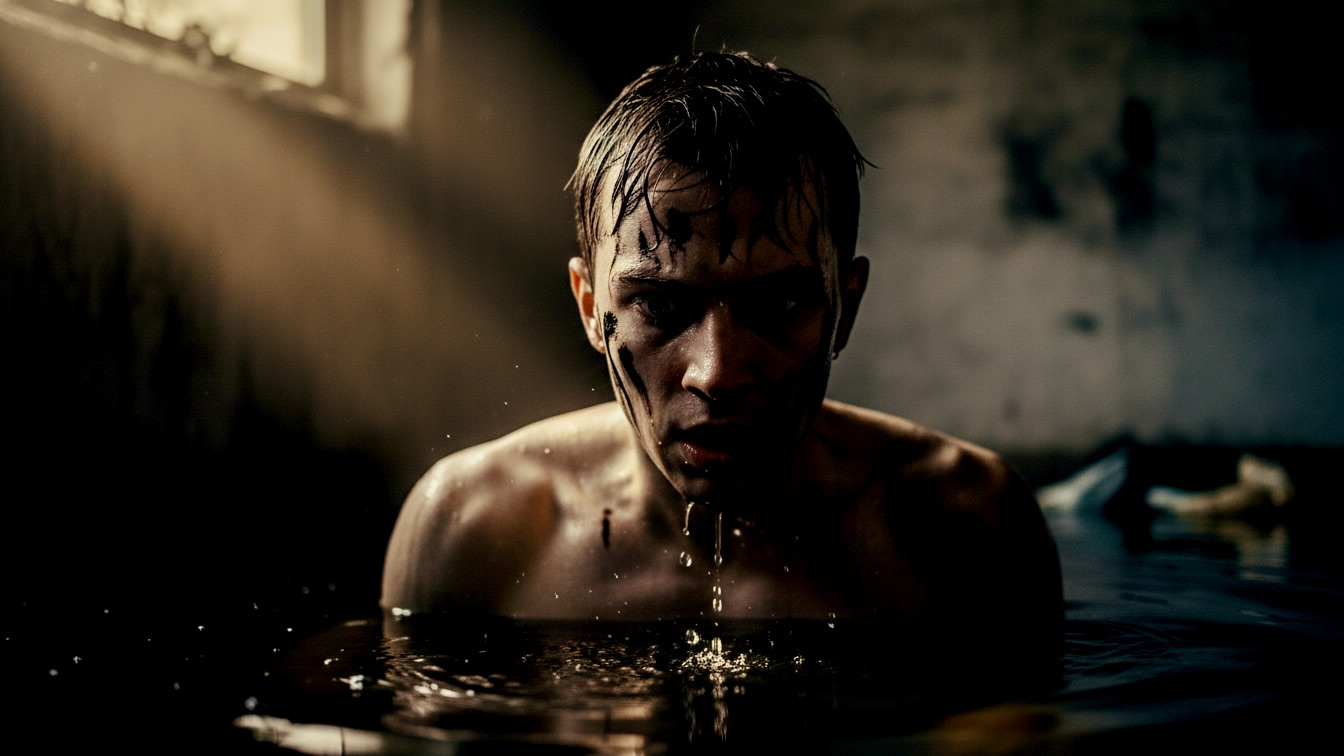
Format: Short Film / Anthology Episode | Est. Length: 10-12 minutes
Imagine a world where the changing seasons bring not renewal, but a visceral test of human morality and survival. This story serves as a harrowing entry in a series that explores the collapse of small-town structures when faced with environmental catastrophe, forcing characters to choose between radical self-preservation and the heavy cost of communal mercy.
Set in a near-future where rural isolation has led to the rise of radical self-reliance ideologies, the anthology series The Toll follows various communities grappling with "The Thaw." Each episode examines a different settlement facing a specific ecological or social breaking point, linked by the recurring theme of how far people will go to preserve their perceived autonomy. The overarching narrative tracks the gradual breakdown of the state's ability to intervene, leaving these valleys to become lawless experiments in survival where the environment acts as both judge and executioner.
A violent spring thaw unleashes toxic industrial runoff into a remote town's only water source, turning the long-awaited relief of spring into a lethal epidemic of black vomit and organ failure.
When a radical town elder sabotages the community's water filtration to force a brutal "survival of the fittest" evolution, a desperate young man must fight through freezing floodwaters to reclaim the only radio that can call for help. He must choose between the vengeance of a killer and the mercy of a savior while his brother dies from the very poison his leader unleashed.
The primary theme explores the "Purge vs. Preservation" dichotomy, questioning whether human resilience is built through forced hardship or communal support. It delves into the corruption of leadership, where Stefan’s ideology of "closed systems" serves as a mask for psychopathic neglect and a desire for absolute control over a weakened population.
The secondary theme focuses on the loss of innocence and the weight of moral choice under pressure. Edmund is forced to embrace the same violence he despises to save what remains of his family, ultimately discovering that surviving the environment is secondary to surviving the darkness within one's own community.
For Edmund, the stakes are deeply personal: the life of his younger brother and the thirty other sick residents of the valley who have no other hope for medical evacuation. For the town, the stakes are existential, as Stefan’s refusal to seek outside help threatens to wipe out the "weak" and leave the survivors in a state of primitive, radicalized isolation. Edmund’s own soul is also at risk; if he kills Stefan in the basement, he validates the elder's belief that only the most brutal deserve to lead.
The external conflict is a man-versus-nature struggle against the freezing, toxic flood and a man-versus-man battle against Stefan’s physical and ideological blockade of the radio. Internally, Edmund battles the paralyzing cold and the seductive urge to commit murder when he discovers the filtration system was intentionally destroyed. Stefan represents the antagonistic force of radical isolationism, viewing the outside world as a threat to the valley’s "purity" and using the environmental disaster as a tool for social engineering.
In a valley choked by a sudden, toxic spring thaw, Edmund discovers that the town’s water supply has been poisoned by runoff from an abandoned battery plant. As residents—including Edmund’s younger brother—begin dying from black vomit and tremors, Edmund treks to the flooded pioneer church to find Stefan, the town elder, and the keys to the emergency radio. He discovers the basement is fully submerged, and Stefan has not only refused to call for help but has physically destroyed the town’s filtration blocks to "purge" the weak from the community.
A brutal physical confrontation ensues in the freezing, knee-deep water of the church basement. Edmund nearly drowns Stefan in the toxic sludge, fueled by the realization that the elder deliberately murdered his neighbors to satisfy a twisted ideology of resilience. Ultimately, Edmund chooses mercy over murder, snatching the keys from Stefan’s neck and leaving the broken old man behind as he climbs toward the radio to signal the outside world.
Edmund (Protagonist): Starts as a desperate, terrified survivor driven by familial love, but ends as a hardened pragmatist who has looked into the abyss of his own capacity for violence. His psychological arc moves from reactive fear to a controlled, righteous fury that allows him to overcome both the environment and his mentor. He represents the bridge between the old world of empathy and the new world of brutal survival.
Stefan (Antagonist): A radicalized traditionalist whose obsession with autonomy has curdled into a genocidal "survival of the fittest" philosophy. He remains static in his delusion, ending the story as a pathetic, defeated figure shivering in the very poison he championed. He serves as a cautionary tale of how isolation can warp leadership into tyranny.
Beat 1: Edmund wades through the "rotting heat" of the valley, witnessing the black, oily meltwater flooding the churchyard and reflecting on the dying townspeople in the gymnasium. He enters the decaying St. Jude’s church, a "rotting wooden carcass," and heads for the flooded basement where the only link to the outside world is kept. The atmosphere is thick with the smell of sulfur and the weight of a community already half-buried by toxic runoff.
Beat 2: Descending into the freezing water, Edmund finds Stefan standing on a pallet island, calmly overseeing the destruction. The tension peaks as Edmund discovers the smashed carbon filters and the bypass hose, realizing the contamination was a deliberate act of sabotage by the man the town trusted. Stefan justifies the mass poisoning as a necessary "purge" to ensure the valley’s future strength, sparking a primal shift in Edmund’s resolve.
Beat 3: The confrontation turns violent as Edmund lunges for the keys, leading to a desperate struggle in the liquid ice of the basement floor. Edmund nearly drowns Stefan in the toxic runoff but pulls back at the last second, choosing to reclaim the keys and his humanity before ascending the stairs to make the call. As he climbs out of the dark, the clinking of the brass keys serves as the only sound against the backdrop of a broken man left in the rising tide.
The episode begins with a sense of suffocating dread and sensory revulsion, emphasizing the smell of sulfur and the sight of black water. It transitions into a sharp, cold adrenaline during the basement confrontation, peaking with a moment of moral crisis during the near-drowning. The final mood is one of grim, exhausted hope—the protagonist has the keys, but the cost of the "toll" is etched into his psyche, leaving the audience with a lingering sense of unease about the future of the valley.
If expanded, the season would follow the arrival of the state authorities and the subsequent clash between the "resilient" survivors who sided with Stefan and the "weak" who were saved by Edmund. The thematic escalation would explore the aftermath of the "purge," as the town becomes a site of federal investigation and internal civil war.
Edmund would evolve into a reluctant leader, haunted by his actions in the basement while trying to protect his recovering brother from the lingering influence of Stefan’s ideology. The season would culminate in a second "thaw" where the community must decide if they will rebuild their old dependencies or find a new, more humane way to live in their poisoned valley.
The visual style is "Industrial Gothic," characterized by high-contrast lighting, a desaturated color palette of grays, blacks, and muddy browns, and a claustrophobic camera style. The tone is unrelenting and visceral, emphasizing the physical sensations of the cold and the metallic taste of the air to immerse the audience in the environmental horror.
Cinematic influences include the bleak, grounded atmosphere of Winter's Bone and the claustrophobic, high-tension physical struggle of Green Room. The use of macro shots—focusing on the oily surface of the water and the rusted iron of the church—will heighten the sense of decay and contamination.
This is intended for fans of prestige survival dramas and ecological thrillers, targeting an adult audience (18-45) who appreciate dark, character-driven narratives with high stakes. It fits within an anthology format similar to Black Mirror or The Last of Us, appealing to viewers who enjoy exploring the darker side of human nature in extreme conditions.
The pacing is a "slow burn to explosion," with the first five minutes dedicated to building the sensory atmosphere and the scale of the tragedy. The midpoint occurs when Edmund enters the water, shifting the tempo into a high-tension thriller for the final five minutes. The structure follows a classic three-act short form: the approach, the revelation/struggle, and the ascent.
Practical Effects: The "black water" must be carefully managed to ensure actor safety while maintaining a thick, oily appearance using non-toxic dyes. The church basement set requires a water tank setup with temperature control for the actors, despite the narrative's "freezing" requirement, to allow for the extended physical struggle.
Sound Design: The soundscape is critical to the episode’s impact, focusing on the "tearing meat" sound of mud, the metallic hum of the air, and the distorted, gargling acoustics of the underwater struggle. These auditory details will heighten the sensory horror and emphasize the protagonist's isolation within the flooded church.


