Format: Short Film / Anthology Episode | Est. Length: 10-12 minutes
This episode functions as a standalone entry in a gritty, urban-realist anthology series titled Concrete Roots, which explores the intersection of youth resistance and gentrification in rapidly decaying metropolitan landscapes. Each episode focuses on a different pocket of the city where marginalized individuals fight to preserve fragments of history, nature, or community against the encroaching, sterile development of a faceless corporate machine.
At 5:02 AM, a red notification pings on Dan’s phone: "Site Clearing Scheduled: 48 Hours," signaling the imminent destruction of his grandfather’s secret urban garden. Standing amidst the damp, skeletal remains of heirloom roses in Lot 42, Dan realizes he has two days to prove the land’s botanical significance or lose the last physical connection to his family legacy.
A desperate teenager and his tech-savvy friend race against a forty-eight-hour demolition deadline to revive a forgotten, historical garden. They must navigate bureaucratic red tape and physical exhaustion to prove the site’s worth before the city replaces it with a parking garage.
The episode explores the tension between rapid urban modernization and the preservation of personal and historical memory. It highlights the struggle of the younger generation to find authenticity in a world defined by digital burnout and corporate homogenization.
The narrative also touches upon the resilience of the natural world and the human spirit, framing the act of gardening as a form of quiet, manual protest. It emphasizes that sometimes the most radical act one can perform is to keep something living in a place that has been marked for death.
If Dan and Gina fail to restore the irrigation and ecological sensors by Thursday morning, the city will authorize the demolition of Lot 42, permanently erasing his grandfather’s work. Beyond the loss of the land, Dan risks a total psychological collapse, as the garden represents his primary tether to his heritage and his own sense of purpose in a world that feels increasingly fake.
The primary conflict is an external battle against time, corporate bureaucracy, and the physical decay of the lot’s infrastructure. Internally, Dan struggles with anxiety and the feeling of helplessness, battling the urge to give up as he faces a developer who views the land only as an asset to be cleared.
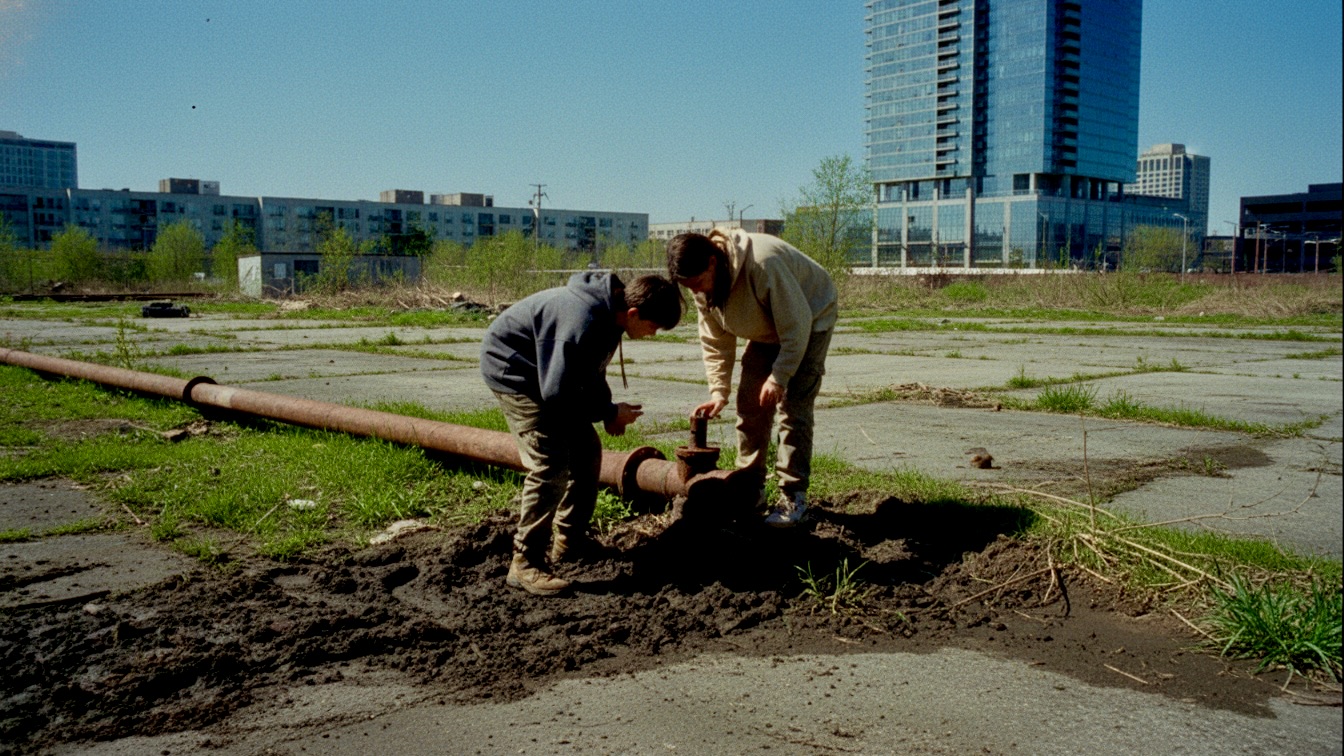
Dan and his friend Gina arrive at Lot 42, a neglected urban space, to initiate a desperate, last-minute restoration project. They work through the night to repair a rusted, ancient irrigation system and recalibrate proprietary soil sensors, knowing that a city inspector’s approval is the only thing that can halt the demolition.
As they labor in the mud, they face the intrusion of a developer’s drone and the arrival of a suspicious scout, pushing their physical and emotional limits to the brink. By the time the inspector arrives for an early assessment, the garden shows signs of life, providing a glimmer of hope that the site might be saved from the wrecking ball.
Dan: A seventeen-year-old struggling with anxiety and the weight of his grandfather's legacy. He begins the episode paralyzed by tension and doubt, but evolves into a focused, gritty activist who finds his voice through the physical labor of reviving the roses.
Gina: Dan’s pragmatic, tech-savvy friend who provides the necessary skills to bypass the lot’s broken systems. She is cynical about the world but deeply loyal, moving from a state of weary skepticism to becoming a steadfast partner in Dan’s fight to save the garden.
The opening beat establishes the ticking clock as Dan discovers the demolition notice and meets Gina, setting the tone of impending doom. They move to the shed to force open the rusted water main, a grueling physical struggle that serves as the first victory in their campaign.
The midpoint occurs when the irrigation system finally triggers, spraying the dead roses with water and signaling a successful, albeit temporary, revival of the site. They then race to fix the soil sensors, fighting against the encroaching night and their own exhaustion to ensure the city portal registers the lot as active.
The climax arrives when the city scout appears at the gate, forcing Dan to confront the representative of the system he is fighting. The inspector leaves without issuing a final rejection, leaving the fate of the lot in a state of suspended animation that provides a fragile, hard-won victory.
The episode begins with a cold, anxious, and gray atmosphere, reflecting Dan's internal state of burnout. As the work progresses, the mood shifts from frantic desperation to a grounded, rhythmic sense of purpose, ending on a note of cautious, defiant hope as the sun rises over the garden.
If expanded, the season would follow Dan and Gina as they become "site guardians," moving from one threatened location to another to help other residents fight demolition. Each episode would introduce a new environmental or historical challenge, gradually building a city-wide network of youth activists.
The overarching arc would track the developer’s escalating tactics to clear the lots, forcing the protagonists to move from simple repairs to full-scale political and legal warfare. The series would culminate in a city-wide confrontation where the "gardens" become symbols of a larger movement to reclaim the city from corporate control.
The visual style is defined by high-contrast, desaturated urban imagery that emphasizes the textures of rust, mud, and decaying concrete. The camera work is handheld and intimate, capturing the tactile nature of the gardening process and the frantic movements of the characters.
The tone is grounded and gritty, avoiding melodramatic tropes in favor of a raw, "sweat-and-dirt" realism. Influences include the quiet intensity of The Florida Project and the urban-resistance aesthetic of Children of Men, focusing on the beauty found in the forgotten corners of a modern city.
The target audience is young adults and adults (16-35) who are interested in social justice, environmentalism, and character-driven dramas. It is intended for streaming platforms that prioritize indie-style, atmospheric storytelling and social commentary.
The pacing is deliberate and rhythmic, mirroring the slow, manual labor of gardening punctuated by sudden bursts of high-tension, time-sensitive tasks. The structure follows a tight three-act progression, with the runtime kept to a brisk 10-12 minutes to maintain the urgency of the forty-eight-hour countdown.
The production should prioritize practical effects for the garden and the irrigation system to enhance the sense of tangibility and realism. The "skeletal" roses should be designed with a distinct, haunting aesthetic that makes their potential blooming feel like a genuine, miraculous event.
Lighting should be used to differentiate between the cold, blue-tinted early mornings and the warm, golden light of the final sunrise. Sound design is critical; the contrast between the oppressive, mechanical hum of the city and the organic, wet sounds of the garden will be the primary driver of the audience's emotional immersion.


