Format: Short Film / Anthology Episode | Est. Length: 10-12 minutes
Imagine a world where the surreal is mundane and the survival of existence hinges on household appliances; this story serves as a meta-textual anchor for a series that blurs the line between the viewer and the viewed.
Set in a "Post-Logic" reality, the series follows "Stabilizers" who maintain the fabric of the universe using mundane items modified with impossible technology. Each episode explores a different "Glitch" in reality, focusing on the heavy toll of being the only ones who know the world is a construct maintained by the attention of an external audience. The overarching narrative explores the erosion of the boundary between the characters' survival instincts and the audience's demand for constant conflict.
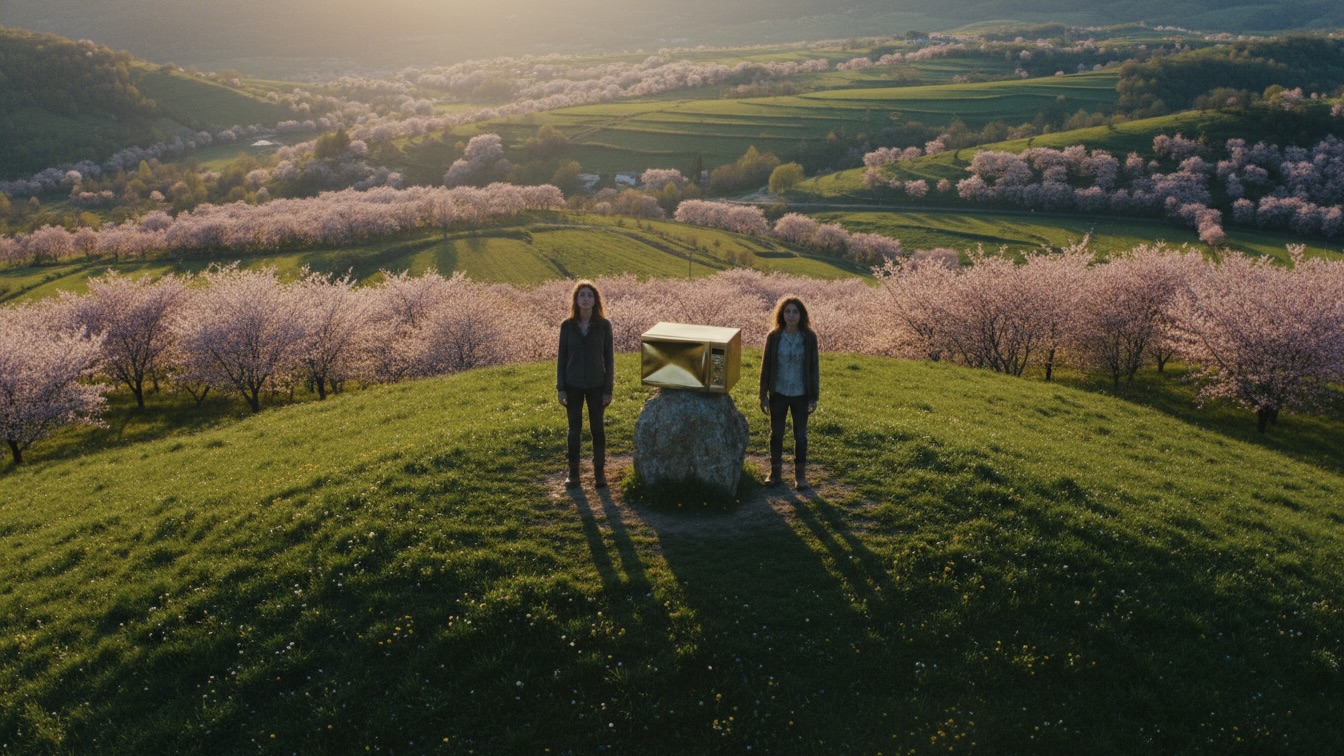
Two exhausted survivors reach a mountain ridge to find a gold-plated 1998 microwave that holds the sky together. The tension peaks as the machine stops humming, threatening to let the world turn inside out.
Two weary reality-fixers complete a grueling mission only to confront the invisible audience that has been watching their every move. Their brief moment of peace is shattered when a cracked pager signals that the cycle of observation and danger must begin anew.
The primary theme is the burden of observation, exploring how the presence of an "audience" validates existence but prevents true rest. It posits that being "seen" is a requirement for reality to function, turning the act of viewing into a form of cosmic energy that the characters both resent and rely upon.
Secondary themes include the absurdity of heroism and the persistence of the mundane. In this world, the most important objects in the universe are discarded relics of a consumerist past, suggesting that meaning is derived not from the object itself, but from the struggle to preserve it against entropy.
If the microwave fails, reality "turns inside out," ending existence for the characters and their world. On a personal level, Leo and Sarah risk losing their sanity and their humanity to the endless, grinding cycle of missions required to keep the "eyes" of the audience fixed upon them; if the audience looks away, they cease to exist.
The primary external conflict is the entropic decay of reality, represented by the "Object" needing stabilization against a backdrop of a world that is literally coming apart. Internally, the characters battle profound exhaustion and the existential dread of being "characters" in a story they cannot escape. This creates a meta-conflict between the protagonists and the audience's inherent demand for more content, which forces the characters back into danger just as they achieve peace.
Leo and Sarah reach a desolate ridge after a four-hour climb, carrying the weight of a world on the brink of collapse. They monitor a gold-plated industrial microwave—a reality-stabilizing device—until it successfully "dings," signaling a temporary reprieve from a global cataclysm. Amidst their physical exhaustion, Leo acknowledges a "heavier gaze" from beyond their world, leading to a direct confrontation with the invisible audience.
The two share a moment of meta-textual gratitude with the viewers, acknowledging that the audience's focus is the only thing keeping them from fading into dust. They attempt to retire to a nearby farmhouse for a life of quiet normalcy, but the peace is short-lived. A pager alert forces them back into action, proving that in a narrative-driven universe, the protagonists are never allowed to truly stop walking.
* Leo: A man defined by physical discomfort and existential awareness, Leo begins the story in a state of "bone-deep" fatigue, hyper-focused on a pebble in his boot as a distraction from the cosmic stakes. By the end, he transitions from a weary servant of the plot to a self-aware participant who accepts his role as a focal point for the audience, choosing to continue the journey despite his desire for rest.
* Sarah: Pragmatic and scarred, Sarah is the grounding force who treats the end of the world with the same dry detachment as a household chore. She starts as a cynical survivor focused purely on the mechanical success of the mission but ends with a rare, tired smile, offering the audience a moment of genuine connection before lacing her boots back up for the next crisis.
* Beat 1: Leo and Sarah reach the ridge, their physical toll emphasized by the "green sandwich" memory and the agonizing pebble in Leo's boot. The gold-plated microwave sits precariously on a rock, its silence indicating the mission's completion while the characters collapse in a state of vibration-heavy exhaustion. The atmosphere is thick with the smell of wild garlic and the realization that the sky has not turned inside out.
* Beat 2: The midpoint occurs when Leo turns his gaze directly into the "empty space" of the camera, acknowledging the audience's presence throughout their journey. Sarah joins him, and they deliver a "thank you" to the viewers for not leaving when the "pacing got weird," effectively bridging the gap between the fictional world and reality. This moment of stillness serves as a "holy" communion between the characters and the observers.
* Beat 3: The climax finds the duo attempting to enter a farmhouse for a life of peace, only for a pager to buzz with new coordinates of a world on fire. Leo looks back at the audience one last time, a silent plea for continued attention, before turning away from the dream of rest to head back into the mountains. The episode ends on the sound of the pager buzzing in the dirt, signaling the start of a new, inevitable chapter.
The episode begins with a heavy, tactile sense of "The Morning After" a war—gritty, tired, and unglamorous. It shifts into a surreal, spiritual connection during the fourth-wall break, creating a sense of shared intimacy between the characters and the viewer. The final movement is a descent back into "The Grind," leaving the audience with a bittersweet feeling of both relief that the story continues and guilt for being the reason the characters can't rest.
A full season would track Leo and Sarah’s journey through various "glitch zones," with each episode featuring a different mundane object acting as a cosmic anchor. The overarching narrative would explore the "Source" of the audience's gaze, eventually revealing that the characters can only survive as long as they remain "interesting," leading to increasingly desperate and dangerous stunts to maintain the viewer's focus.
As the season progresses, the meta-commentary would escalate, with the characters finding "scripts" or "reviews" of their previous missions left in the environment. The finale would see them attempting to "break the screen" to find a world where they can exist without being watched, only to realize that the "void" is the only thing protecting them from total non-existence.
The visual style is "Gritty Magical Realism," utilizing high-contrast natural lighting and extreme close-ups on textures—cracked enamel, peeling paint, and the grit under fingernails. The camera work should feel voyeuristic, occasionally lingering a second too long on the characters to justify their feeling of being watched, creating a tension between the beautiful spring landscape and the industrial ugliness of the "Object."
The tone is a blend of Stalker’s philosophical desolation and the deadpan absurdity of The Lobster. It should feel like a high-stakes survival drama that is constantly being undermined by the ridiculousness of its own premise, using the "ding" of the microwave as a sonic bridge between domestic comfort and cosmic horror.
This is aimed at a "Prestige TV" audience (Ages 25-45) who enjoys meta-fiction, philosophical sci-fi, and anthology series like Black Mirror or The Twilight Zone. It appeals to viewers who appreciate slow-burn narratives that reward close attention and are comfortable with the subversion of traditional storytelling tropes.
The pacing is "Deliberately Stagnant," mimicking the characters' exhaustion by letting scenes breathe and focusing on small, rhythmic movements. The 10-12 minute runtime follows a non-traditional two-act structure: the "Release" (the mission end and the fourth-wall break) and the "Relapse" (the call to the next mission), ensuring the transition from peace to urgency feels jarring.
The primary special effect is the "Object"—the gold-plated microwave—which must look like a practical, heavy prop with internal lighting to give it an eerie, "active" glow. Sound design is critical; the contrast between the organic sounds of the ridge (wind, birds) and the synthetic, abrasive sounds of the pager and the microwave's "ding" will define the reality-warping nature of the world.
Location scouting should prioritize a ridge with a clear, expansive view to emphasize the "stage-like" quality of the setting. The farmhouse at the end should look idyllic but slightly "unfinished" or "flat" to suggest it is a set piece that the characters are trying to inhabit, reinforcing the meta-textual themes of the script.


