Format: Short Film / Anthology Episode | Est. Length: 10-12 minutes
Imagine a world where the survival of the human spirit is measured not in oxygen levels, but in the scent of a flower. This story serves as a high-stakes entry in a sci-fi anthology, blending the claustrophobic tension of deep-space survival with the delicate, tactile beauty of a botanical drama, setting the stage for a larger narrative about reclaiming a green Earth on a red planet.
Pollinating is a standalone episode within the anthology series The Red Frontier, which explores the "blue-collar" experience of Martian colonization. While the upper-tier habitats enjoy simulated oceans and luxury, the series focuses on the maintenance workers, low-level botanists, and engineers who keep the fragile ecosystem from collapsing. The overarching narrative arc follows the slow, grassroots movement of these workers as they transition from merely surviving in tin cans to dreaming of a terraformed world, often in direct defiance of corporate mandates that prioritize efficiency over life.
A deep, chest-rattling groan signals a massive solar flare as the habitat’s power dies, leaving Lee in a terrifying silence where the only sound is the cessation of the oxygen scrubbers. She realizes that if the machines have quit, the fragile life in the greenhouse is only minutes away from a death sentence.
When a solar flare destroys the automated systems of a Martian greenhouse, two rival botanists must manually pollinate a rare crop before the bloom expires. If they fail, they lose their only ticket out of the industrial slums and the planet loses its last genetic link to Earth’s flora.
The central theme is the triumph of human intuition and touch over fragile, automated technology. In a world where every breath is mediated by a machine, the story argues that true survival requires a visceral, physical connection to the environment, as seen when the characters must abandon their screens to sink their hands into the dirt. It explores the "Human vs. Machine" conflict not through combat, but through the painstaking labor of manual pollination.
Additionally, the episode explores themes of class and legacy, contrasting Lee’s grit as a former maintenance worker with Shane’s burden as a "legacy admission." Their forced collaboration strips away social standing, revealing that on a dead planet, the only true currency is competence and the shared will to preserve life. The Stargazer lilies serve as a metaphor for the characters themselves: fragile, out of place, but capable of thriving if given enough care.
The stakes are both professional and existential; for Lee, the death of the lilies means the loss of a career-defining grant and a permanent return to the grueling labor of scrubbing algae tanks. For Shane, failure represents the collapse of his family legacy and the shame of being the "pioneer" who couldn't keep a single bed of flowers alive. On a broader scale, the Stargazer lilies represent the last heirloom genetic link to Earth, and their failure would mean the permanent extinction of the species on Mars.
The primary antagonist is the Martian environment itself, manifesting as a solar flare that cripples the habitat’s infrastructure and sends temperatures plummeting. Internally, the conflict stems from the friction between Lee and Shane, whose vastly different backgrounds and mutual resentment threaten to sabotage their cooperation. They must also fight against their own physical limits, battling extreme sleep deprivation, hallucinations, and the soul-crushing pressure of a 48-hour deadline.
Following a devastating solar flare, Lee rushes to Greenhouse Beta to find the automated systems fried and her rival, Shane, unsuccessfully attempting to repair a ruptured nutrient line. Lee uses her background in maintenance to seal the leak, but they soon realize the automated drone-pollinators are destroyed, leaving the rare Stargazer lilies unable to reproduce during their impending bloom. With the research grant and the survival of the species on the line, Lee convinces a reluctant Shane to join her in a grueling, manual pollination process using fine-tipped brushes.
Over the next two days, the pair works in a humid, dim environment, moving from flower to flower while battling exhaustion and the seeping Martian cold. They eventually drop their guards, bonding over shared stories of Earth and the pressure of their respective social tiers. When the lilies finally bloom in a sensory explosion of scent and color, the pair is discovered by the Habitat Director, who is moved by their manual success. The episode ends with the grant being split between them, fueling a new ambition to use their partnership to grow the first real forest on the Red Planet.
Lee: A cynical, highly skilled botanist who clawed her way out of the maintenance tunnels through sheer grit. At the start, she is a defensive loner who views Shane as an incompetent obstacle, but by the end, she learns to trust a partner and expands her vision from personal survival to planetary terraforming. She is the technical backbone of the operation, possessing a "blue-collar" intuition for machinery and soil.
Shane: A "legacy admission" botanist burdened by the high expectations of his pioneering family and his own secret insecurities. Initially appearing as a pampered and incompetent academic, he undergoes a transformation into a resilient worker who discovers a genuine, intuitive connection to the plants. His arc concludes with him shedding his need for familial approval and finding self-worth in the physical labor of saving the greenhouse.
The solar flare strikes with a low-frequency groan, plunging the lab into a sickly orange backup glow and silencing the vital hum of the oxygen scrubbers. Lee sprints through ozone-scented hallways to Greenhouse Beta, her duct-taped toolkit rattling as she realizes the automated systems that protect her career are failing. She bursts into the greenhouse to find a panicked Shane drenched and failing to stop a high-pressure leak, forcing her to shoulder him aside and apply a professional resin patch with steady, experienced hands.
Once the leak is sealed, the duo discovers that the logic boards for the drone-pollinators are fried, meaning the Stargazer lilies will die without producing seeds unless they intervene manually. Lee kicks open a supply cabinet and hands a fine-tipped brush to Shane, initiating a grueling 48-hour marathon of hand-pollination that pushes their bodies to the breaking point. As they work through the night, the initial hostility fades into a rhythmic silence, eventually leading to a vulnerable conversation where they share their fears of failure and their disparate dreams of a green Earth.
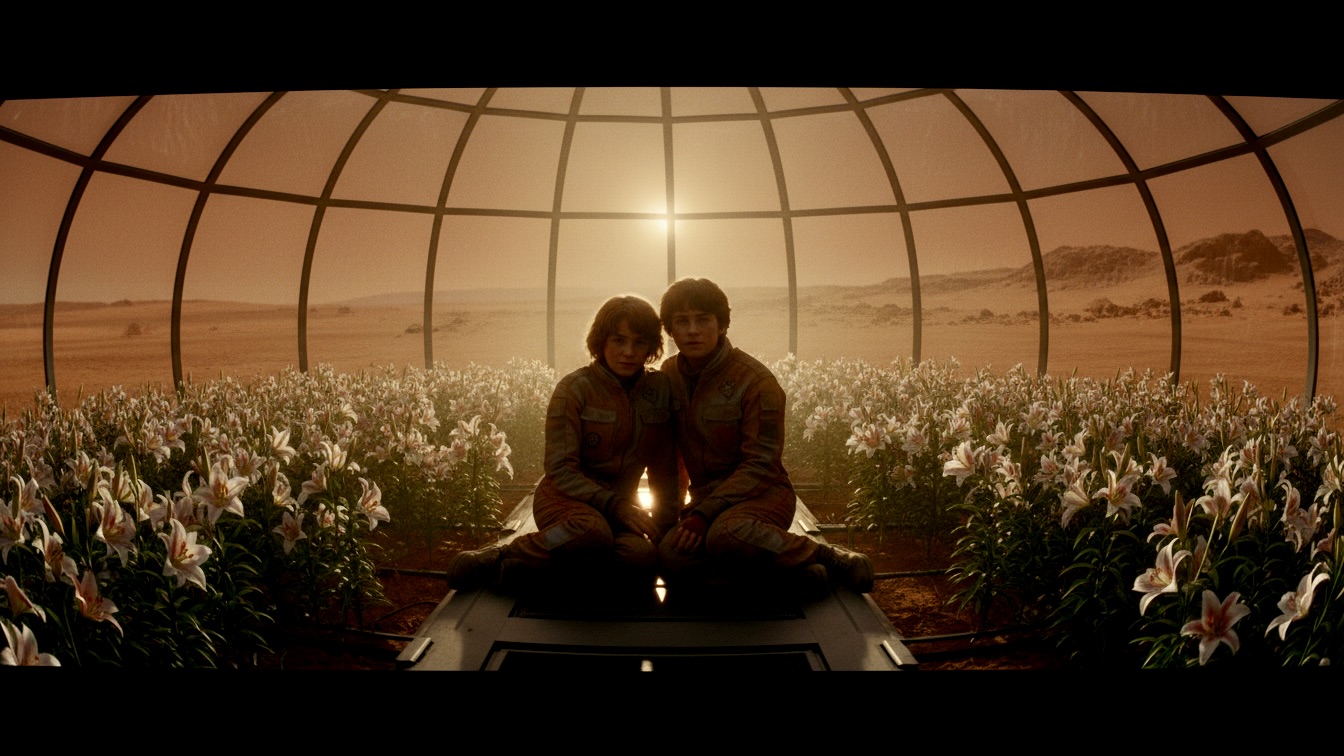
As the second night falls and the Martian cold seeps through the glass, they huddle together under a thermal tarp, their shared body heat keeping them conscious enough to witness the final bloom. The lilies uncurl in a sudden, overwhelming explosion of spicy fragrance and sunset colors, momentarily transforming their sterile plastic prison into a lush, sensory paradise. This climax shifts the power dynamic as they realize they have achieved the impossible, standing together in the mud as the first humans to breathe the scent of a Martian-grown flower.
The episode begins with high-octane "survival horror" tension, characterized by sensory deprivation and mechanical failure. It then transitions into a "procedural" middle act that emphasizes the grueling, meditative nature of manual labor, creating a sense of mounting exhaustion and intimacy between the characters. The final movement is one of "sublime awe," where the physical and emotional toll is rewarded by a transcendent sensory experience, leaving the audience with a feeling of hard-won hope and the beginning of a deep, platonic partnership.
If expanded, the season would follow Lee and Shane as they use their joint grant to access the "Deep Storage Vault," a restricted area containing seeds for Earth’s ancient forests. Each subsequent episode would focus on a different botanical or engineering challenge, such as creating sustainable soil from Martian regolith or defending their "illegal" forest from corporate auditors who view non-industrial plants as a waste of resources.
The season-long thematic escalation would move from "survival" to "rebellion," as the duo’s success inspires other low-tier workers to start their own secret gardens. The finale would see the first oak sapling breaking through the Martian dust, symbolizing a permanent shift in the colony's identity. This arc would explore the political consequences of their actions, as the corporate board attempts to reclaim the greenhouse, leading to a standoff where the workers must choose between their jobs and the life they’ve created.
The visual style is "Industrial Naturalism," contrasting the harsh, geometric lines of the Martian habitat with the soft, organic curves of the lilies. The lighting should transition from the sterile, flickering orange of emergency power to the rich, saturated hues of the blooming flowers, using macro cinematography to capture the fine details of pollen and petals. The tone is reminiscent of The Expanse in its gritty realism, but with the poetic, atmospheric stillness found in films like Sunshine.
The color palette will be dominated by "Martian Rust" and "Safety Orange" in the first half, slowly being invaded by the "Deep Magentas" and "Vibrant Greens" of the lilies as the story progresses. Sound design is crucial, moving from the terrifying silence of the power outage to the rhythmic, wet sounds of the greenhouse, and finally to a lush, ambient soundscape during the bloom. The goal is to make the audience feel the claustrophobia of the hab and the sudden, expansive relief of the floral scent.
The target audience includes fans of "Hard Science Fiction" and character-driven dramas, specifically those aged 16-45 who enjoy stories about human resilience and environmentalism. It appeals to viewers who appreciate the "competence porn" of shows like The Martian or Apollo 13, where technical problem-solving is the primary driver of the plot. The emotional depth and class-based subtext also make it suitable for fans of prestige anthology series like Black Mirror or Electric Dreams.
The pacing follows a "pressure cooker" structure, with a frantic, fast-paced opening five minutes that establishes the life-or-death stakes. The middle section (minutes 5-9) slows down significantly to emphasize the passage of time and the physical toll of the pollination, allowing for character development through dialogue. The final three minutes are paced with a slow, cinematic grace to maximize the emotional impact of the bloom and the resolution of the grant conflict.
Production will require a high-quality "Greenhouse Beta" set with practical water-spraying effects and a realistic mud floor to ground the actors' performances. The Stargazer lilies should be a mix of high-end practical silk flowers for the wide shots and detailed animatronics or CGI for the "blooming" sequence to ensure the movement looks organic and magical. The contrast between the sterile lab and the muddy greenhouse is essential for the visual storytelling.
Special attention must be paid to the "pollen" makeup, which should progressively coat the actors to show the passage of time and the intensity of their labor. The solar flare effect can be achieved through lighting cues and sound design rather than expensive external CGI, keeping the focus on the interior human drama. Using a real, humid environment on set will help the actors convey the physical exhaustion and "heavy air" described in the script.


