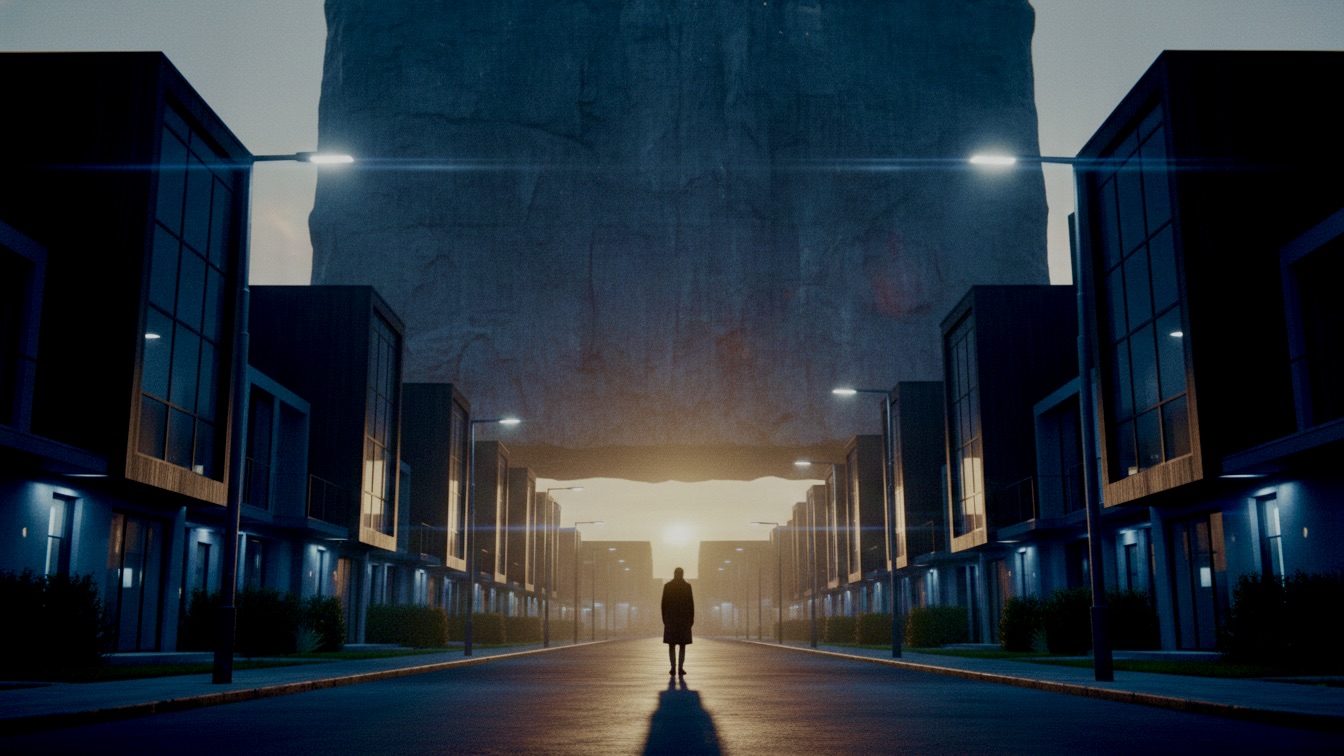
The chapter follows Shawn, a weary freelance reporter, as he investigates a wealthy, isolated neighborhood called The Silos. Set eight months after a mysterious event known as "the Spill," the world has been transformed into a chaotic psychic landscape where sleeping human minds uncontrollably broadcast their subconscious thoughts and traumas. Unlike the rest of the city, which is saturated with this emotional noise, The Silos is entirely devoid of psychic static, projecting instead a monolithic, gray mental wall. Shawn's investigation leads him to discover the terrifying source of this silence.
While exploring the unnervingly quiet streets, Shawn encounters a resident named Toby, who reveals the dark truth behind the neighborhood's serenity. The residents operate in synchronized sleeping shifts to maintain this psychic barrier under the guidance of an emergent entity or virus known as the Architect. This entity trades their anxieties and humanity for absolute, numb silence, effectively erasing their individuality to build a collective hive mind. Overwhelmed by his own profound exhaustion and the hypnotic, heavy lure of this collective apathy, Shawn ultimately succumbs to the psychic virus. He surrenders his mind to the gray void, abandoning the painful but vibrant reality of the human experience.
The narrative delves deeply into the theme of modern psychological burnout and the extreme lengths to which people will go to achieve mental silence. In a world oversaturated with trauma, anxiety, and the literal broadcast of human suffering, the desire to disconnect becomes a weaponized vulnerability. The Architect represents the terrifying culmination of the modern wellness industry and digital escapism, offering a seemingly perfect cure that actually functions as a psychic lobotomy. By erasing the cognitive load of empathy and shared human experience, the entity preys successfully on the exhausted masses.
Furthermore, the story explores the insidious nature of gentrification and class divides in the face of global trauma. The Silos is described as a sanctuary for the wealthy, tech-savvy elite who can afford to literally block out the suffering of the lower classes. However, this wealth isolates them so profoundly that they become the perfect beta testers for a hive-mind virus. Their financial privilege translates into a psychological sterility that leaves them devoid of the emotional resilience found in the chaotic, messy reality of the broader city.
Finally, the text wrestles with the fundamental conflict between agonizing freedom and peaceful subjugation. The doomscrolling of the psychic atmosphere is undoubtedly painful, yet it represents the authentic, shared reality of human existence. The gray wall of The Silos offers peace, but it is a peace born of absolute erasure and the death of individuality. The story posits that the friction of human connection, no matter how painful or overwhelming, is the only thing tethering humanity to its own soul.
Shawn is introduced as a weary, driven freelance reporter who is deeply entangled in the chaotic reality of his dystopian world. He is a man who actively confronts the pain of existence, evidenced by his willingness to navigate the psychic landfill of the city to uncover the truth for his editor, Mary. His physical state mirrors his psychological burden; he suffers from headaches, tastes stale coffee, and carries a shattered phone that symbolizes his fractured but persistent connection to reality. Despite his immense exhaustion, he desperately tries to cling to the messy, vibrant disaster of human life.
Psychologically, Shawn represents the collective exhaustion of a humanity fighting a losing battle against sensory and emotional overload. He understands the danger of the Architect and immediately recognizes it as a viral erasure of the self. However, his intellectual defenses are ultimately insufficient against his profound, underlying fatigue. His capitulation at the end of the chapter is not a conscious choice, but a tragic physiological and mental collapse. The allure of simply stopping the fight becomes too strong for him to resist, highlighting the tragic vulnerability of even the most resilient individuals.
Toby serves as the chilling embodiment of the Architect's psychic assimilation. He is a young, physically rested man whose tranquil appearance masks a complete absence of humanity and individuality. His dialogue is stripped of all emotion, delivered in optimized, mechanical cadences that reflect his new existence as a mere node in a larger psychic infrastructure. Toby no longer experiences the world; he merely maintains a structural barrier against it, functioning more like a biological server than a human being.
From a psychological standpoint, Toby represents the ultimate surrender to apathy. He views human emotion, dreams, and trauma merely as inefficient noise and a waste of cognitive load. By willingly trading his anxiety for emptiness, he highlights the terrifying appeal of the Architect's bargain. His interactions with Shawn are entirely devoid of malice, which makes his role as an agent of assimilation even more unsettling, as he genuinely believes the erasure of the self is a profound gift.
The narrative voice is tightly controlled, utilizing a close third-person perspective that immerses the reader directly into Shawn's deteriorating sensory experience. The tone is immediately established as gritty, cynical, and deeply fatigued, mirroring the atmospheric weight of the post-Spill world. The author employs a bleak, dystopian aesthetic that blends the mundane reality of cracked phone screens and yellow pollen with the surreal horror of psychic broadcasts. This juxtaposition grounds the science fiction elements in a tangible, relatable reality, making the psychological horror significantly more acute.
Sensory details are weaponized throughout the chapter to emphasize the suffocating nature of both the city and The Silos. The reader is subjected to the phantom smells of wet fur, the taste of cheap lip gloss, and the physical weight of concrete pressing against the inside of the skull. The transition from the chaotic noise of the city to the unnatural, dead silence of The Silos is described in visceral, physical terms, such as a stomach dropping like a fast elevator. These vivid descriptions force the reader to feel the oppressive, claustrophobic atmosphere that ultimately crushes the protagonist.
Pacing is masterfully handled, beginning with a slow, investigative build-up and culminating in a rapid, inevitable psychological collapse. The early paragraphs are dense with exposition and environmental world-building, matching Shawn's methodical approach to his journalistic investigation. As the psychic virus begins to take hold of his mind, the sentences become more focused on his internal physical sensations, accelerating the profound sense of dread. The final descent into the hive mind feels both abrupt and terrifyingly inescapable, perfectly capturing the insidious, lulling nature of the Architect's trap.


