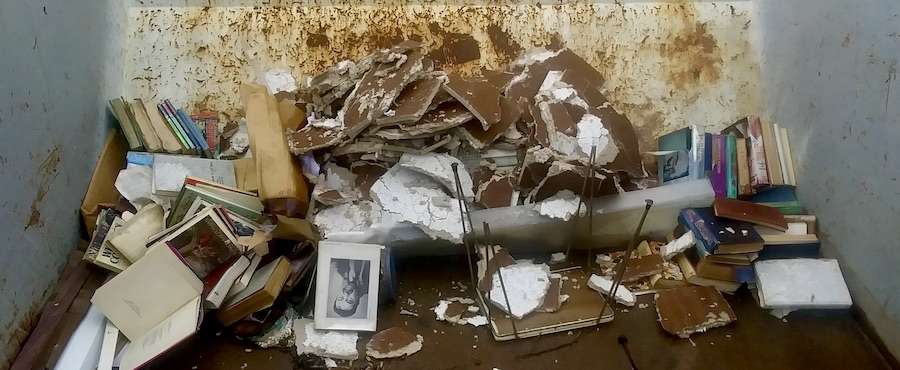
Nobody remembers the garbage.
Walk through a workshop at two in the morning after everyone has gone home. You won’t find a museum. You’ll find scrapped paper, sawdust in the corners, black grease wiped across old rags, and a trash bin overflowing with ruined canvas or three thousand lines of broken code that crashed a server at midnight. We don’t put that mess on display. We sweep it up, wheel it out to the alley before sunrise, and pretend the floor was always clean.
The trouble starts when you step into your own room to make something new. You sit down with a fresh page or a dry brush, and your hands make an ugly, clumsy attempt. That’s how it works. But because nobody shows you the trash in the alley, you assume your rough start is a personal failure. You look at a finished piece sitting on a glass shelf and convince yourself the creator just thought it into existence, neat and polished, without sweating through a dozen terrible versions first.
That is the trap. You judge your raw, clumsy start against somebody else’s finished work after ten years of practice.
Burnt Bread and Bad Vocals
Walk past the display glass of a famous bakery early in the morning. Everything sits straight. Golden crusts, white sugar, the smell of warm butter and caramelized fruit. It looks easy, as if the baker simply knew how to handle dough from the moment they picked up a flour sack. What the storefront hides is ten years of heavy metal cans. It hides thousands of flat, dense, burnt loaves tossed into the dark while the city slept. They didn’t start with perfect bread. They started with dough that refused to rise and flour stuck to the floor.
Or consider the hook of a song playing through a cheap car speaker. It sounds clean and effortless. But if you opened the songwriter’s phone and scrolled back through two years of unedited voice memos, you wouldn’t find polish. You’d hear crackling audio, a thumb knocking against the mic, off-key humming, and bad rhymes that sound silly out loud. They had to record twenty terrible takes just to stumble across the four measures that actually held together.
The Trap of Excuses
There is a catch here. It is easy to turn “don’t compare yourself to others” into an excuse for sloppy work. That is another mistake. If you never study expert work, you never learn how things fit together. You still need high standards. Looking closely at a master’s finished piece is how a carpenter figures out how to join two pieces of oak without a visible gap, or how a writer figures out how to move a story along without dragging.
The goal isn’t to work in the dark or pretend quality doesn’t matter. The trick is keeping your ego out of the mechanics. Studying someone else’s refined work to fix your own broken joints is useful. Using their finished product to convince yourself that your initial effort means you lack talent is just foolish.
Strip away the commentary and you are left with the quiet friction of sitting down to start. It never feels comfortable. You sit at the desk, the room goes dead quiet, and the first thing you make is going to look rough. It might be flat. It might be embarrassing.
If everyone hides their broken early drafts, aren’t we all just agreeing to keep lying to the person starting tomorrow?