How resourcefulness becomes a radical act of defiance against the gatekeepers.
The status quo is often just a set of habits disguised as rules. For a young creative leader running a grassroots organization, “bucking the status quo” doesn’t have to mean a loud protest or a complex manifesto.
Instead, it’s about the quiet, persistent refusal to wait for permission from systems that weren’t built with you in mind. We are often taught that to make art or build a community hub, we must follow a specific, expensive sequence: get the degree, find the mentor, apply for the prestigious grant, and wait for a sanctioned venue to open its doors. But the status quo thrives on this gatekeeping. It relies on the idea that there is only one “proper” way to exist in the creative landscape.
When you are working with limited resources, the traditional path is frequently blocked by barriers that have nothing to do with your talent or your vision. If you wait for the “proper” channels to recognize your value, you might be waiting forever. This is why, for the scrappy creator, bucking the status quo is a vital survival strategy. It is the realization that if the front door is locked, you can look for a side door, a window, or simply decide to build your own structure in the backyard. This mindset shifts the entire power dynamic of your work. You stop being a petitioner asking for a seat at someone else’s table and start being a host at your own.
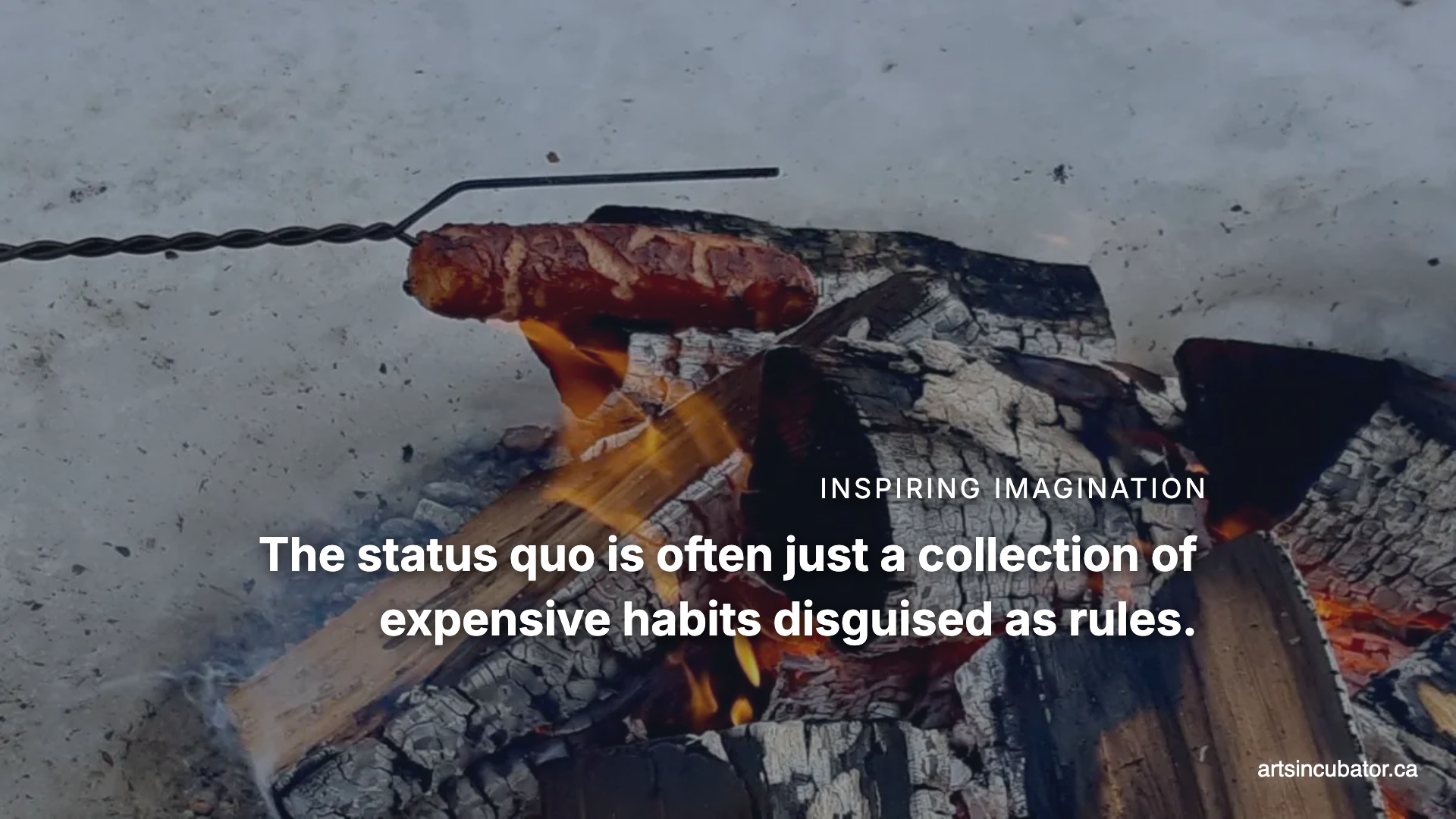
How do we actually apply this in our daily work? It starts with the “DIY Bypass.” Instead of waiting for a high-end gallery space, we look at the potential of a local coffee shop after hours or an empty parking lot. Instead of chasing corporate sponsorships that come with strings attached, we trade skills with local printers or swap labor with neighboring organizers. This isn’t just about being “frugal”—it’s about reclaiming the means of production. It is a fundamental understanding that the “status quo” is often just a collection of expensive habits. When we choose to do things differently, we aren’t just saving money; we are proving that the traditional barriers to entry are mostly psychological constructs designed to maintain a specific hierarchy.
Another powerful way to buck the status quo is through radical transparency and human connection. Most institutional arts organizations maintain a layer of polished exclusivity—high ticket prices, formal dress codes, or jargon-heavy descriptions that make people feel like they need a degree just to participate. You can disrupt this entire system simply by being human. Speak in plain language. Make your events truly “come as you are.” When you prioritize genuine community connection over the appearance of prestige, you are fundamentally challenging the way the arts are “supposed” to work. You are making the statement that the people in the room are more important than the brand on the wall.
Bucking the status quo is exhausting work, and it requires a level of grit that large institutions often lack because they are too afraid of losing their comfort or their standing. You have the unique advantage of having nothing to lose and everything to create. Every time you host a show in a non-traditional space or collaborate with a peer instead of competing with them, you are chipping away at a system that has long excluded voices like yours.
Stay optimistic, stay resourceful, and remember that the side door is always open for those brave enough to look for it.
Northern Arts and Regional Innovation
This is a collaborative initiative by The Arts Incubator Winnipeg and the Art Borups Corners art collective, supporting artists and creative projects in Melgund Township, Northwestern Ontario. Our groups champion rural arts development, community programming, Indigenous arts partnerships, and cultural innovation—strengthening the local and regional arts sector through mentorship, exhibitions, digital media, and sustainable creative entrepreneurship. Our events and activities include artists from Melgund Township, Winnipeg, Ignace, Sioux Lookout, Dryden, and beyond. You read more innovation-focused posts here.
About the Author