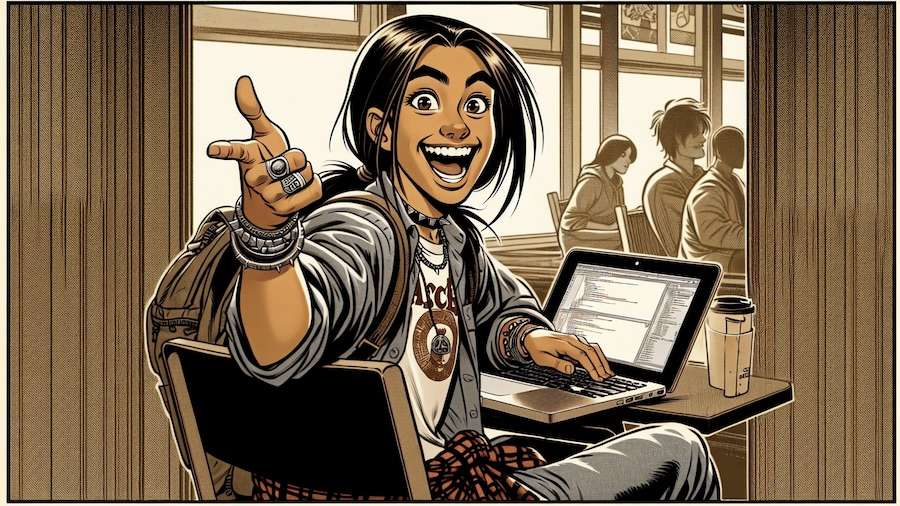
How the mindset of a small team turns limited resources into unexpected creative breakthroughs.
Innovation is often marketed as something that requires a sleek laboratory, a six-figure R&D budget, and a team of consultants in expensive suits.
In reality, for those of us running grassroots arts organizations, innovation is much more visceral. It is a psychological posture. It is what happens when your ambition exceeds your bank account and you refuse to let the project die. Innovation, in its truest sense, is the result of being backed into a creative corner and choosing to dance your way out.
For small, resource-constrained organizations, the psychology of innovation is rooted in the Scrappy Pivot. Unlike large institutions that have layers of bureaucracy to shield them from risk, a small team has the psychological agility to change direction in a heartbeat. This isn’t just a logistical advantage; it is a mental one. When you don’t have the proper way to do something, you are forced to invent a new way. This state of necessity bypasses the parts of our brain that are obsessed with perfection and activates the parts that are obsessed with possibility.
One of the greatest psychological hurdles to innovation is what psychologists call functional fixedness. This is the cognitive bias that limits a person to using an object only in the way it is traditionally used. If you see a pile of discarded wooden pallets and only see trash, that is functional fixedness. But if you see a modular stage, a gallery wall, or a communal seating area, you have broken that bias. In a grassroots setting, breaking functional fixedness is a daily requirement. You learn to see every constraint—a lack of lighting, a small venue, a tiny audience—not as a wall, but as a prompt. Innovation happens the moment you stop asking what you lack and start asking what this specific limitation allows you to do that no one else is doing.
To foster this mindset, you have to build a culture of psychological safety. Innovation is inherently messy. It requires a period of time where the work looks wrong or feels ugly. If your team is afraid of looking foolish or making a mistake, they will stick to the safe, established paths. As a leader, your job is to lower the stakes of experimentation. You must demonstrate that the ugly prototype is a necessary stage of the process. When you celebrate the process of trying a weird idea—even if it does not ultimately work—you give your collaborators the permission to think outside the standard box. You are training the collective brain of your organization to value curiosity over compliance.
We also need to understand that creativity actually thrives under pressure. Psychologically, having too many options can lead to decision paralysis. When you have an unlimited budget, you can do anything, which often leads to doing nothing particularly original. But when you only have twenty dollars and a roll of duct tape, your brain has to work harder. It has to make connections it would not otherwise make. This is the psychology of the constraint. It forces you to simplify, to get to the core of the message, and to find the most direct way to move an audience.
Innovation is not a gift granted to a lucky few; it is a habit of mind that anyone can cultivate. It is about looking at the world with a sense of what if rather than we can not. Your small size is not a weakness in this regard; it is your greatest asset.
You are lean, you are fast, and you are unburdened by the way things have always been done. Trust your ability to pivot, lean into your constraints, and remember that the most profound breakthroughs often come from the simplest, scrappiest ideas.

Northern Arts and Regional Innovation
This is a collaborative initiative by The Arts Incubator Winnipeg and the Art Borups Corners art collective, supporting artists and creative projects in Melgund Township, Northwestern Ontario. Our groups champion rural arts development, community programming, Indigenous arts partnerships, and cultural innovation—strengthening the local and regional arts sector through mentorship, exhibitions, digital media, and sustainable creative entrepreneurship. Our events and activities include artists from Melgund Township, Winnipeg, Ignace, Sioux Lookout, Dryden, and beyond. You read more innovation-focused posts here.
About the Author