Reviewing Section 19.2.3.3 of the Initial Project Description
This article is part of a series exploring the views and perspectives of youth, artists and community members working with the ECO-STAR North climate entrepreneurship project, developed through our community consultation and engagement participation in the integrated impact assessment process for the proposed Deep Geological Repository.
What is Proposed
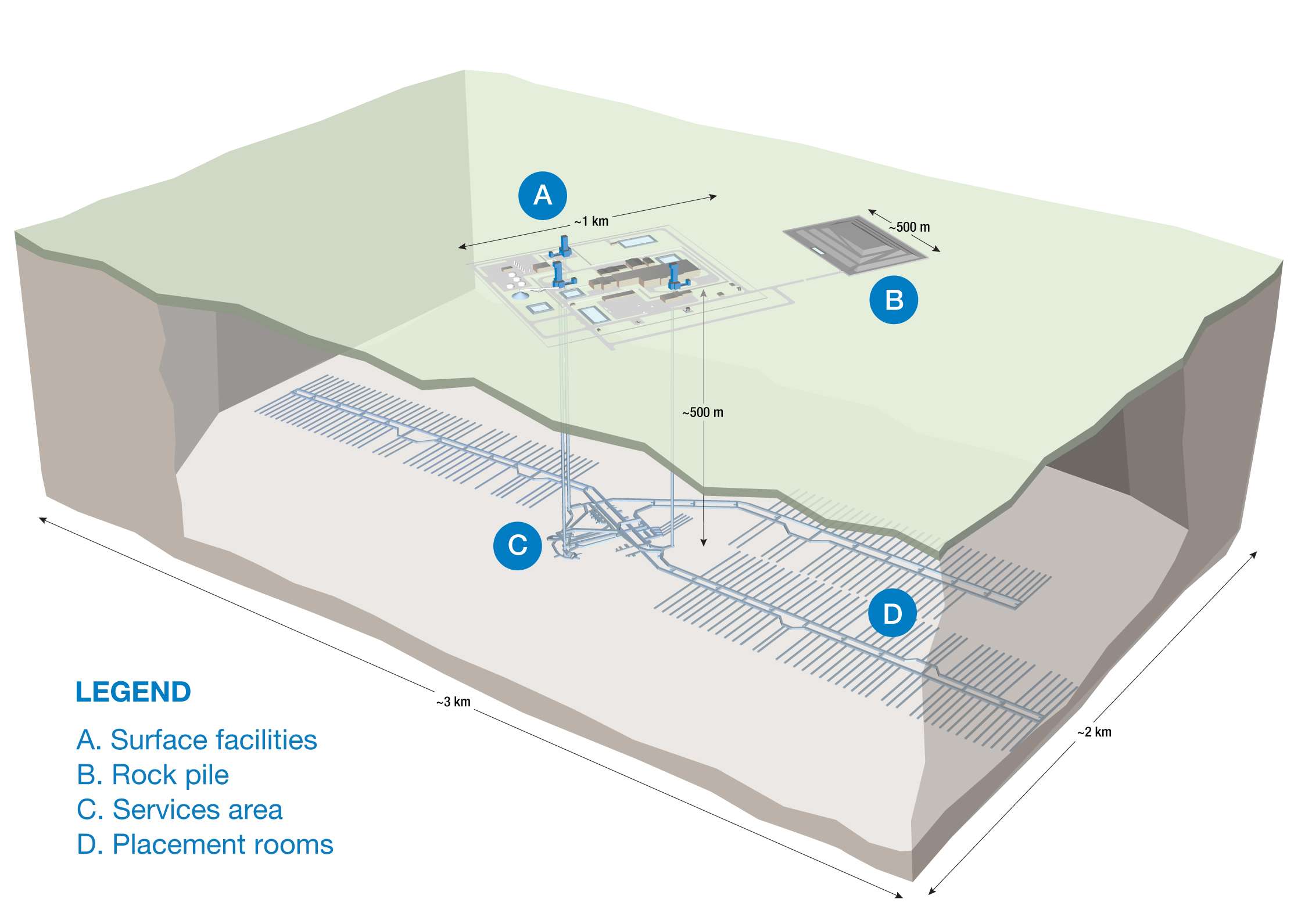
In the Initial Project Description, the Nuclear Waste Management Organization (NWMO) outlines that project activities—specifically land clearing, blasting for surface and underground facilities, and the operation of rail spurs—will generate noise, vibration, and light emissions. The proponent acknowledges that without mitigation, these activities could result in moderate to high adverse effects.
However, the proposal claims that through standard environmental design features and best management practices (such as equipment dampening and setbacks), these effects will be managed. The proponent asserts that due to the project’s remote location—approximately 10 km from the nearest community—residual effects are anticipated to be negligible and well within regulatory limits.
Underlying Assumptions
Our review of the text identifies several key assumptions that influence the proponent’s conclusion of “negligible risk”:
- Assumption of Remoteness: The text assumes that a 10 km distance from the Township of Ignace equates to a lack of sensitive receptors, potentially overlooking seasonal residents, hunters, and Indigenous land users active within that buffer zone.
- Assumption of Efficacy: It is assumed that standard mitigation strategies will be sufficient to dampen noise and vibration to negligible levels without the validation of site-specific modelling.
- Assumption of Human-Centric Limits: The reliance on human-centric regulations (like NPC-300) assumes that levels acceptable for humans are equally acceptable for sensitive wildlife and Species at Risk (SAR).
Community Assessment
The primary concern arising from our community consultation is the sequence of the assessment. The proponent has assigned a “High Confidence” rating to a “Negligible Risk” conclusion while simultaneously admitting that “Noise, vibration, and light modelling have not yet been completed.”
From a community perspective, concluding risk levels without the supporting data undermines the scientific integrity of the impact assessment. While the site may be distant from the town centre, it is not empty. The definition of “sensitive receptors” appears too narrow, potentially excluding cultural sites, seasonal camps, and traditional land use areas that are vital to the community’s identity and economy. Furthermore, assigning a negligible rating for these intermediate components may bias subsequent assessments for wildlife, as noise levels compliant for industrial zones can still disrupt migratory birds and aquatic life.
Path Forward
To address these gaps, we recommend the following corrective measures:
- Prioritize Modelling: The proponent must complete and publicly disclose preliminary noise, vibration, and light modelling before finalizing risk screenings. This data is necessary to justify the “High Confidence” rating.
- Expand Receptor Definitions: The definition of sensitive receptors must be expanded in consultation with the Wabigoon Lake Ojibway Nation and the Township of Ignace to include traditional land use areas and wildlife corridors, not just permanent residences.
- Data-Driven Mitigation: Mitigation strategies should be tiered and based on specific modelling results that account for topography and cumulative impacts, ensuring the preservation of the region’s ecological integrity.
About the Integrated Assessment Process
The federal Impact Assessment Agency of Canada (IAAC) has formally launched the integrated impact assessment process for the proposed Deep Geological Repository (DGR) for Canada’s Used Nuclear Fuel Project, a major national infrastructure initiative led by the Nuclear Waste Management Organization (NWMO).
The proposed underground repository is designed to permanently contain and isolate used nuclear fuel in a secure geological formation. Wabigoon Lake Ojibway Nation and the Township of Ignace have been selected as host communities for the project. The site is located approximately 21 kilometres southeast of Wabigoon Lake Ojibway Nation and 43 kilometres northwest of Ignace, Ontario, near Highway 17.
According to project materials, the repository would provide permanent storage for approximately 5.9 million bundles of used nuclear fuel. The full lifecycle of the project is expected to span roughly 160 years, including site preparation, construction, operations, closure, and long-term monitoring.
Integrated Federal Review
Major nuclear projects in Canada are subject to an integrated assessment process jointly led by the Impact Assessment Agency of Canada and the Canadian Nuclear Safety Commission (CNSC). This “one project, one review” approach is intended to streamline regulatory oversight while ensuring rigorous evaluation of environmental, health, social, economic, and Indigenous rights impacts.
Under this framework, IAAC oversees the impact assessment requirements under the Impact Assessment Act, while the CNSC regulates nuclear safety under the Nuclear Safety and Control Act. The CNSC will issue the initial site preparation licence and manage all subsequent nuclear licensing for the project’s duration.
The integrated assessment also includes a focus on potential impacts on Indigenous Peoples, including rights, land use, cultural practices, health, and socio-economic conditions. Where potential adverse effects are identified, the process is intended to identify mitigation measures to reduce or avoid harm.
Public Comment Period Now Open
The first public comment period for the project is currently open and will run until February 4, 2026. During this phase, the public is invited to provide feedback on the Summary of the Initial Project Description submitted by the NWMO. Submissions received during this period will inform IAAC’s summary of issues, which will guide the next stages of the impact assessment. All comments submitted become part of the public project record and are posted to the federal Impact Assessment Registry.
This plain-language summary is provided by ECO-STAR North and Art Borups Corners to support public engagement.
Disclaimer: The views and perspectives expressed in this article are solely those of the independent arts program led by ECO-STAR North and Art Borups Corners. They do not reflect the official positions of the Nuclear Waste Management Organization (NWMO) or the Government of Canada.
About the Author