A Visit to the Dyment Museum
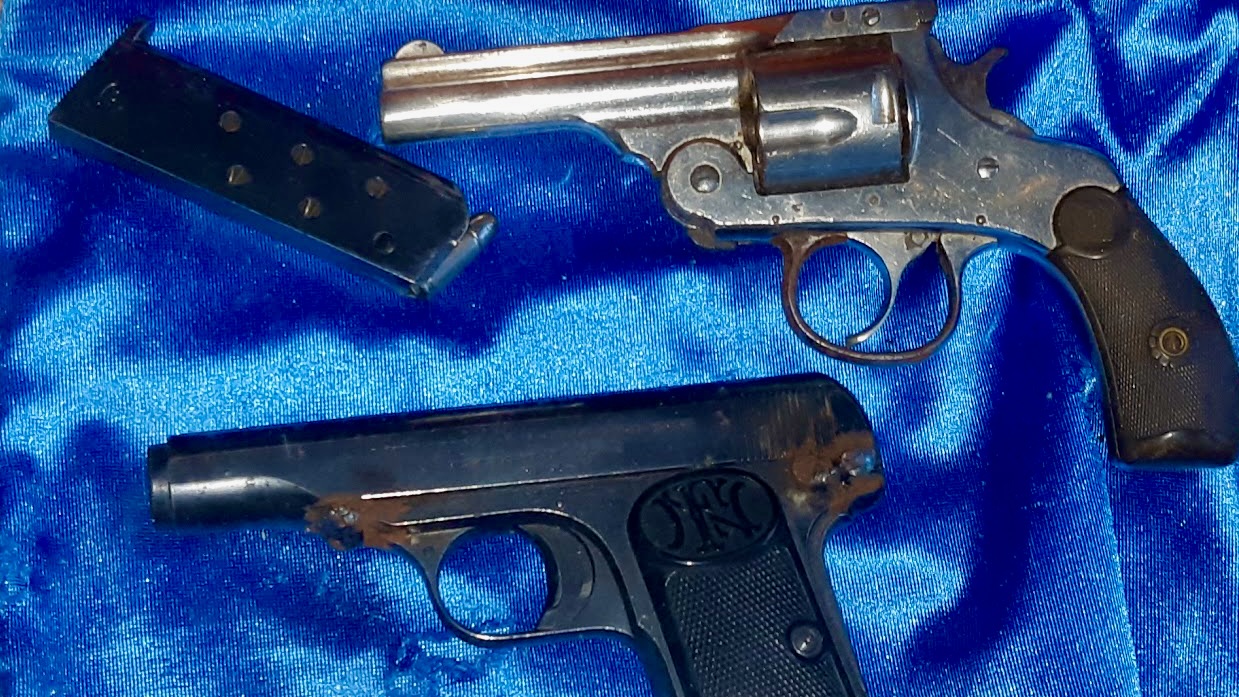
Step right up and peer into a fascinating slice of history, captured within this simple wooden display! These two antique firearms from the Dyment Museum aren’t just relics; they’re tangible connections to the men who carried them and the eras they represent. Forget modern polymer and laser sights—these are classic pieces of personal protection from a bygone time.
The Revolver: A Trusty Sidekick from the Post Office!
Our first star, the silver-toned top handgun, is a Type R .38 Calibre Harrington & Richardson 5 Shot. The inscription tells a wonderful story: it was issued in 1899 to the Dyment Post Office.
Imagine the scene: the turn of the 20th century, a small post office, and a clerk or carrier entrusted with this sturdy, five-shot revolver. 1899 was a time of rapid change, and while the Old West was fading, a trusty sidearm was still a vital tool for safeguarding the mail and the funds it contained. The Harrington & Richardson (H&R) company was famous for making reliable, affordable handguns for the general public and institutions alike. This little .38 undoubtedly saw a lot of history—perhaps only guarding bags of letters, or maybe, just maybe, stopping an attempted robbery!
The Automatic: Sleek Design and Early Firepower
Below the revolver sits a much sleeker, darker piece: a 7 Shot .32 Cal. Browning Auto.
This pistol represents the future of firearms design! Developed by the legendary John Moses Browning and often manufactured by FN Herstal in Belgium, these early semi-automatic pistols were revolutionary. The .32 ACP cartridge and the seven-shot capacity were a significant step up from most small revolvers in terms of ease of reloading and concealability. When Luther Taylor bought this, he was acquiring a piece of cutting-edge technology. It’s a gorgeous example of early 20th-century design—small, powerful, and utterly reliable for its day.
About the Author