Assessing Risks to Local Flora and Traditional Medicines
This article is part of a series exploring the views and perspectives of youth, artists and community members working with the Melgund Integrated Nuclear Impact Assessment Project. This initiative is a climate entrepreneurship and arts-based community recreation program, developed through community consultation, engagement participation in the integrated impact assessment process for the NWMO’s proposed Deep Geological Repository for nuclear waste fuel.
What is Proposed
The Nuclear Waste Management Organization (NWMO) outlines in the Initial Project Description that project activities—including site clearing, blasting, and construction—will inevitably alter the local landscape. Approximately 17% of the proposed site consists of wetland habitats (swamp and fen). The proponent acknowledges that vegetation removal is certain and the likelihood of effects is high. However, they conclude that the overall environmental risk is "low" and the residual effects are "negligible." This conclusion relies heavily on the argument that wetlands and riparian environments are abundant in the broader Northern Ontario region, and that sensitive species like wild rice and black ash will be avoided "to the extent practicable."
Underlying Assumptions
Our analysis of the proposal identified several key assumptions used by the proponent to reach their "low risk" conclusion:
- Regional Abundance Justifies Local Loss: The assumption that because wetlands are not critically degraded in Northern Ontario as a whole, the permanent loss of specific local wetlands is ecologically negligible.
- Sufficiency of Standard Mitigation: The assumption that industry-standard best management practices (BMPs) are sufficient to mitigate complex ecological disruptions without site-specific innovation.
- Flexibility of Avoidance: The assumption that committing to avoid culturally significant plants "to the extent practicable" provides adequate protection, implying that engineering requirements may override preservation.
Community Assessment
Through our consultation process, community members and technical reviewers have identified significant gaps in the proponent’s logic. A primary concern is the contradiction between acknowledging a "high likelihood" of site clearing while rating the impact as "negligible." This rating appears to be skewed by a regional comparison that ignores the loss of specific, localized ecological niches.
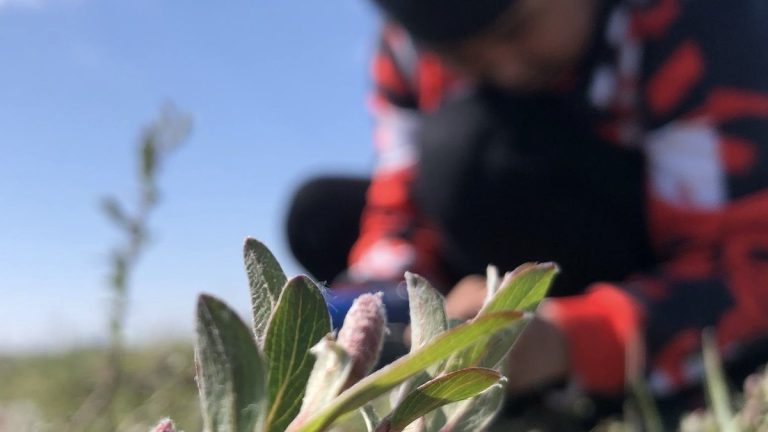
Furthermore, the assessment raises cultural concerns regarding traditional medicines. While Balsam fir and Balsam poplar are identified as medicinal plants present on-site, the current mitigation plan offers only vague promises of avoidance. There is a distinct lack of accountability regarding what happens when avoidance is not "practicable." The community emphasizes that the destruction of these specific gathering areas cannot be dismissed simply because similar plants exist elsewhere; the specific relationship to the land and the location matters.
Path Forward
To align the project with community values and ecological best practices, the following corrective measures are recommended:
- Quantitative Accountability: The proponent must provide a detailed breakdown of the total area of vegetation loss and implement a specific "No Net Loss" plan for wetlands, outlining compensatory mitigation strategies.
- Defined Criteria: The term "extent practicable" must be strictly defined with technical and economic criteria to prevent it from becoming a loophole for habitat destruction.
- Co-Mapping and Preservation: The proponent should engage in site-specific co-mapping with Indigenous communities to identify traditional medicine gathering areas. This must result in formal agreements on management, including potential relocation or restoration efforts led by traditional knowledge holders.
About the Integrated Assessment Process
The federal Impact Assessment Agency of Canada (IAAC) has formally launched the integrated impact assessment process for the proposed Deep Geological Repository (DGR) for Canada’s Used Nuclear Fuel Project, a major national infrastructure initiative led by the Nuclear Waste Management Organization (NWMO).
The proposed underground repository is designed to permanently contain and isolate used nuclear fuel in a secure geological formation. Wabigoon Lake Ojibway Nation and the Township of Ignace have been selected as host communities for the project. The site is located approximately 21 kilometres southeast of Wabigoon Lake Ojibway Nation and 43 kilometres northwest of Ignace, Ontario, near Highway 17.
According to project materials, the repository would provide permanent storage for approximately 5.9 million bundles of used nuclear fuel. The full lifecycle of the project is expected to span roughly 160 years, including site preparation, construction, operations, closure, and long-term monitoring.
Integrated Federal Review
Major nuclear projects in Canada are subject to an integrated assessment process jointly led by the Impact Assessment Agency of Canada and the Canadian Nuclear Safety Commission (CNSC). This “one project, one review” approach is intended to streamline regulatory oversight while ensuring rigorous evaluation of environmental, health, social, economic, and Indigenous rights impacts.
Under this framework, IAAC oversees the impact assessment requirements under the Impact Assessment Act, while the CNSC regulates nuclear safety under the Nuclear Safety and Control Act. The CNSC will issue the initial site preparation licence and manage all subsequent nuclear licensing for the project’s duration.
The integrated assessment also includes a focus on potential impacts on Indigenous Peoples, including rights, land use, cultural practices, health, and socio-economic conditions. Where potential adverse effects are identified, the process is intended to identify mitigation measures to reduce or avoid harm.
Public Comment Period Now Open
The first public comment period for the project is currently open and will run until February 4, 2026. During this phase, the public is invited to provide feedback on the Summary of the Initial Project Description submitted by the NWMO. Submissions received during this period will inform IAAC’s summary of issues, which will guide the next stages of the impact assessment. All comments submitted become part of the public project record and are posted to the federal Impact Assessment Registry.
This plain-language summary is provided by ECO-STAR North and Art Borups Corners to support public engagement.
Disclaimer: The views and perspectives expressed in this article are solely those of the independent arts program led by ECO-STAR North and Art Borups Corners. They do not reflect the official positions of the Nuclear Waste Management Organization (NWMO) or the Government of Canada.
About the Author