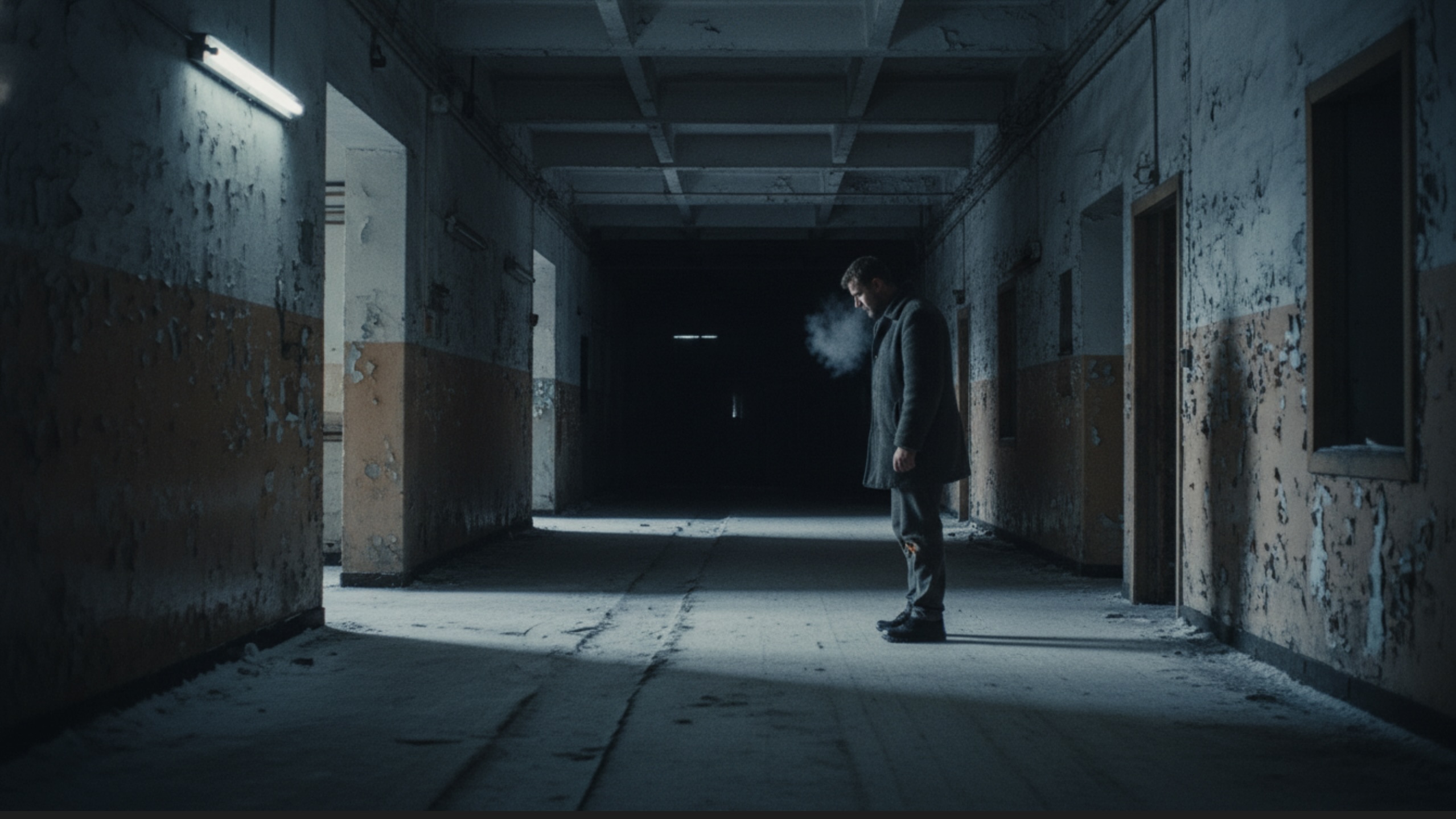
An Analysis of The Last Cold Lock
Synopsis
The narrative opens in a derelict, freezing factory in Northern Canada, where the narrator and his companion, Jonah, are trapped. They attempt to open an emergency exit secured by a massive, rusted padlock. The situation is dire, exacerbated by extreme cold and physical exhaustion. When a decorative brass key—their only hope provided by an unreliable source—fails to turn the frozen mechanism, the narrator resorts to brute force. He attempts to smash the lock with a cast-iron pipe scavenged from the debris, but the industrial-grade steel remains unyielding, highlighting the futility of their physical efforts against the environment.
With the ground-level exit proving impossible, the narrator’s attention shifts to a small, precarious opening high near the roofline. Despite the obvious danger and Jonah’s pessimistic observations, the narrator climbs a rotting, unstable scaffold. Driven by a mix of desperation and spite, he makes a perilous leap to an old electrical cable and manages to haul himself through the small vent. He lands in a dark service corridor on the other side, separated from Jonah but finding a potential path forward into the unknown darkness, driven by a faint sound and the refusal to succumb to the freezing death waiting for them.
Thematic Analysis
The dominant theme within the text is the crushing weight of futility and the absurdity of human effort in the face of entropy. The setting is not merely a backdrop but an antagonist; the factory is described as a "permanent burial ground" and a "monument to something broken." The padlock itself serves as a central symbol of this existential blockage. It is described as a "stubborn fist" and a "block of ice," representing an obstacle that logic (the key) and force (the pipe) cannot overcome. The narrative suggests that the characters are trapped in a cycle of failure, where the universe is not just indifferent, but actively mocking them, as evidenced by the wind that sounds like the world is laughing.
Parallel to the theme of futility is the exploration of psychological resilience versus resignation. The cold is presented as a "relentless truth," a force that strips away illusions and leaves only the raw reality of survival. While the environment seeks to reduce the characters to stasis—freezing them like the machinery around them—the narrative drive comes from the refusal to accept this stasis. The characters are engaged in a Sisyphus-like struggle; they push against immovable objects not because they are certain of success, but because the alternative is the stillness of death. The rust and decay serve as a constant reminder of the inevitable end of all things, yet the human impulse to move "one foot in front of the other" persists in defiance of this reality.
Character Analysis
The Narrator
The protagonist is a man defined by a potent mixture of cynicism and aggressive survival instinct. Psychologically, he operates in a state of high-functioning desperation. His internal monologue reveals a deep-seated anger that acts as a defense mechanism against despair; he uses this rage to fuel his physical actions, pushing through the pain of a shoulder injury and the numbing cold. He views hope as dangerous, yet his actions are inherently hopeful, creating a cognitive dissonance that drives the plot. He scoffs at the idea of success while simultaneously risking his life on a rotting scaffold to achieve it.
His relationship with the environment is adversarial. He personifies the inanimate objects around him—the lock, the pipe, the factory—attributing malice to them to justify his aggression. This projection allows him to externalize his internal struggle; fighting the lock is easier than confronting the hopelessness of his situation. His treatment of Jonah is sharp and biting, suggesting he sees his companion's passivity as a threat to his own fragile resolve. By taking the lead and climbing the scaffold, he reasserts agency in a situation designed to strip him of it, proving that his will to survive overrides his logical assessment of the danger.
Jonah
Jonah serves as the psychological foil to the narrator, embodying resignation and the depressive acceptance of their reality. He is characterized by his flatness; his voice is monotone, his movements are small and defeated, and he is often looking away or staring at broken things. Where the narrator sees a challenge to be smashed, Jonah sees a puzzle he has already failed. He functions as a mirror reflecting the futility the narrator tries so hard to ignore. His observation that the scaffold is unstable is factually correct, yet it represents his paralysis; his logic leads to inaction.
Despite his apparent defeatism, Jonah is not entirely useless. He provides the physical boost the narrator needs to ascend, acting as a literal and figurative support. His pessimism, while draining, also grounds the narrator’s manic energy. Jonah represents the part of the human psyche that acknowledges the odds, the voice that whispers it might be easier to just stop. However, his presence is essential; without Jonah as a witness and a counterpoint, the narrator’s struggle would exist in a vacuum. Jonah’s survival depends on the narrator’s drive, creating a symbiotic, albeit strained, dynamic between action and inertia.
Stylistic Analysis
The narrative voice is gritty, immediate, and steeped in sensory discomfort. The author utilizes a first-person perspective that is deeply embedded in the physical sensation of the moment. The prose is tactile; the reader is made to feel the "slick" ice, the "raw skin," and the "deep and throbbing" ache of the cold. The use of temperature is pervasive, with the cold acting as a constant pressure on the sentence structure itself. Sentences are often short, fragmented, and breathless, mimicking the physiological response to freezing temperatures and physical exertion. This staccato rhythm creates a sense of urgency and claustrophobia.
The tone is relentlessly bleak, bordering on noir, but adapted for a survival horror setting. The imagery focuses heavily on decay and industrial ruin—"skeletal landscape," "ghost of industry," "metallic whisper of failure." The author frequently employs personification, granting the factory and the weather malevolent intent. The wind "claws," the press has a "silent scream," and the cold is "insidious." This stylistic choice elevates the setting from a passive location to an active enemy. The dialogue is sparse and functional, stripped of pleasantries, reflecting the exhaustion of the characters. The interplay between the narrator’s sarcastic internal monologue and the grim reality creates a layer of dark irony that permeates the text.