An Analysis of A Stain
Synopsis
The chapter follows the protagonist, Casey, as she navigates the brutal, freezing landscape of downtown Winnipeg to answer a summons from her toxic former lover, Gabe. The narrative begins with her physical struggle to enter his dilapidated apartment building, a process that mirrors her internal resistance and inevitable capitulation to his control. The cold is oppressive, serving as both a physical barrier and a metaphor for the emotional desolation she feels. Upon forcing her way into the building and ascending the grimy stairs, she enters Gabe’s apartment to find a scene of calculated humiliation.
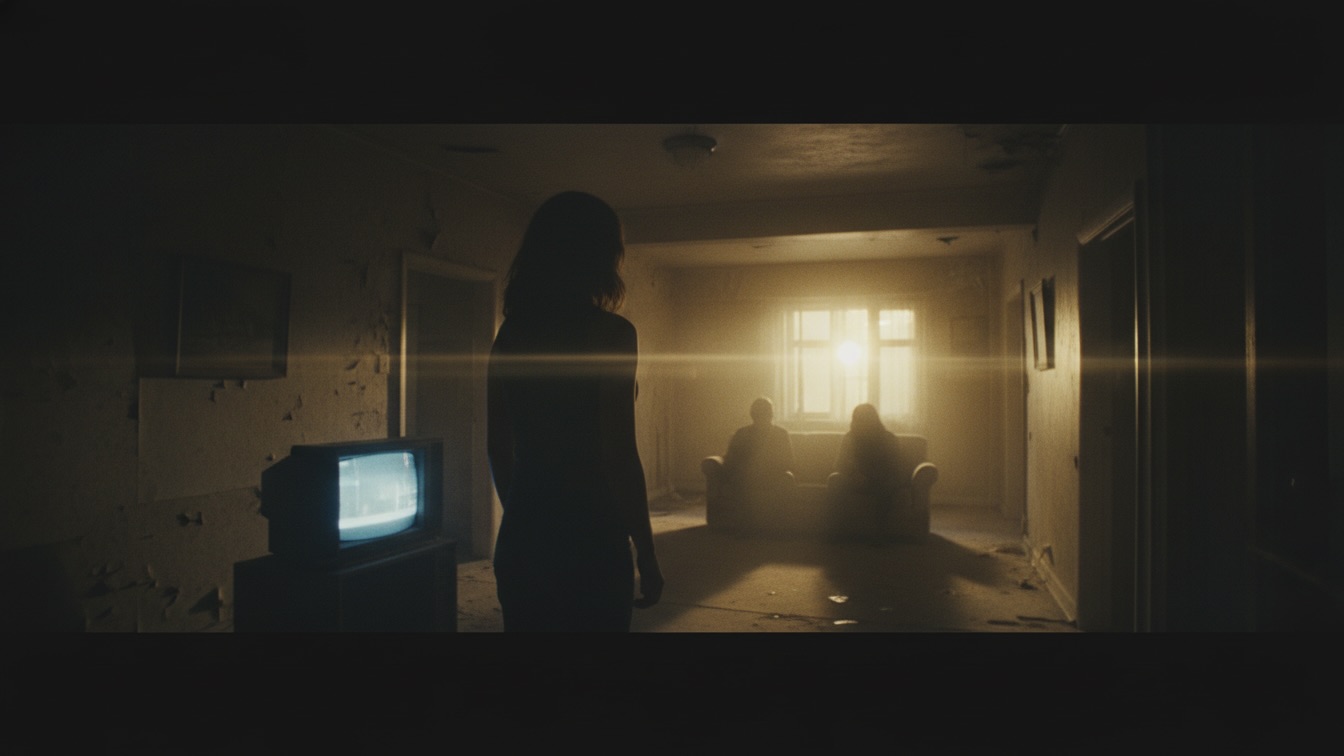
Inside, Casey discovers Gabe on the couch, entangled in an intimate embrace with a strange blonde woman. Instead of the confrontation leading to a departure, Casey finds herself paralyzed by a mix of trauma, obsession, and a perverse desire to witness the extent of Gabe's cruelty. The scene shifts from a gritty domestic drama into a psychological nightmare as the environment becomes surreal and claustrophobic. The chapter concludes with the blonde woman acknowledging Casey’s presence with a chilling familiarity, eventually revealing a sharp object, while Gabe watches with indifferent, voyeuristic satisfaction.
Thematic Analysis
The primary theme permeating the text is the interplay between environmental decay and psychological erosion. The setting is not merely a backdrop but an active participant in the degradation of the protagonist's psyche. The "stuck" lock, the crumbling brickwork, and the smell of "frozen rust and stale despair" are external manifestations of Casey’s internal state. The narrative suggests that the rot of the building and the rot of the relationship are indistinguishable. The cold acts as a preserving agent for this misery, freezing the characters in a loop of dysfunction where progress or escape becomes physically and mentally impossible.
Parallel to the theme of decay is the exploration of addiction and the cycle of abuse. Casey describes her compliance with Gabe’s summons not as a choice, but as a mechanical failure of will, likening her hope to a "stupid engine" that revs despite her better judgment. The text dissects the anatomy of trauma bonding, where the victim is fully aware of the absurdity and danger of their actions yet remains unable to alter their trajectory. The "call" from Gabe serves as a trigger that bypasses logic, reducing Casey to a creature of instinct and compulsion, seeking a "dishonest warmth" that she knows will ultimately harm her.
Furthermore, the story delves into the theme of performative voyeurism and the objectification of pain. Gabe’s apartment is staged as a theater of cruelty, with the television casting distorted shadows that mimic the twisted reality of the room. Gabe does not merely cheat; he curates a tableau for Casey to witness, transforming her heartbreak into a spectator sport. The presence of the third party, the blonde woman, acts as a prop in this performance, stripping the intimacy of its privacy and turning the act of betrayal into a public shaming. The climax suggests that the true violation is not the infidelity itself, but the demand that Casey watch, acknowledge, and participate in her own destruction.
Character Analysis
Casey
Casey is a study in cognitive dissonance and paralyzed agency. She possesses a sharp, cynical self-awareness, constantly narrating the absurdity of her situation and the toxicity of her environment. She recognizes the "perverse chapter" she is living in and identifies the building’s warmth as a "lie," yet she lacks the executive function to act on these realizations. Her internal monologue reveals a woman deeply fractured by emotional abuse, where her identity has become inextricably linked to the suffering Gabe inflicts upon her. She views herself through a lens of brokenness, projecting her feelings of malfunction onto the physical world, such as the key and the elevator.
Her motivation is driven by a pathological need for confirmation and closure that she knows she will never receive. She enters the apartment not to win Gabe back, but to fulfill a masochistic role he has scripted for her. As the scene progresses, her psychological state deteriorates into dissociation; she feels her body becoming rigid and her senses overwhelmed by the surreal stimuli of the room. By the end of the chapter, she is stripped of her fight, reduced to a trembling witness who realizes that she does not want the truth because the reality of her entrapment is too horrifying to confront.
Gabe
Gabe represents the void at the center of the narrative, a character defined less by his actions and more by his profound, weaponized passivity. He is the architect of the scene but refuses to do the heavy lifting, forcing Casey to fill in the blanks of his silence with her own insecurities. His "ghost of a smile" and vacant stare indicate a man who has detached himself from human empathy, viewing people as interchangeable parts in a machine designed to generate emotional feedback for his own amusement. He exerts control not through aggression, but through the withholding of affection and the denial of clarity.
Psychologically, Gabe embodies a malignant narcissism that thrives on the degradation of others. He summons Casey solely to witness his intimacy with another, deriving satisfaction from her visible pain. He is described as having an "invisible force field of malfunction," suggesting that he is an agent of chaos who actively corrodes the stability of those around him. In the final moments, his role shifts from a mere cheater to something more predatory and ancient, a static observer who consumes the distress of his victims as sustenance.
The Woman
Initially presented as a prop in Gabe's tableau, the blonde woman evolves into a sinister reflection of Casey’s own entrapment and potential future. She is complicit in the cruelty, yet her "ancient, tired wisdom" suggests she is also a victim of the same cycle, perhaps further along the timeline of degradation. Her lack of hostility and her "shared secret" smile imply a loss of individuality; she has merged with the toxic environment of the apartment. By revealing the sharp object at the end, she transitions from a passive object to an active enforcer of the nightmare, signaling that the violence of the relationship is about to manifest physically.
Stylistic Analysis
The narrative voice is intensely claustrophobic and sensory-driven, utilizing a first-person perspective that traps the reader inside Casey’s deteriorating mind. The prose is thick with visceral imagery, focusing heavily on tactile and olfactory details—the "grinding monotony" of the cold, the smell of "rotting fruit," and the "metallic tang" of fear. This sensory overload creates a suffocating atmosphere that mirrors the protagonist’s anxiety. The author uses personification effectively, granting the building and the cold a malevolent agency; the wind has "barbs," and the lock offers a "terrible, protesting groan," suggesting the environment is conspiring against the protagonist.
Pacing is handled through a gradual descent from gritty realism into surreal psychological horror. The early paragraphs are grounded in the physical struggle against the Winnipeg winter, marked by a slow, laborious tempo that reflects the difficulty of movement. As Casey enters the apartment, the pacing accelerates in tandem with her rising panic. The sentence structures become more fragmented, and the descriptions of the television light "pulsing" and "strobing" create a disorienting, hallucinatory rhythm. This stylistic shift mimics a panic attack or a psychotic break, blurring the lines between what is physically happening and what Casey is projecting.
The tone is relentlessly bleak, characterized by a vocabulary of exhaustion and decay. Words like "stale," "grimy," "sickly," and "perverse" appear repeatedly, establishing a lexicon of ruin. There is no relief or contrast offered; the "warmth" inside is described as "dishonest" and "cloying," ensuring that the reader feels no safety even when the protagonist escapes the snow. This consistent tonal darkness reinforces the inevitability of the conclusion, ensuring that the final, horrific image of the sharp object feels like a natural extension of the established atmosphere rather than a sudden shock.