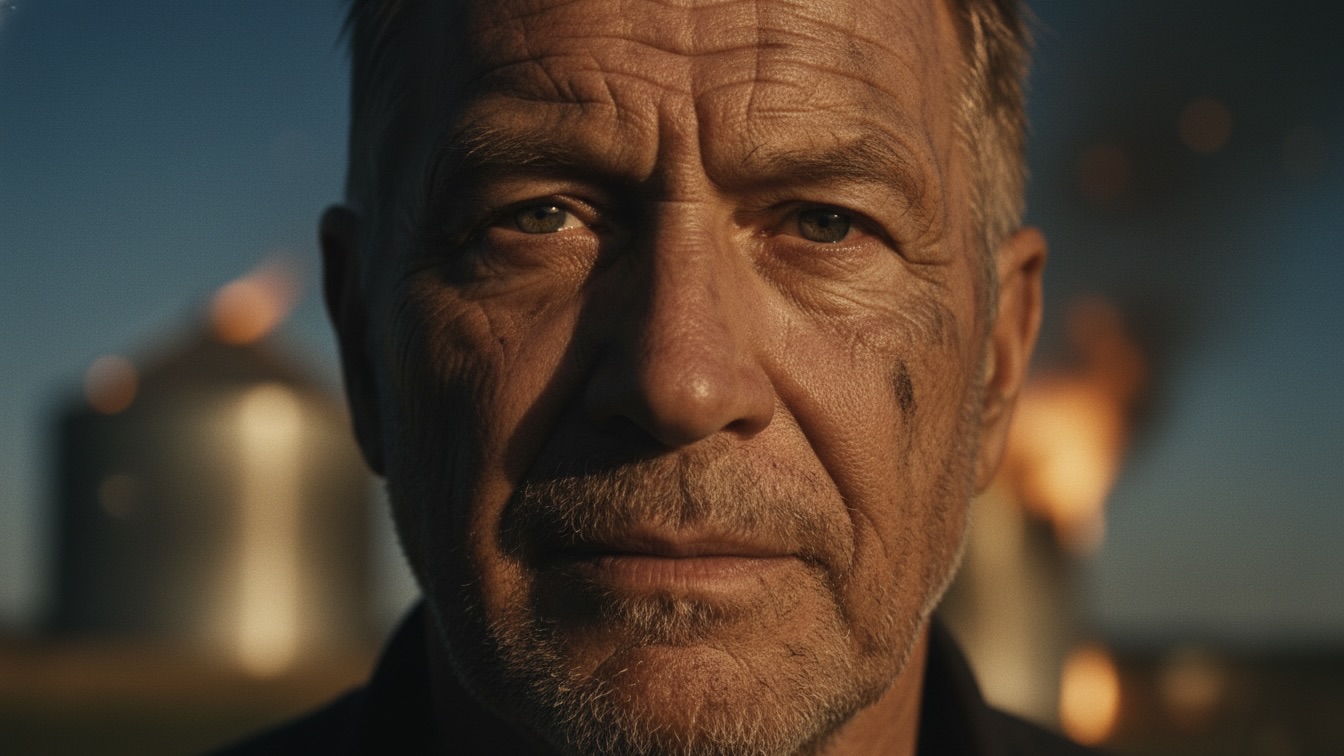
Format: Short Film / Anthology Episode | Est. Length: 10-12 minutes
Imagine a world where the horizon is a permanent heat haze and the sound of a gasoline engine is a death knell; Silt in the Well serves as a visceral entry point into a broader anthology series titled The Last Harvest. This series explores the fractured remains of agrarian society, where each episode focuses on a different "holdout" family or community fighting against the encroaching wasteland and the predatory militias that thrive in the vacuum of law. Each installment functions as a standalone character study within a shared universe of environmental collapse, building an overarching narrative about the cost of preserving humanity when the earth itself has died.
Max stands in a field of dead corn and spits into the dust, only to watch the moisture evaporate instantly before it can even soak into the parched earth. The silence of the dying farm is shattered by the mechanical roar of a militia truck, signaling that the world’s end has finally arrived at his gate.
A cynical farmer must choose between hoarding a cache of miracle seeds for a non-existent future or sacrificing his life to stop a ruthless militia from poisoning his community. In a world without water, his final act of defiance becomes the only thing left to grow.
The primary themes explore the conflict between survival and morality, questioning whether life is worth living if the cost is one's humanity. It delves into the concept of legacy, specifically the idea of planting "seeds" for a future the protagonist will never inhabit, contrasting the selfish hoarding of resources against the selfless act of communal preservation.
The story also functions as an environmental cautionary tale, utilizing the "Dust Bowl" aesthetic to ground its sci-fi elements in a terrifyingly plausible reality. The emotional undercurrent is one of terminal exhaustion, where the characters are not just fighting a villain, but the crushing weight of an environment that has become hostile to biological life.
For Max, the stakes are his soul and his remaining time; he is a man with a failing heart who must decide if his final days will be spent in cowardice or sacrifice. For Martha and the refugees, the stakes are literal survival, as they represent the last vestige of a society that values life over leverage. If Ben wins, the "Gold-Grain" becomes a tool of tyranny, ensuring that the only people who survive the drought are those willing to kill for it.
The external conflict is a classic siege dynamic between Max and Ben’s militia, escalating from a "protection racket" to a lethal battle for the farm’s hidden assets. Internally, Max battles a deep-seated cynicism that tells him the refugees are already dead and hope is a luxury he can no longer afford. The environment itself acts as a secondary antagonist, a relentless, dehydrating force that limits the characters' options and heightens the desperation of every movement.
Max, a weathered farmer, struggles to survive a terminal drought while hiding a cache of "Gold-Grain"—genetically engineered seeds that represent the only hope for a future. His isolation is shattered by Ben, a charismatic but ruthless militia leader who demands a tithe of grain and eventually poisons Max’s well to force his compliance. Max initially tries to remain neutral, even as Martha pleads for the lives of a group of refugees camped on their border, but the discovery of the poisoned well reveals that Ben has no intention of letting them survive.
When Ben murders a desperate refugee father in cold blood, Max’s internal wall of cynicism finally shatters. He realizes that giving the seeds to the militia would only empower a new era of tyranny and that his own life is a small price to pay for a clean slate. He orchestrates a final, explosive stand, igniting the methane and dust in his grain silo to destroy the militia’s leverage and provide a distraction, allowing Martha and the refugees to escape into the night with the Gold-Grain.
Max is a man defined by calcified grief and survivalist tunnel vision, starting the story as a cynical hoarder who views empathy as a liability. By the climax, his psychological arc completes a total reversal as he embraces martyrdom, trading his life for the slim possibility of a future he will never see. Ben serves as the dark mirror to Max’s pragmatism, a man who has traded his humanity for tactical advantage and views the apocalypse as an opportunity for "optimization." Martha acts as the narrative’s moral anchor; her thinning frame and quiet resilience provide the emotional catalyst that eventually forces Max to choose between his seeds and his soul. Supporting characters like Cody and the Refugee Father represent the two paths of the new world: the mindless aggression of the enforcer and the desperate vulnerability of the displaced.
Beat 1: Max inspects his failed crop under a punishing sun, spitting into the dust only to watch the moisture evaporate instantly. Ben arrives in a reinforced truck, demanding a grain "tithe" from a field that is clearly dead, signaling his true intent is to find the rumored "Gold-Grain." Max denies having the seeds, but Ben’s veiled threats make it clear the militia will return to liquidate the farm if he doesn't comply.
Beat 2: After Ben leaves, Max discovers militia goons poisoning his well with chemicals to force his hand and ensure his total dependency on their resources. Inside the house, Martha pleads for the life of a feverish refugee girl, but Max’s fear and cynicism lead him to snap at her, claiming they have no water to waste on the dying. The tension peaks when Max realizes that his secret cache of seeds is no longer a safety net, but a target that has effectively ended their quiet life.
Beat 3: Ben returns with armed men, escalating his threats and revealing he knows about the hidden, drought-resistant Gold-Grain stash beneath the floorboards. When a refugee father is murdered for seeking water, Max’s internal wall of cynicism finally shatters, and he decides to lead the militia to the silo under the guise of surrender. He prepares a trap using a gas can and the explosive potential of the grain dust, choosing to destroy his legacy rather than let it be stolen.
Beat 4: The silo erupts into a pillar of fire, providing a chaotic distraction that allows Martha to escape with the refugees and the true seeds. Max watches from his porch as his life's work burns, finally finding peace in a singular act of defiance that wipes the slate clean. As the militia flees the inferno, Max sits in the glow of the fire, drinking the last of his whiskey while the world turns to ash around him.
The episode begins with a sense of stifling, stagnant despair, characterized by the heat and the silence of the dead fields. As the militia’s pressure increases, the mood shifts into a high-tension thriller, marked by paranoia and the claustrophobia of the farmhouse. The climax provides an explosive emotional release, moving from the horror of the refugee’s murder to the cathartic, fiery destruction of the farm, ending on a note of bittersweet serenity as Max accepts his fate.
In a multi-episode arc, the focus would shift to Martha and the refugees as they journey across the "Dead Zones" to find soil capable of sustaining the Gold-Grain. The season would track the evolution of the refugee camp into a mobile society, constantly hunted by the remnants of Ben’s militia who seek the seeds for their own survival.
Thematic escalation would involve the struggle to maintain the "Gospel of Gold-Grain" without turning into the same kind of hoarders Max originally was. The season finale would see the first successful planting of the seeds, symbolizing a hard-won victory for communal cooperation over individualist greed.
The visual style is defined by "High-Contrast Desaturation," utilizing a palette of ochre, bone-white, and deep shadows to emphasize the harshness of the sun. Handheld camera work should be used during the militia encounters to create a sense of instability, while wide, static shots of the dead landscape emphasize the isolation of the farm.
The tone is "Neo-Western Gothic," blending the lawlessness of a frontier story with the atmospheric dread of a world that is physically decaying. Influences include the scorched-earth aesthetic of Mad Max: Fury Road and the intimate, grounded desperation of Children of Men.
The target audience includes fans of prestige post-apocalyptic drama (e.g., The Last of Us, Station Eleven) and viewers who enjoy high-stakes moral dilemmas. The age group is 18-45, appealing to those interested in environmental themes, survivalist narratives, and character-driven anthology storytelling.
The pacing follows a "Pressure Cooker" structure, starting with a slow, atmospheric build that establishes the environmental stakes before accelerating into a fast-paced confrontation. The 10-12 minute runtime necessitates a lean script with minimal dialogue, relying on visual storytelling to convey the history of the drought and the weight of Max’s decisions.
The silo explosion is the primary production challenge, requiring a mix of practical pyrotechnics for the initial blast and CGI for the sustained inferno and melting metal. The "Gold-Grain" itself should be treated as a hero prop, with a distinct metallic sheen that makes it look unnaturally valuable against the drab background.
Location scouting must prioritize a distressed, weathered farmhouse and a flat, barren horizon to minimize the need for digital set extensions. The sound design will be crucial, utilizing the constant drone of wind and the metallic groans of the silo to create an immersive sense of a world that is literally falling apart.


