Format: Short Film / Anthology Episode | Est. Length: 10-12 minutes
Imagine Dead Pines Lodge as a standout installment in an anthology series titled The Signal Gap, a collection of high-tension thrillers exploring the terrifying consequences of our digital footprints in the physical world. Each episode centers on a different character forced into "dead zones"—remote geographical pockets where technology fails and primal survival takes over. The series serves as a modern cautionary tale, blending the psychological horror of Black Mirror with the visceral, grounded survivalism of Yellowjackets, as characters realize that the ghosts they fear online can follow them into the woods.
A disgraced influencer arrives at a remote, signal-free lodge to escape a PR scandal, only to realize that her last geotagged post has led a silent predator directly to her doorstep.
After a public breakdown, a tech-addicted woman flees to a remote cabin where she must rely on a traumatized survivalist to fend off a physical stalker. When the only bridge to civilization is sabotaged, they must trade their digital tools for primitive traps to survive the night.
The primary theme is the "Digital Phantom Limb," examining the psychological agony and vulnerability inherent in modern connectivity. The story explores the withdrawal symptoms of the "always-on" generation, contrasting the performative safety of a screen with the brutal, unscripted reality of the natural world.
Secondary themes include "Redemption through Isolation" and the "Permanence of the Digital Record." Both Harper and Andrew are haunted by their online pasts—one by a recent scandal and the other by a historical tragedy—suggesting that true escape is only possible through a total, physical disconnection from the grid.
For Harper, the stakes are life and death; she is being hunted by a man who has transitioned from a digital nuisance to a physical threat. For Andrew, the stakes are moral and emotional, as he is forced to break his isolation and risk his life for a person who represents the very culture that destroyed his soul. Failure means not only a violent end at the hands of a stalker but a confirmation that there is no place left on earth to hide from the internet's reach.
The external conflict is a "cat-and-mouse" hunt in a closed-circle environment, where the antagonist—a silent, calculated stalker—has the advantage of preparation and a weapon. Internally, Harper battles acute technology withdrawal and a crippling anxiety that renders her useless in a survival situation. Andrew provides a secondary, interpersonal conflict; his deep-seated resentment toward Harper’s lifestyle creates a barrier of distrust that nearly proves fatal for both.
Harper, a high-profile influencer reeling from a livestream scandal, is dropped off at Dead Pines Lodge, a remote retreat with zero cellular service. She is met by Andrew, a surly, anti-tech caretaker who treats her digital withdrawal with open contempt. As a violent summer storm rolls in, Harper’s paranoia peaks when she spots a human figure watching her cabin from the shadows, though Andrew dismisses her fears as hallucinations caused by "unplugging."
The tension boils over when Harper discovers Andrew’s secret: he is a former content creator whose partner died during a dangerous stunt, leading to his self-imposed exile. Their mutual distrust is silenced when they find the only bridge out of the valley has been destroyed by a chainsaw. Realizing Harper’s stalker used her final airport post to track her, the duo must flee into the pitch-black woods. Using Andrew’s knowledge of the terrain and a series of "analog" traps, they neutralize the stalker in a brutal confrontation. In the aftermath, Harper is offered a chance to return to her digital life but chooses to remain in the silence, finally finding the peace she was looking for.
Harper (Protagonist): A woman whose entire identity is curated for an audience. She begins the story in a state of hyper-vocal panic and physical fragility, unable to function without a signal. By the end, she has shed her performative skin, proving her resilience in a life-or-death struggle and choosing the "real" over the "digital."
Andrew (Deuteragonist): A man living in a self-imposed purgatory. Initially cynical and aggressive, his arc reveals a deep well of grief and a protective instinct triggered by Harper’s plight. He moves from a state of bitter isolation to a place of active redemption, finding a way to save someone where he once failed.
The Stalker (Antagonist): A silent, looming presence. He represents the dark side of parasocial relationships—a man who believes he "owns" Harper because of the access she provided online. He is efficient, cold, and physically imposing.
1. Harper is abandoned at the lodge by a driver, her phone dying just as she realizes she is in a total "dead zone," triggering an immediate panic attack.
2. Andrew confronts Harper at the woodpile, establishing the "no-tech" rules and mocking her "PR nightmare" status while she notices the unnatural silence of the woods.
3. During a midnight storm, Harper sees a man’s silhouette outside her window; the power cuts out, and she is left in a sensory-deprivation nightmare.
4. Harper breaks into the lodge office to use the satellite phone, but Andrew catches her, leading to a heated argument about her "addiction" versus his "reality."
5. Harper discovers the "shrine" in the barn, uncovering Andrew’s past as a disgraced influencer and the blood-stained ring light from his partner’s fatal accident.
6. Andrew discovers the sabotaged bridge and realizes the stalker is already on the property, forcing an immediate retreat into the forest.
7. Andrew and Harper set a primitive "sapling trap" in a narrow trail bottleneck, using themselves as bait to lure the stalker into the kill zone.
8. The stalker hits the tripwire and is incapacitated by the sapling; Andrew engages in a visceral hand-to-hand struggle, eventually subduing the intruder.
9. Two days later, Harper is offered her "redemption" through a new phone and a viral story, but she rejects the device and chooses to stay at the lodge with Andrew.
The episode opens with High-Frequency Anxiety, characterized by rapid cuts and jarring sounds to simulate Harper's internal state. As she settles into the lodge, the mood shifts to Slow-Burn Dread, utilizing long takes and a minimalist score to emphasize the oppressive silence. The climax is a surge of Visceral Terror, shifting into a final tone of Quiet Catharsis, where the absence of sound is no longer a threat, but a comfort.
If expanded, the first season would follow Harper and Andrew as they turn Dead Pines Lodge into an underground "sanctuary" for others hunted by the digital world. The overarching narrative would involve a shadowy tech conglomerate attempting to "map" the dead zone, viewing the lodge’s inhabitants as "data-voids" that must be eliminated or reconnected.
As the season progresses, the thematic focus shifts from individual survival to a broader rebellion against the "Great Connection." Harper would evolve into a leader of the offline resistance, while Andrew’s past would return to haunt him in the form of a documentary crew or a "true crime" investigator digging into the gorge accident, threatening their sanctuary from the inside.
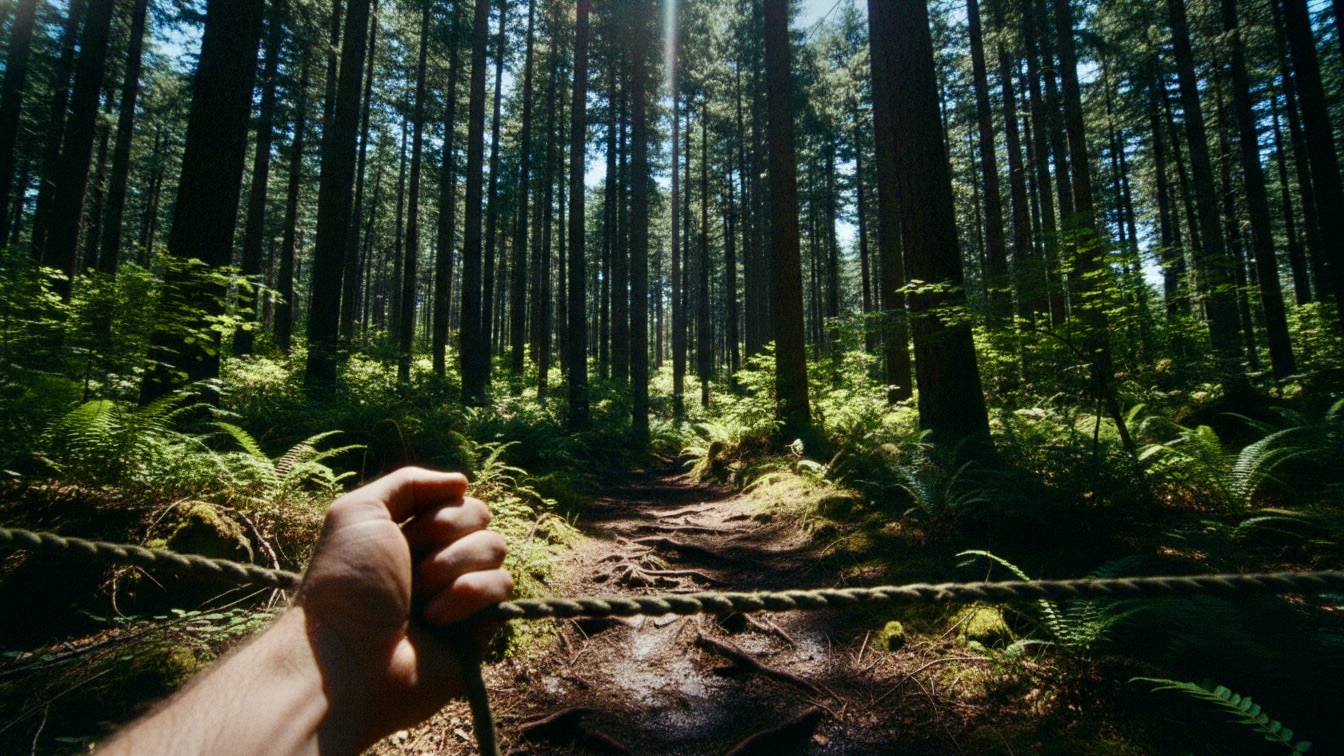
The visual style is "Naturalistic Gothic." The cinematography will contrast the cold, blue-white light of a smartphone screen with the warm, amber hues of firelight and the deep, "inky" greens of the forest at night. Handheld camera work will be used during Harper’s withdrawal phases to create a sense of instability, transitioning to steady, locked-off shots as she gains her footing in the wilderness.
Tonal comparables include the isolationist tension of The Lodge and the gritty, practical survivalism of The Revenant. The sound design is a key character, using "hyper-real" foley—the crunch of gravel, the snap of a twig, the roar of rain—to fill the void left by the lack of a traditional musical score.
The target audience is Adults 18-45, specifically "Digital Natives" who experience the same tech-anxiety depicted in the story. It appeals to fans of psychological thrillers, survival horror, and social commentary, fitting perfectly within the viewing habits of audiences who enjoy premium anthology content on platforms like Netflix, HBO, or Hulu.
The 10-12 minute runtime demands a "Propulsive Pacing" model. Act I (Arrival/Withdrawal) occupies the first 3 minutes; Act II (The Discovery/The Sabotage) runs from minutes 3 to 8; and Act III (The Hunt/The Choice) concludes the final 4 minutes. There is no "B-plot," ensuring every second increases the claustrophobia of the setting.
The production requires a singular, high-production-value cabin location and a nearby forest with a ravine. The "bridge" can be handled via a single practical set piece showing the cut beams, avoiding the need for a full-scale bridge collapse.
Practical effects are paramount for the "sapling trap" and the physical struggle to maintain the "analog" theme of the story. Night shooting will require high-sensitivity sensors (e.g., Sony Venice or Arri Alexa 35) to capture the forest’s depth without the use of artificial "movie" moonlight, keeping the experience immersive and terrifying.


