Format: Short Film / Anthology Episode | Est. Length: 10-12 minutes
Imagine a gritty, noir-infused anthology series where every episode uncovers a different layer of systemic corruption through the eyes of a disgraced lawman. This story serves as a high-octane entry point into a world where the line between the law and the lawless is blurred by the salt spray of the coast and the cold weight of stolen gold.
"The Meridian Files" is an anthology series centered on Mitch Reed, a detective navigating the fallout of a massive gold heist that has corrupted every level of local government. Each episode explores a different lead or consequence of the Meridian Airport theft, blending procedural elements with high-stakes maritime and urban action. The series tracks Mitch’s descent from a decorated officer to a vigilante investigator as he pieces together a conspiracy that reaches far beyond the local precinct.
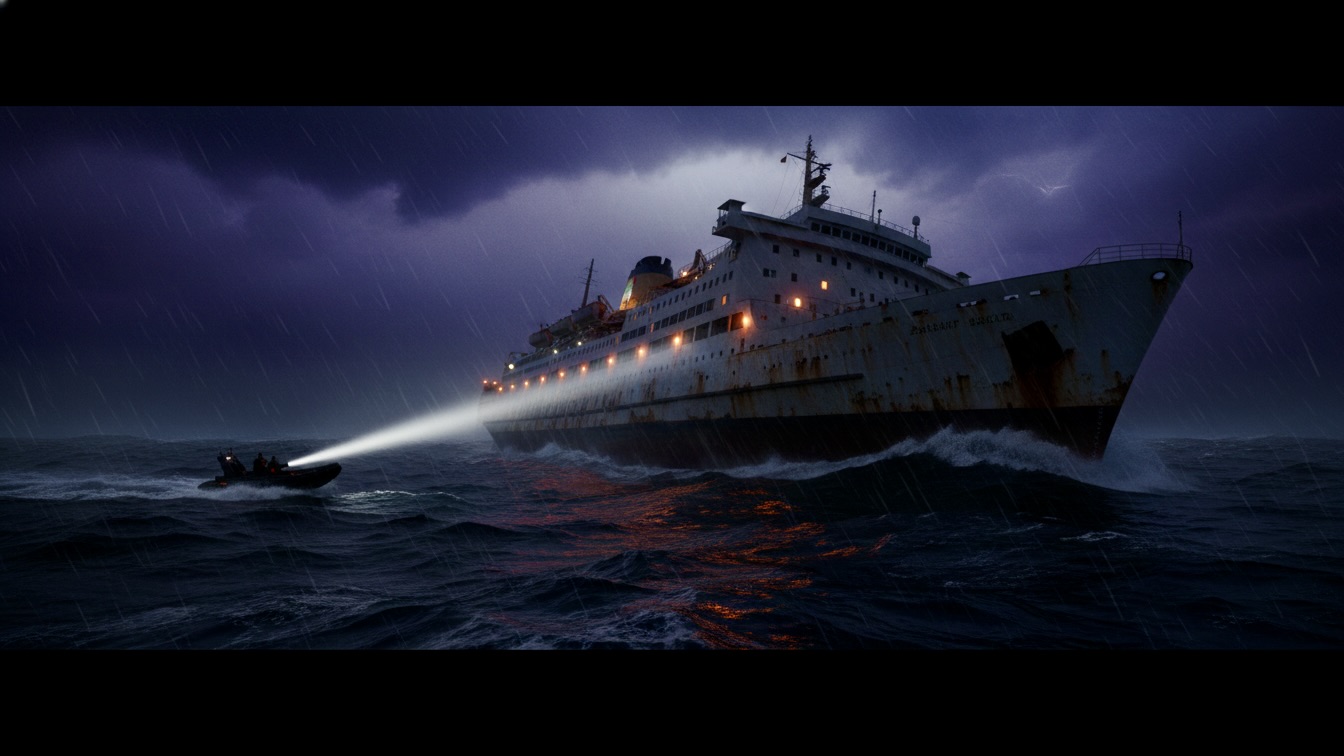
A suspended detective boards a rusting ferry in a brewing storm, only to witness a tactical boarding party execute a passenger in a cold-blooded hunt for forty million dollars in missing gold.
A disgraced cop must team up with a cynical ferry deckhand to stop a mercenary unit from stealing a fortune in gold bullion during a violent maritime storm. If they fail, the ship will capsize, and the true mastermind behind the heist will remain in the shadows forever.
The episode explores themes of systemic corruption and the weight of professional integrity versus bureaucratic compliance. It highlights the "invisible" workers—the suspended cops and the deckhands—who become the only line of defense when the official systems of security are compromised or complicit.
The secondary theme is the physical and psychological toll of "the job." Mitch’s bad knee and Casey’s youthful cynicism represent the different stages of burnout, yet both find a shared purpose in the face of absolute predatory violence, suggesting that heroism is often a matter of being in the wrong place at the right time.
For Mitch, the stakes are his life and the slim hope of vindication; if he dies, the truth about the Meridian heist dies with him. For the passengers on the Queen of Avery, the stakes are survival, as the ship risks capsizing under the weight of the storm and the mercenaries' sabotage. For the antagonist, the stakes are the forty million dollars in gold and the anonymity of the mastermind pulling the strings.
The primary external conflict is the tactical mercenary unit, a professional and lethal force that views civilians as "meat" and has no qualms about collateral damage. Internally, Mitch battles his own physical limitations and the bitterness of his suspension, while Casey must overcome his paralyzing fear to take a stand. The environment itself acts as a secondary antagonist, with the violent storm and the listing ship creating a ticking clock that threatens to kill everyone regardless of the outcome.
Mitch Reed, a detective sidelined for digging too deep into the Meridian gold heist, follows a suspicious courier onto the Queen of Avery ferry during a massive summer squall. As the storm peaks, a mercenary team boards the vessel under the guise of a security drill, executing the courier to retrieve a bag containing the access codes for a hidden shipment of gold bullion stashed in a semi-truck on the vehicle deck.
Mitch evades the lockdown and joins forces with Casey, a young deckhand who witnessed the execution. Together, they realize the mercenaries plan to drop the gold through a ballast hatch into a waiting submersible, a move that would capsize the unstable ferry. In a desperate final confrontation on the vehicle deck, they use the ship’s own equipment to flush the mercenaries and the gold into the depths, saving the passengers but leaving the ultimate architect of the crime at large.
Mitch Reed: A weary, suspended detective with a "bad attitude" and a chronic knee injury who refuses to stop chasing a closed case. He begins the episode isolated and cynical, but through the necessity of the crisis, he regains his sense of duty and mentorship. By the end, he is physically battered but more determined than ever to find the man behind the message on the burner phone.
Casey: A twenty-year-old ferry deckhand who uses sarcasm as a shield against a dead-end job and the terrifying reality of the hijacking. He starts as a panicked bystander, but under Mitch's pressure, he evolves into a capable ally, eventually making the decisive move to release the cargo. His arc ends with a newfound respect for the "mall cop" and a grim understanding of the world’s true dangers.
The Lead Mercenary: A cold, professional predator who views the heist as a simple mathematical equation and human life as an inconvenience. He represents the "predator" philosophy, showing no mercy until the moment he is outmaneuvered by the very "prey" he dismissed. His demise at the hands of a deckhand serves as a sharp subversion of his perceived superiority.
Beat 1: Mitch sits in his car, reading his suspension letter as a storm breaks over the ferry terminal, establishing his isolation and the oppressive atmosphere. He follows a sweating man with a heavy olive-drab bag onto the Queen of Avery, his detective instincts overriding his civilian status. The ferry departs into the black water just as the rain turns into a violent, windshield-smashing squall.
Beat 2: The lights flicker and die as a metallic thud echoes through the hull, signaling the arrival of a mercenary boarding party via stealth craft. A professional voice announces a "security drill" over the PA, but Mitch recognizes the tactical gear and rifles of a professional hit squad. He slips through a maintenance door just as the mercenaries begin corralling the passengers and confiscating phones.
Beat 3: In the dark service corridors, Mitch encounters Casey, a terrified deckhand who has just witnessed the execution of the man with the bag. Mitch calms the kid down and realizes the bag was just a key to a larger payload hidden in a semi-truck on the vehicle deck. They deduce the mercenaries' plan: to drop the gold through a ballast hatch into a waiting submersible, a move that would capsize the unstable ferry.
Beat 4: Mitch and Casey reach the catwalk overlooking the vehicle deck, witnessing the mercenaries rigging the winch for the gold crates. The ship lurches to a dangerous thirty-degree tilt, threatening to roll over as the storm batters the broadside. Mitch decides to draw their fire, tasking Casey with using a high-pressure fire hose to disrupt the mercenaries' footing.
Beat 5: Mitch drops onto the deck and engages in a lopsided gunfight, using the semi-truck for cover while Casey blasts the mercenaries with the fire hose. The lead mercenary prepares to kill Casey, but the kid pulls the emergency cargo release, dropping the gold, the winch, and the villain into the ocean. The ship rights itself instantly, and Mitch subdues the remaining attackers as the vessel limps toward the harbor.
The episode begins with a sense of stifling, humid dread and professional defeat, transitioning into sharp, cold adrenaline as the hijacking begins. The middle act is defined by claustrophobia and the "foxhole" camaraderie between Mitch and Casey. The climax provides a cathartic release of tension as the weight is literally lifted from the ship, ending on a somber, noir-inflected note of unresolved conspiracy.
If expanded, the season would follow Mitch as he uses the burner phone to trace the "Asset compromised" message back to a high-ranking official within the Meridian Port Authority. Each episode would focus on a different piece of the logistical puzzle—the sub-contractors, the money launderers, and the corrupt cops who facilitated the forty-million-dollar disappearance.
The thematic escalation would move from simple greed to a commentary on how the city’s infrastructure is being cannibalized by its own protectors. Mitch’s character arc would involve him deciding whether to take the evidence to the FBI or to exact his own brand of justice as he realizes the legal system is too compromised to hold the mastermind accountable.
The visual style is "Industrial Noir," characterized by high-contrast lighting, sickly yellow emergency glows, and deep, bruised purples in the sky. The camera work should be handheld and kinetic during the action sequences to emphasize the instability of the ship, contrasting with static, lonely wide shots of the ferry in the vast, dark water.
Tonal influences include the gritty realism of Heat and the isolated maritime tension of Captain Phillips. The atmosphere should feel wet and heavy, with the sound design emphasizing the groaning metal of the ship and the relentless roar of the storm to create a constant sense of environmental peril.
This content is designed for fans of gritty crime dramas and tactical thrillers, specifically the 25-45 demographic that enjoys shows like Reacher, Bosch, or The Old Man. It appeals to viewers who appreciate grounded, "blue-collar" heroes and stories where the protagonist is outgunned but not outsmarted.
The pacing is a "slow burn to explosion" structure. The first three minutes establish the mood and stakes, followed by a rapid escalation of tension at the five-minute mark when the mercenaries board. The final five minutes are a relentless, high-tempo sequence on the vehicle deck, concluding with a quiet, reflective denouement at the docks.
The production requires a heavy emphasis on practical water effects and a gimbal-mounted set for the vehicle deck to simulate the ship’s thirty-degree tilt. The "drop" of the gold crates can be achieved through a combination of practical rigs and a digital extension for the ocean floor below the hatch.
The lighting design is critical; the transition from the "stale" interior lighting to the yellow emergency strobes provides the primary visual shift for the second act. Sound design must be layered, using the mechanical roar of the ferry’s engines as a rhythmic heartbeat that speeds up as the tension rises.


