Gus battles a ladybug invasion and a mysterious mail saboteur while attempting a world record in a disconnected Winnipeg.
The sunroom was a kiln. That was the only word for it. In Winnipeg, people think summer is a myth until it hits you like a wet wool blanket fresh out of the dryer. I sat at my mahogany desk, the one I’d dragged from the office three years ago when the firm decided I was too 'legacy' for the new digital architecture. My hand was cramping. It wasn't just a dull ache; it was a sharp, rhythmic throb that traveled from my thumb to my elbow. I was on page four hundred and twelve of the master chain. The Guinness people were coming on Tuesday. They didn't care about my carpal tunnel. They cared about the physical continuity of the ink.
Then there were the ladybugs. They weren't the cute ones you see in children’s books. These were the invasive Asian beetles, the ones that smell like a wet dog when you squish them and have a bite that feels like a needle prick. They were everywhere. They coated the windows in a shifting, orange-red carpet. They crawled over the legs of my desk. They landed on my bald spot with a tiny, sickening click. I flicked one off the edge of my paper. It landed in my lukewarm coffee. It didn't drown. It just paddled in circles, mocking me.
"Stay out of the ink, you little bastards," I muttered. My voice sounded thin in the quiet house. Ever since the provincial government pulled the plug on social media, the silence in the neighborhood had become heavy. It was the 'Digital Sanity Act of 2025.' They called it a blessing. No more TikTok dances, no more outrage cycles, just pure, analog peace. For a man who spent forty years balancing ledgers, it should have been a dream. But peace is just another word for noticing every single bug that crawls across your floor.
I reached for my bottle of Iroshizuku Kon-peki. It’s a deep, vibrant blue. It makes the words look like they’re floating on the page. But the bottle was light. Too light. I’d ordered a six-month supply from a boutique shop in Tokyo. It was supposed to arrive last week. I checked the tracking on the government-approved 'Essential Services Only' terminal in the hallway. Seized. The Strait of Hormuz was acting up again. Some drone strike or a tanker blockade had redirected the cargo ships. My ink was sitting in a shipping container under a desert sun while I was stuck here with a box of cheap, blue ballpoints I found in the back of the junk drawer.
I picked up a Bic. It felt light and plastic. It felt like a lie. I pressed the tip to the paper. The line was thin and scratchy. It looked like the handwriting of a desperate man. I was writing to a retired librarian in Brandon. We were supposed to be the longest continuous chain of handwritten correspondence in history. No stamps, just a private courier network we’d set up through the local gardening clubs. It was a masterpiece of logistics. It was the only thing I had left that felt like it mattered.
A ladybug landed on the tip of the pen. I didn't flick it. I watched it. Its wings were slightly translucent. It looked exhausted. "Me too," I said. I shook the pen, and the beetle fell onto the page. I kept writing, steering the pen around the insect. I was describing the weather. That’s what people do when the world stops. They talk about the heat and the rain and the way the light hits the side of the garage at four in the afternoon. It’s the only truth that doesn't change when the servers go down.
I heard the mail slot in the front door clatter. That was early. The neighborhood courier, a kid named Leon who looked like he hadn't seen the sun since the ban started, usually didn't show up until five. I stood up, my knees cracking like dry kindling. I walked through the living room, dodging the piles of newspapers I’d been collecting. The air was thick with the scent of old paper and the faint, metallic tang of the ladybugs.
I reached the door and saw the canvas bag sitting on the mat. It was bulging. I picked it up and felt something strange. It wasn't just the weight of the letters. There was a crinkle. A sound that didn't belong. I carried it back to the kitchen table and dumped the contents out. Amidst the cream-colored envelopes and the postcards from Kenora, there were scraps of neon-green paper. They weren't folded. They were crumpled into tight little balls.
I picked one up and smoothed it out. The handwriting was jagged, written with a thick marker. It said: 'The silt knows the truth. The scales are coming back. We are the river, and the river is us.' Underneath the text was a crude drawing of a human figure with a fish tail, but the tail was rotting. I felt a cold prickle on the back of my neck. I opened another one. 'The zombie fish don't forget. Tell the dry-landers the water is rising.'
"What the hell is this?" I asked the empty kitchen. I looked at the ladybugs clustering in the corners of the ceiling. They seemed to be watching me. I thought about the reports on the radio. Strange blooms in the Red River. Fish floating belly-up with milky eyes. They called it a 'natural cycle,' but the green notes in my hand felt like something else. They felt like a leak. A leak from a world I didn't understand anymore.
I spent the next hour sorting through the mail bag. Out of forty-two legitimate letters destined for the chain, there were fifteen of these 'fish-folk' notes. They were tucked inside the folds of the envelopes, not even sealed. Someone was intercepting my courier bags. Someone was using my Guinness attempt as a Trojan horse. My heart hammered against my ribs. This wasn't just a prank. This was a violation of the ledger. An accountant’s nightmare is a corrupted data set, and my letters were as corrupted as they could get.
I walked to the window and looked out at the street. Winnipeg in July is a study in green and gray. The elms were thick with leaves, casting deep shadows over the cracked pavement. Across the street, Mrs. Hickes was in her garden. She was wearing a wide-brimmed straw hat and was aggressively hacking at a patch of weeds. She was seventy-five, a former high school principal who viewed the social media ban as a personal affront to her civil liberties. She called herself a 'youth advocate,' which mostly meant she let the neighborhood kids smoke on her porch and gave them cookies while they complained about their parents.
I saw a flash of movement behind her lilac bushes. A head of messy, bleached-blonde hair popped up and then vanished. Leon. He was supposed to be on his route. He was supposed to be delivering my letters to the next drop-point at the hardware store. Instead, he was skulking in the Hickes' yard. I grabbed the bag of green notes and headed outside. The heat hit me like a physical blow. The sidewalk was littered with dead ladybugs. They crunched under my shoes like dry cereal. It was a disgusting, rhythmic sound.
"Leon!" I yelled. My voice cracked. I cleared my throat and tried again. "Leon, get over here!"
The boy emerged from the bushes. He was wearing an oversized hoodie despite the ninety-degree heat. He had dark circles under his eyes and was clutching a messenger bag to his chest like it contained the crown jewels. He looked at me with the bored, glassy stare of a generation that had been forced to look at the real world for the first time in a decade.
"Gus. Hey," he said. He didn't move. He just stood there on the edge of the sidewalk, looking at my shoes.
"What is this?" I held up one of the green notes. "Why are these in my bags? You’re the only one who handles the transfers between my house and the depot."
Leon shrugged. It was a slow, deliberate movement. "I don't know, man. Maybe the wind blew them in?"
"The wind blew fifteen crumpled notes into a cinched canvas bag?" I stepped closer. I could see the sweat beading on his forehead. "Leon, this is a world record attempt. It’s a legal document of human interaction. You’re tampering with history."
"History is boring, Gus," Leon said. He looked over his shoulder at Mrs. Hickes' house. "Nobody cares about your letters. They’re just... paper. It’s like watching a tree grow in real time. We’re bored. We’re dying of boredom out here."
"So you’re stuffing my mail with fish-folk nonsense?" I shook the green paper at him. "What is this 'silt' crap? What are you kids doing?"
Mrs. Hickes stopped her weeding and stood up, wiping her brow with a gloved hand. She marched toward the fence. "Leave the boy alone, Gus. He’s just a kid. He’s trying to find a way to breathe in this vacuum you and your friends created."
"I didn't create the ban, Martha," I snapped. "I just enjoy the lack of notification pings. It’s called peace of mind. You should try it. Maybe your blood pressure would go down."
"Peace of mind is a luxury for people who have already lived their lives," she said. Her eyes were sharp behind her bifocals. "These kids have nothing. No connection. No community. You took away their world and gave them... what? A ladybug plague and a river full of chemicals?"
"The ladybugs are a natural phenomenon," I said, though I didn't believe it. "And the river is... well, it’s the Red. It’s always been murky."
"It’s changing," Leon whispered. He finally looked me in the eye. "Haven't you seen them? Down by the forks? The kids who stay in the water too long? They aren't just swimming, Gus. They’re... becoming."
"Becoming what? Fish?" I let out a dry, hacking laugh. "It’s a trend, Leon. A viral stunt without the internet. You’re just bored."
"Wait until the inspector sees your bag," Leon said, his voice cold. "He won't care about your record. He’ll care about the fact that you’re running a sub-channel for the resistance."
"The resistance?" I felt a pulse of genuine fear. The government didn't have much of a sense of humor these days. Any organized 'community' that wasn't approved by the Ministry of Heritage was viewed as a potential cell of digital radicals. "Leon, tell me you’re not using my mail for something illegal."
"It’s just talk," Leon said, turning away. "But talk is all we have left. See you tomorrow, Gus. If you still have a mailbox."
He disappeared into the backyard of the Hickes' house. I stood there, the green paper fluttering in the hot breeze. A ladybug landed on my thumb. I crushed it. The smell was sharp and foul, like burning rubber and old vinegar. I looked back at my house. The sunroom windows were orange with the beetles. It looked like the building was bleeding. I had to finish the chain. I had to prove that the old ways still worked, before the kids and the bugs and the river took it all back.
I didn't go back inside. I followed him. I knew it was trespassing, and I knew Mrs. Hickes would probably call the police—or worse, give me a lecture—but I had to know. I rounded the corner of her house, my shoes sinking into the overgrown lawn. The ladybugs were thicker here. They were clustered on the siding of the house in pulsing, vibrating clumps. The sound of their wings was a low-frequency hum that made my teeth ache.
In the center of the backyard, under an old apple tree that hadn't seen a prune in a decade, was a setup that looked like a bomb-maker’s workshop. There were car batteries, a tangle of orange extension cords, and a series of antennas made from old colanders and wire hangers. Leon was sitting on a milk crate, hunched over a laptop that looked like it had been dropped off a roof. A group of three other teenagers were huddled around him. They were all wearing those strange, scale-patterned face masks.
"Is it working?" one of them asked. A girl with purple hair and a nose ring. "Did we get a signal?"
"The mesh is holding," Leon said, his fingers flying across the keys. "But we’re only getting pings from the North End. We need the courier route to bridge the gap to the suburbs. That’s why the letters are important. They carry the physical keys."
"The keys?" I stepped out from behind the lilac bush. "What keys?"
They all jumped. The girl with the purple hair let out a yelp. Leon slammed the laptop shut, but not before I saw the screen. It wasn't a website. It was a map of Winnipeg, covered in glowing blue lines. It looked like a nervous system. Or a river delta.
"Gus, you can't be here," Leon said, his voice shaking. "This is private property."
"I’m pretty sure Martha’s backyard isn't a sovereign state," I said, walking toward them. "What are you doing? Is that a wifi hotspot? You know the fines for that. They’ll take your house, Martha!"
Mrs. Hickes appeared on the back porch, holding a tray of lemonade. She didn't look surprised. "They can try, Gus. But I’m an old woman. What are they going to do? Put me in a home? I’m already in one. These children are building something. Let them work."
"They’re building a network," I said, pointing at the colanders. "With my mail as the backbone. You’re using my letters to transport... what? Code?"
"Not code," Leon said. He opened the laptop again. He seemed to realize that I wasn't going to run to the authorities immediately. "Encrypted fragments. We can't send big files over the mesh. The government monitors the airwaves. But we can send small pieces. We hide them in the letters. A specific sequence of words, a certain way of folding the paper. It’s steganography."
"Why?" I asked. I sat down on a rusted lawn chair. The heat was making me dizzy. "Why go through all this trouble? Just to talk to each other about your... fish identity?"
"It’s not an identity, Gus. It’s a protest," the purple-haired girl said. "The river is dying. The ladybugs? They aren't supposed to be here in these numbers. It’s the heat. The permafrost is melting up north, and things are coming out of the ground. Things that shouldn't be awake. The 'fish-folk' are just kids who are tired of pretending that the world is fine just because we can't see the disaster on a screen anymore."
"The ladybugs are dying because they’re eating the contaminated larvae from the riverbanks," Leon added. "They’re like canaries in a coal mine. And your record attempt? It’s the only thing that moves through the city without being searched. The couriers are mostly old people and kids. The 'Essential Services' cops don't care about a bunch of letters to Brandon."
I looked at the green notes in my hand. 'The silt knows the truth.' It wasn't a meme. It was a warning. My stomach turned over. I thought about my ledger, my beautiful, orderly ledger. I thought about the Guinness inspector, a man named Mr. Henderson who was known for his love of 'purity' in record-breaking.
"If Henderson finds a single one of these in the chain, he’ll disqualify the whole thing," I said. "Three years of work. Thousands of hours of writing. All for nothing."
"And if we don't get the warnings out, people are going to keep drinking the water," Leon said. "There was a spill at the refinery. Upstream. They didn't announce it because they didn't want a panic. But the fish know. And the bugs know. We’re just trying to tell the humans."
Suddenly, a black sedan pulled up to the curb in front of my house. I recognized the government plates. A man in a crisp, gray suit stepped out. He was carrying a briefcase and looking at his watch. He looked like he’d never stepped on a bug in his life.
"Henderson," I whispered. "He’s early."
"He can't go in there," Leon said, standing up. "If he sees the mail bags..."
"He’s not here for the mail bags," I said, a wave of panic washing over me. "He’s here for the audit. He’s going to check the sunroom."
I looked at the house. The ladybugs were now a solid, pulsing mass on the sunroom windows. You couldn't even see the glass. It looked like a giant, beating heart made of orange shells. The inspector started walking up my driveway. He stopped, looked at the windows, and frowned. He pulled out a handkerchief and wiped his face.
"We have to do something," Mrs. Hickes said. She looked at the kids. "Leon, take the bag. Gus, go greet him. Buy us some time."
"Time for what?" I asked.
"To make sure your record is the most interesting thing he’s ever seen," she said with a bleak smirk. "Go!"
I ran back to my house, my heart thumping against my ribs. I reached the front door just as Henderson was about to knock. I was sweating, my shirt sticking to my back. I smelled like ladybugs and desperation.
"Mr. Henderson!" I gasped, leaning against the doorframe. "You’re... you’re early. I wasn't expecting you until Tuesday."
"The Ministry moved the audit up, Mr. Gus," Henderson said. He didn't offer to shake hands. He just stared at the ladybug that was currently crawling up my neck. "Is there a problem? You look... distressed."
"Just the heat," I said, wiping the bug away. "And the insects. They’re quite a nuisance this year, aren't they?"
"They are an infestation," Henderson said, looking at the sunroom. "I hope they haven't compromised the integrity of the paper. We require pristine conditions for the final tally."
"Pristine," I said, opening the door. "Absolutely. Please, come in. Let’s go to the kitchen. I’ll make some tea."
"I’m not here for tea, Gus. I’m here for the ink."
He pushed past me into the house. I followed him, my mind racing. I could hear movement in the backyard. I could hear the fence creaking. I prayed Leon was fast. I prayed the 'resistance' knew how to hide their tracks better than they knew how to build antennas out of colanders.
Henderson didn't make it to the sunroom. As soon as we stepped into the hallway, a gust of wind—or perhaps just the sheer weight of the swarm—caused the sunroom door to fly open. A wave of ladybugs, thousands of them, spilled into the hallway. It was like a red tide. They hit the floor with a sound like pouring gravel. Henderson let out a yelp that was far too high-pitched for a man in a gray suit. He began swatting at the air, his briefcase flying open. Papers—official government audit forms—scattered everywhere, instantly covered in crawling orange spots.
"Good god!" Henderson screamed. "This is biological warfare! This is a hazard!"
"It’s just nature, Mr. Henderson!" I shouted over the hum. I felt a strange sense of relief. The chaos was a shield. "They’re attracted to the warmth!"
Through the swarm, I saw the back door to the kitchen swing open and shut. Leon. He’d made it. He’d swapped the bags. Or he’d taken them. I didn't know which was worse, but at least the neon-green evidence was gone from my immediate vicinity. I grabbed Henderson’s arm and pulled him back toward the kitchen. "In here! It’s clearer in here!"
We collapsed into the kitchen chairs. Henderson was hyperventilating. He was picking ladybugs out of his hair with trembling fingers. "I cannot... I cannot certify a record in these conditions. The integrity... the hygiene..."
"The integrity is in the writing!" I said, leaning forward. I realized I didn't care about the Guinness book anymore. Not the way I did an hour ago. I cared about the noise. I cared about the kids in the backyard. "Look at this, Henderson."
I reached into my pocket and pulled out the last green note I’d kept. The one about the silt. I laid it on the table. Henderson blinked at it. "What is this? This isn't part of the chain."
"It’s the new chain," I said. I looked at the ladybugs clustering on the rim of my coffee cup. "You want to see a record of human interaction? You want to see how people talk when you take away their screens? This is it. It’s messy. It’s crumpled. It’s full of warnings about a world that’s breaking down while we sit here and count pages of small talk."
Henderson looked at the note, then at me. His face was pale. "This is... this is unauthorized communication. I should report this."
"To who?" I asked. "The Ministry of Silence? Look out the window, Henderson. The world is talking. It’s just not talking to you."
I heard the back door open again. This time, it wasn't just Leon. It was all of them. The purple-haired girl, the other kids, and Martha Hickes. They were carrying stacks of paper. Not my letters, but their own. Sheets of notebook paper, napkins, the backs of grocery receipts. All of them covered in that jagged, urgent handwriting. All of them telling the story of the river, the spill, the dying bugs, and the kids who were watching it happen.
"We’re adding them to the chain," Leon said, stepping into the kitchen. He looked at Henderson with a defiance that made him look ten years older. "Gus said the record is about continuity. Well, this is the continuation. This is the next chapter."
I looked at the pile of papers. It was a beautiful disaster. It was the antithesis of my ledger. It was unorganized, unverified, and completely real. I picked up my scratchy Bic pen. "He’s right. If you want to certify the longest hand-written record of life in Winnipeg, you have to include the life that’s actually happening."
Henderson looked like he was about to faint. He looked at the teenagers, the old woman in the gardening hat, and the retired accountant who was currently covered in ladybugs. He looked at the swarm pulsing in the hallway, a living barrier between him and his orderly world.
"I... I will have to consult the manual," he stammered. He stood up, clutching his empty briefcase. "This is... highly irregular."
"Everything is irregular now," Mrs. Hickes said, handing him a glass of lemonade. "Drink this. It’s from the rain barrel. It’s perfectly safe. For now."
Henderson didn't drink it. He turned and fled, tripping over the threshold as he ran for his car. We watched him drive away, his tires crunching over the carpet of beetles in the driveway. The silence that followed was different. it wasn't the heavy, forced silence of the ban. It was the quiet of a group of people who had finally found something to say.
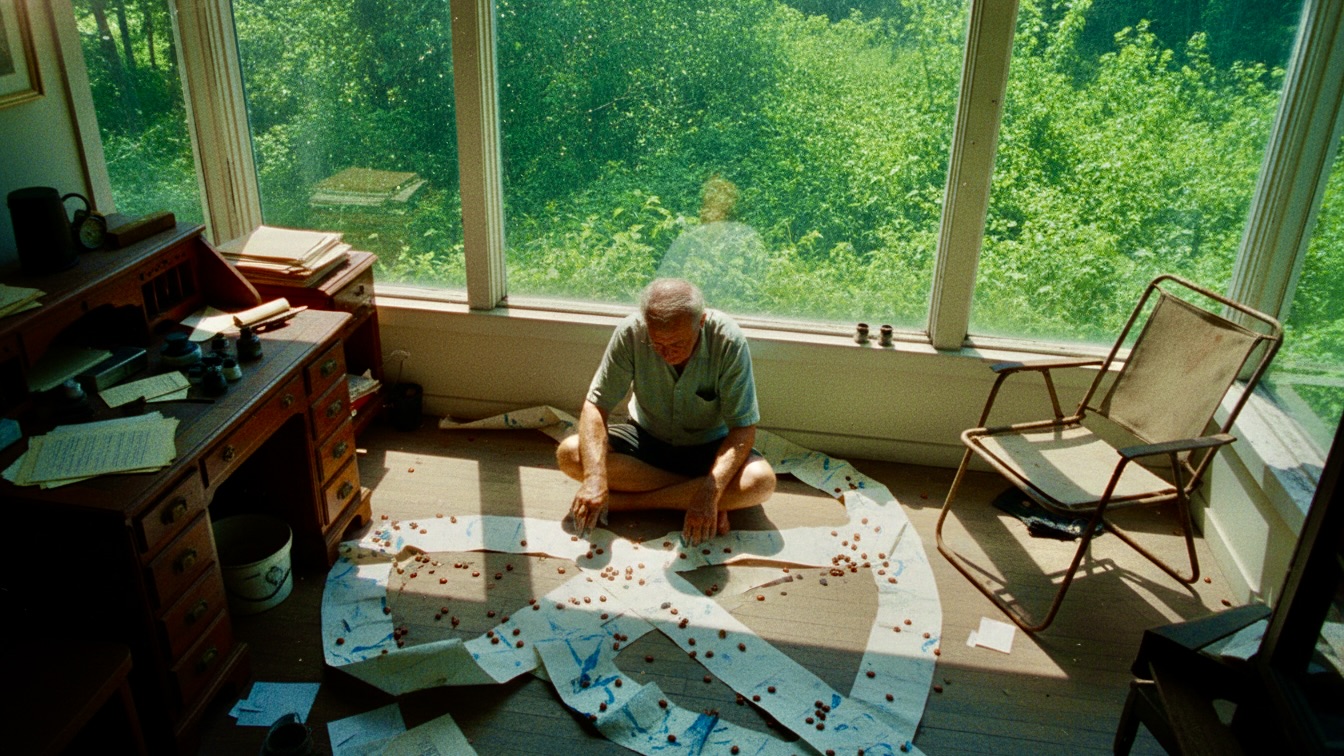
We spent the rest of the afternoon in the sunroom. The heat was still there, and the ladybugs were still dying, but we opened the windows and let the air move. We sat on the floor, surrounded by thousands of letters. The old chain and the new one. We began to stitch them together. Literally. Leon found a needle and thread, and we started sewing the pages into a single, massive scroll.
I wrote the transition. I used the cheap ballpoint, and I didn't care. I wrote about the ladybugs. I wrote about the smell of the river. I wrote about the way the light felt when you knew it was revealing something hidden. The kids wrote about their 'fish' protests, their secret networks, and their fear that the world their parents built was finally dissolving. Martha wrote about the high schools she’d run and the way she saw the same fire in these kids that she’d seen in the sixties.
By sunset, the scroll was thirty feet long and growing. It snaked across the sunroom floor and out into the hallway. The ladybugs had calmed down. They were no longer a swarm; they were just part of the room, a red and orange texture on the walls. We sat in the middle of them, our hands stained with ink.
"The Guinness people will never accept this," I said, leaning back against the mahogany desk. My arm was numb, but the throb in my elbow had faded into a dull, satisfied hum.
"Who cares?" Leon said. He was lying on his back, staring at the ceiling. "We know it’s a record. We were there for the whole thing."
"It’s a ledger of the end of the world," the purple-haired girl said. She was braiding a piece of the scroll into her hair. "Or the beginning of a new one. One that smells like ladybugs."
I looked at my hands. They were covered in blue ink and the faint, yellow residue of the beetles. I felt a strange, bleak smirk tugging at the corners of my mouth. We were ridiculous. A group of outcasts in a bug-infested house, writing letters to a world that wasn't listening. But as the sun dipped below the horizon and the city of Winnipeg turned into a silhouette of trees and shadows, I realized it was the most honest work I’d ever done.
I picked up a piece of green paper and a Bic pen. I began to write. Not to a librarian in Brandon, but to whoever would find this scroll a hundred years from now, when the river had taken the streets and the ladybugs were the only ones left to read it.
I told them about the heat. I told them about the silence. And I told them about the crunch.
“I looked at the water rising in the distance, knowing the silt was already claiming the first of the letters.”


