My front tire hit a stray branch, sending a violent shudder up through my forearms.
My front tire hit a stray branch, sending a violent shudder up through my forearms. The shock resonated in my elbows. I squeezed the brake levers, feeling the familiar, high-tension bite of the brake pads against the steel rim. The bike skidded slightly on the damp pavement, the rubber squealing an agonizing, high-pitched note before settling into a dead stop.
My hands were numb. They had been numb since Tuesday. It was currently Friday. Or perhaps Saturday morning. Time had dissolved into a single, continuous loop of streetlights and asphalt. Insomnia is not a mental state. It is a physical rot. It lives in the hinges of your jaw. It lives in the microscopic twitch under your left eye. I let my head drop forward, resting my forehead against the cold, sweat-slicked metal of the handlebars.
The park was silent. Not a peaceful silence. A dead silence. The kind of silence that happens when all the ambient city noise is swallowed by millions of broad oak leaves and thick, untamed underbrush. I stood there, straddling the top tube of my fixed-gear, breathing through my teeth.
"You are crushing the Panicum virgatum."
I jerked my head up. The sudden movement sent a spike of vertigo straight through my skull. My vision blurred, pixelated, and then reassembled.
There was a person standing ten feet away, waist-deep in a patch of tall, serrated grass.
"Excuse me?" I said.
"The switchgrass," the person said. They stepped out of the foliage onto the paved path. They were wearing a headlamp, the beam currently aimed directly at my chest, blinding me. They had a small trowel in one hand and a canvas tote bag slung over their shoulder. "You dragged your tire right through a cluster of indigenous switchgrass. I spent three hours germinating those seeds in my bathtub last March."
I blinked against the glaring light. "Can you turn that off?"
"Apologies," they said. They reached up and clicked the lamp off. The sudden darkness was absolute. It took my eyes a full thirty seconds to adjust to the ambient moonlight filtering through the canopy.
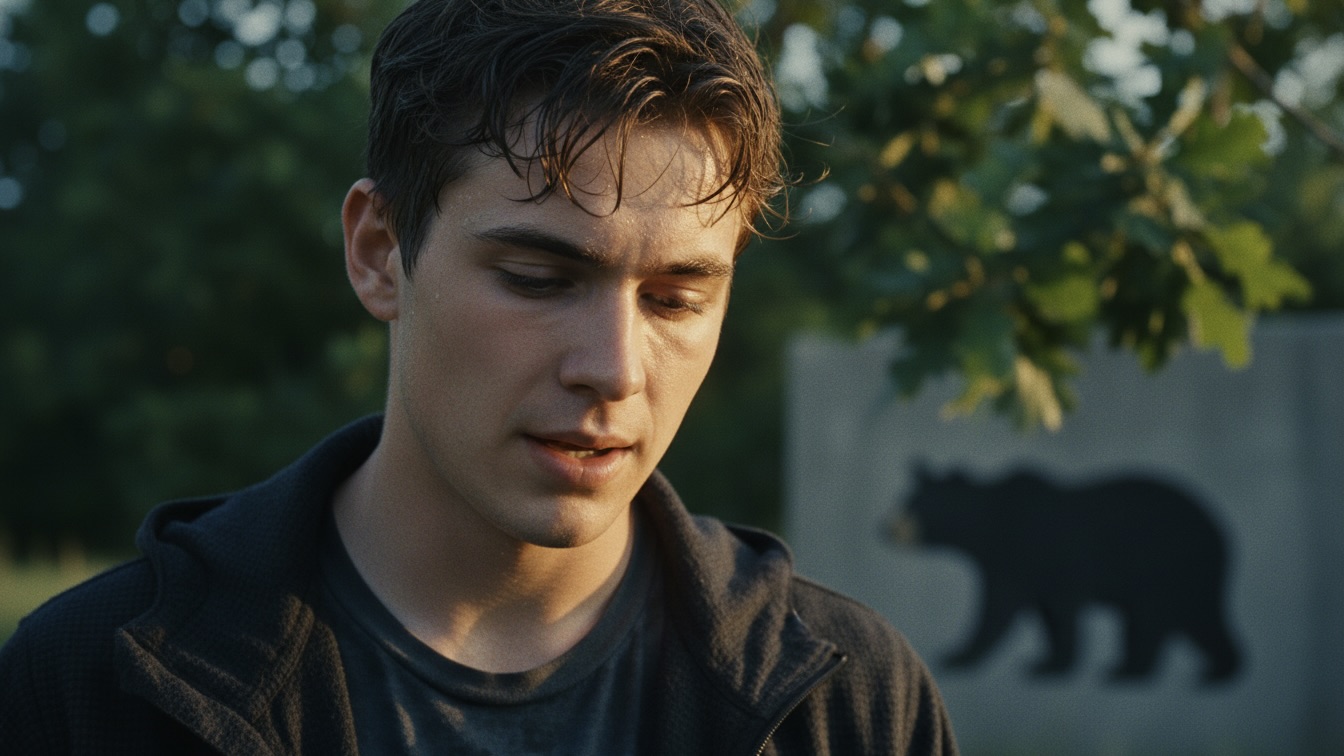
They were young, maybe my age, wearing an oversized, dirt-stained jacket covered in utility pockets.
"Who are you?" I asked. My voice sounded thin. Brittle. Like dried leaves.
"Corey," they said. "I am re-wilding the municipal infrastructure. Guerrilla botany. It is a highly necessary act of localized rebellion against the Parks Department's obsession with invasive ornamental shrubs. What are you doing here at two in the morning with a messenger bag? The logistics hubs closed four hours ago."
I pulled my bag tighter against my chest. The nylon strap dug into my collarbone. "I am making a delivery."
"To the middle of the North Woods?" Corey asked. They took a step closer, analyzing me. I felt exposed. My clothes were damp with nervous sweat. My knuckles were white where I gripped the handlebars. "There are no residential addresses within a three-mile radius of this specific coordinate. Are you lost?"
"I am not lost," I snapped. "I am taking a shortcut."
"A shortcut to nowhere," Corey noted. They crouched down, using the trowel to scrape a piece of mud off their boot. "You look terrible, by the way. Your pupils are vibrating. You look like you are operating on a severe deficit of REM sleep."
"I am fine," I said.
"You are vibrating," Corey corrected.
I pushed the bike forward. "I have to go."
"Wait," Corey said, standing up. "You should see this. You are already here. You might as well witness the absolute absurdity of urban planning."
I did not want to see anything. I wanted to lie down on the pavement and let the earth reclaim me. But my legs moved anyway. The sheer force of another human being giving a directive overrode my exhaustion. I walked my bike alongside Corey, the freewheel clicking a steady, mechanical rhythm in the dark.
We pushed through a dense thicket of aggressive brambles. The thorns caught against my jeans, tearing the denim. We emerged into a small, unpaved clearing.
In the center of the clearing sat a brutalist concrete utility building. It was a windowless cube, meant to house electrical transformers or water pumps.
"Look at the east wall," Corey said, pointing with the trowel.
I looked. Someone had painted a mural across the entire surface of the concrete. It was a black bear. It was not stylized or cartoonish. It was violently, impossibly realistic. The artist had used hyper-pigmented acrylics, capturing the exact sheen of the animal's fur, the heavy, muscular slump of its shoulders, the wet reflection in its dark eyes. The bear was looking directly forward, its paws resting on a painted log.
"It is magnificent, is it not?" Corey whispered. "I was here yesterday mapping the soil acidity. This wall was completely blank. Someone hauled industrial painting equipment through two miles of unlit forest just to put a masterpiece on a pump station."
I stared at the painted eyes. They felt heavy. They felt judgmental.
"It is just graffiti," I said.
"It is an assertion of existence," Corey countered. "It is someone screaming into the void that they were here."
Above us, a branch snapped.
It was not a small snap. It sounded like a wooden baseball bat being broken over a concrete block. The sound shattered the silence, echoing against the painted wall.
Corey froze.
I looked up. The oak tree leaning over the utility block was massive. Its branches were thick, sprawling limbs covered in dense summer foliage.
The shadows in the canopy shifted. A massive, amorphous shape detached itself from the highest branch.
Gravity took over. The shape plummeted, crashing through the lower branches in a violent, chaotic avalanche of tearing leaves and snapping wood. It hit the ground with a sickening, heavy thud that reverberated through the soles of my shoes.
A cloud of dry dirt kicked up into the air.
It was a black bear.
Not the painting. A real, living, breathing, four-hundred-pound apex predator. It stood up on its hind legs, shaking the dust from its coat. It was seven feet tall. The moonlight caught the sharp, yellowed tips of its claws.
"Move," Corey hissed.
I dropped my bike. The metal frame clattered against the dirt. I did not look back.
Corey sprinted toward the utility block, launching themselves at the rusted iron ladder bolted to the side of the concrete wall. I was right behind them. My hands slammed onto the iron rungs. The rust bit into my palms. My boots slipped on the metal. Panic, sharp and metallic, flooded my chest. I scrambled upward, my knees slamming against the concrete.
Below me, I heard the heavy, rhythmic thumping of the bear dropping to all fours.
I threw myself over the ledge, collapsing onto the flat, tar-papered roof. Corey was already there, lying flat on their stomach, panting violently.
We lay side by side on the grit. The heat of the day was still trapped in the black tar beneath us, radiating upward against my stomach. My heart was hammering a frantic, irregular beat against my ribs.
Down in the clearing, the bear let out a low, guttural huff.
I pressed my face into the rough surface of the roof. The gravel dug sharp little craters into my cheek. I squeezed my eyes shut, trying to regulate my breathing. Every time I inhaled, my lungs stuttered.
The utility block was exactly ten feet tall. Ten feet of vertical concrete separating us from an animal that routinely rips open hollow logs to eat the insects inside.
"Do not move," Corey whispered. Their voice was a barely audible rasp over the sound of my own blood rushing in my ears.
"I am not moving," I whispered back. My teeth were chattering. It was seventy-five degrees out, but my body felt entirely hollowed out by cold.
Below us, the massive animal shifted. The heavy padding of its paws against the dry dirt was a deliberate, terrifying sound. It was walking a slow circle around the base of the utility block.
Suddenly, a horrific, screeching crash echoed through the clearing. Metal tearing against metal.
I flinched, curling my knees to my chest. I risked opening one eye, peering over the lip of the concrete ledge.
The bear had discovered the industrial municipal trash cans lined up next to the pump station. It had effortlessly swiped the heavy steel lid off the nearest can. The lid had flown ten feet, smashing into the trunk of the oak tree. The bear was now leaning its entire torso into the bin, its massive shoulders working as it dug through the plastic bags.
"This is spectacular," Corey murmured.
I turned my head. Corey had army-crawled to the edge of the roof and was staring down at the beast with wide, unblinking eyes.
"Are you out of your mind?" I hissed. "Get back."
"Look at the sheer mechanical efficiency of its musculature," Corey said, their tone reverent. "It is a flawless biological machine. It is a perfect agent of random chaos."
"It is a bear," I shot back, dragging myself slightly away from the ledge. "It is going to eat us."
"It is not going to eat us," Corey said, dismissing my panic with a wave of their dirt-stained hand. "We are not part of its caloric calculus. We are irrelevant. The universe is a vast, uncaring void, and this creature is simply executing its programming. It is beautiful. It is absolute proof that nothing we do matters."
I stared at Corey. My brain, already misfiring from days of zero sleep, struggled to process the sheer audacity of this conversation.
"You are actively romanticizing an apex predator while we are currently trapped on a municipal utility block," I said. My voice was rising. I could not stop it. "We are marooned on a ten-by-ten square of hot tar. My bike is down there. The exit path is blocked."
"Your bike is a construct," Corey said, turning to look at me. Their headlamp, still strapped to their forehead, caught the moonlight. "Your delivery is a construct. The logistics hub, the routing app, the schedules. It is all an illusion of control. The bear is reality. The bear is the chaotic truth of the cosmos asserting itself over our pathetic attempts to impose order."
"Shut up," I snapped. I pulled my knees tighter to my chest. My hands instinctively found the thick nylon strap of my messenger bag. I gripped it so hard my knuckles popped.
Down below, the bear ripped a thick black garbage bag entirely in half. The sound was a loud, wet tear.
"You are entirely missing the point of this experience," Corey said, leaning back onto their elbows. "You are paralyzed by anxiety because you believe your actions hold weight. You believe your trajectory has a designated purpose. Once you accept that the universe is entirely indifferent to your existence, the panic subsides. We are just temporary arrangements of atoms sitting on a roof."
"Things matter," I said. The words tasted like ash in my mouth. I repeated it, louder this time. "Things have to matter."
Corey tilted their head, studying me. The theatrical nihilism dropped from their posture, replaced by a sudden, intense focus. Their eyes dropped from my face to my hands.
"You are clinging to that bag as if it is a flotation device," Corey observed.
"It is my property," I deflected, shifting my body to shield the bag from their view.
"You are not a courier," Corey said. It was not a question. It was a clinical diagnosis.
"I told you, I am making a delivery."
"No," Corey said, shaking their head slowly. "I know the couriers in this sector. I know the midnight riders. They ride with a relaxed grip. They complain about the gig economy. They do not hold their cargo like it is a vital organ. And they definitely do not pedal into the darkest, most inaccessible quadrant of the park unless they are actively trying to hide from the grid."
Far off in the distance, past the tree line and the perimeter fence, the faint, oscillating wail of a city ambulance siren cut through the night.
The bear paused its digging. It lifted its massive head, its ears swiveling toward the sound. It stood completely still for a long, agonizing minute. Then, deciding the noise was not a threat, it plunged its head back into the trash can.
"I am just doing my job," I lied. My voice cracked on the final word.
"Your heart rate is visible through your t-shirt," Corey stated quietly. "Your defensive sarcasm is a very transparent Gen-Z deflection tactic. You are using irony to shield yourself from genuine psychological distress."
"Do not psychoanalyze me," I ground out. "You are a person who plants weeds in the dark. You are not a therapist."
"I am highly observant," Corey corrected. "And I observe that you are carrying something incredibly heavy. And I do not mean physical weight."
The static in my brain reached a deafening pitch. The exhaustion, the terror of the bear, the heat of the roof, the endless, grinding weight of the last three weeks—it all suddenly compounded into a single, crushing physical pressure in my chest.
My throat closed. I tried to swallow, but I could not. I looked down at the bag. The black waterproof canvas. The heavy-duty zipper.
I reached out with trembling fingers and gripped the zipper pull.
The zipper teeth separated with a harsh, metallic rip.
Corey did not move. They sat perfectly still, watching my hands.
I reached into the dark interior of the bag. My fingers brushed against a heavy, rectangular object. It was wrapped in a thick, protective layer of bubble wrap, taped aggressively at the seams. I pulled it out. It was roughly the size of a large hardback book, but it weighed exactly four and a half pounds.
I set it down on the tar between us.
"It is a box," I said. My voice sounded entirely detached, as if it belonged to someone else standing on a different roof.
"I can see that," Corey said softly.
"It is a temporary cardboard urn," I continued, staring at the brown tape. "The crematorium provides them as a courtesy if you do not want to purchase a decorative vessel. They gave it to me on Tuesday. It contains my mother's ashes."
The silence on the roof became absolute. Even the bear below seemed to momentarily mute its destruction.
Corey stared at the box. The theatrical detachment, the grand philosophical posturing about the void—it all vanished instantly. Corey's shoulders dropped.
"I am sorry," Corey said. It was the first normal, entirely un-theatrical thing they had said all night.
"Do not be sorry," I snapped, the anger flaring up as a desperate defense mechanism. "I do not need sympathy. I need to finish the delivery."
"Why are you out here?" Corey asked. "In the middle of the night?"
"Because I cannot sleep!" I practically shouted the words. I immediately clamped a hand over my mouth, terrified I had alerted the bear, but the animal just continued tearing through the garbage. I lowered my voice to a harsh, ragged whisper. "I have not slept since I picked up the box. Every time I close my eyes, I see her hospital room. I hear the monitors. So I got on my bike. I just started riding."
I pulled my knees tight to my chest, resting my chin on my kneecaps. My hands were shaking uncontrollably now.
"She wanted to be scattered somewhere beautiful," I whispered. "Somewhere chaotic and alive. She hated manicured lawns. She hated cemeteries. She wanted to be part of the noise. But I cannot find the right place. Every place I look at is wrong. A bridge? Too cliché. A public garden? Too sterile. The river? The water looks toxic. I keep riding, looking for the perfect coordinate, and I keep failing her. Every mile I pedal, I am failing her. The longer I carry this box, the heavier it gets."
The physical reality of my failure was crushing. I was a terrible son, sitting on a dirty roof, hiding from an animal, carrying my mother in a cardboard box because I was too paralyzed by indecision to let her go.
Corey reached out. They did not touch me, but they placed their hand flat on the tar, bridging the distance between us.
"You are trapped in the illusion of inherent meaning," Corey said. Their voice was entirely different now. It was not a lecture. It was a lifeline.
I looked up at them, my eyes stinging.
"Earlier," Corey continued, "I said the universe is an uncaring void. I said nothing matters. You argued that things have to matter. You are right. But you are looking for the universe to provide the meaning for you. You are waiting for a geographic location to magically announce itself as sacred."
Corey pointed down toward the edge of the roof.
"The universe does not assign meaning," Corey said firmly. "We manufacture it. We force it into existence. That is what humans do. We look at a blank concrete wall, and we paint a masterpiece on it. We look at an overgrown patch of municipal dirt, and we plant switchgrass. We look at a chaotic, terrifying world, and we draw a circle around a specific spot and we say, 'This matters.'"
I looked at the cardboard box. The brown tape was slightly frayed at the corner.
"You cannot choose the wrong place," Corey said, their eyes locking onto mine. "Because the place does not make the act sacred. The act makes the place sacred. The moment you open that box and let her go, wherever you are standing becomes the exact right place."
The words hit me like a physical blow. The tight, agonizing knot in my chest—the knot that had been suffocating me since Tuesday—suddenly fractured.
I took a deep, shuddering breath. The air entered my lungs easily. The stutter was gone.
Below us, the bear let out a massive, rumbling burp.
The sound was so profoundly absurd, so violently counter to the heavy emotional weight of the moment, that a sharp, involuntary sound escaped my throat.
It was a laugh.
It sounded rusty and broken, but it was a laugh.
Corey blinked, surprised, and then a slow, crooked smile spread across their face. They let out a quiet snort.
"The cosmic biological machine has indigestion," Corey whispered.
We crawled back to the ledge and looked over.
The bear was sitting back on its haunches, its front paws resting on its massive stomach. It looked entirely satisfied. The area around the trash cans was a disaster zone of shredded plastic, crushed aluminum cans, and scattered debris.
The bear slowly dropped back to all fours. It did not look up at the roof. It did not care about the two humans watching it. It simply turned around and began a slow, heavy amble back toward the dark tree line.
We watched in complete silence as the massive shadow melted into the dense underbrush. Within seconds, the forest swallowed it whole. The only proof it had ever been there was the catastrophic mess left behind.
"It is gone," Corey said.
We waited another ten minutes to be absolutely certain. The silence of the park slowly returned to normal. The crickets resumed their mechanical chirping. The distant hum of the city traffic faded back into the background.
I picked up the cardboard box. I did not put it back in the messenger bag. I held it in my hands.
Corey swung their legs over the edge of the roof, finding the first iron rung of the ladder. They climbed down quickly, their boots hitting the dirt with a soft thud. I followed, moving carefully, my muscles aching with a new, deep exhaustion. The frantic, metallic panic of the adrenaline rush was draining out of my system, leaving behind a profound, hollow clarity.
I stepped off the ladder and stood in the clearing.
I walked over to my bike, picked it up, and leaned it against the trunk of the oak tree.
Then, I turned and looked at the utility block.
The painted bear stared back at me. In the fading moonlight, the hyper-realistic acrylics seemed to vibrate against the rough concrete. It was fierce. It was beautiful. It was entirely out of place in this forgotten corner of the city.
It was chaotic. It was loud. It was a defiant assertion of existence.
I looked at Corey. They were standing by the ruined trash cans, watching me.
"Here," I said.
Corey nodded slowly. "It is a very good wall."
I walked up to the base of the mural. I knelt in the dirt, right beneath the painted paws of the bear. I set the cardboard box on the ground. My hands were steady now. I pulled a small pocketknife from my jeans and sliced through the layers of heavy brown tape.
I opened the flaps. Inside was a thick, transparent plastic bag secured with a plastic zip-tie. I cut the tie.
I expected the ashes to look like wood ash, light and flaky. They did not. They were coarse, heavy, and pale grey, mixed with tiny, unrecognizable fragments. They looked like crushed stone. They looked permanent.
Corey stepped up beside me. They did not say anything. They just stood there, a silent witness in a dirt-stained jacket.
I reached into the bag. The texture was gritty against my skin. I scooped up a handful.
I did not say a prayer. I did not have any grand, theatrical last words. My mother would have hated a speech anyway. She would have told me to stop stalling and get on with it.
I opened my hand.
A sudden, warm summer breeze swept through the clearing, rustling the leaves of the oak tree. The wind caught the heavy grey dust, pulling it from my palm. The ashes swirled in the air, a pale, chaotic cloud against the dark concrete, before settling into the soil at the base of the painted wall.
I reached in and took another handful. I threw it upward, letting the wind take it again.
I kept going until the bag was empty.
When it was done, I folded the plastic bag and put it back inside the cardboard box. I stood up, dusting my hands on my jeans.
The suffocating pressure in my chest was completely gone. I felt incredibly light. The physical burden, the endless, grinding loop of my insomnia, had evaporated. I just felt empty, but it was a clean emptiness. A space waiting to be filled.
"Thank you," I said to Corey.
"I did nothing," Corey said. "I merely pointed out the obvious. And introduced you to the local wildlife."
"Still," I said. "Thank you."
I walked over to my bike. I grabbed the handlebars and swung my leg over the saddle. I looked back at the utility block one last time. The painted bear stood guard over the grey dust settled in the dirt.
I turned my bike toward the paved path.
As I pedaled out of the clearing, the absolute darkness of the night finally began to fracture. A thin, pale line of bruised purple light appeared on the eastern horizon, cutting through the silhouettes of the skyscrapers in the distance. The streetlights flickered and died, their automated sensors registering the approaching dawn.
The air felt different now. Warmer. Lighter.
I pushed hard on the pedals, the bike accelerating down the paved path. The wind hit my face, cooling the sweat on my forehead. My eyes felt heavy, the deep, overwhelming pull of genuine exhaustion finally settling into my bones.
I was going home, and for the first time in weeks, I knew I was going to sleep.
“I closed my eyes as the tires hit the main avenue, surrendering to the heavy, irresistible pull of the dark.”


