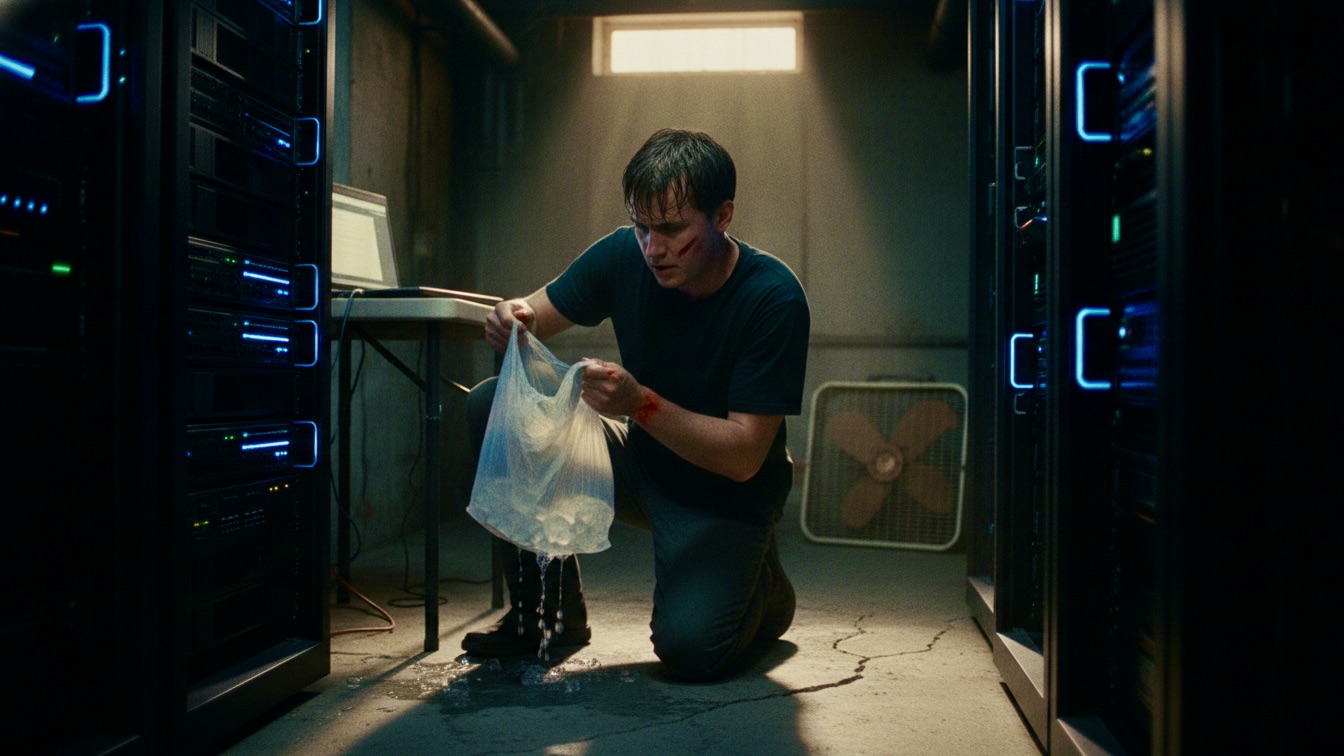
The chapter follows three activists—Edgar, Joanie, and Tariq—as they navigate a desperate situation in a sweltering basement during a record-breaking heatwave. Operating out of a defunct laundromat, they are attempting to hack into the servers of a powerful corporation called Aura to expose a project involving the exploitation of unhoused children. The physical environment is as much an enemy as the corporate firewall, with the temperature of their salvaged server rack threatening to trigger a permanent shutdown.
As the heat reaches a critical threshold of 105 degrees Celsius, the team must employ increasingly primitive and dangerous methods to keep their hardware running. Tariq manually fans a router with cardboard while Edgar performs a high-risk electrical bypass on the server’s thermal governors. Despite the smell of burning plastic and the risk of electrocution, they maintain their focus. Joanie successfully spoofs the biometric security of the target system just as the hardware begins to melt.
The mission concludes with a successful data breach, as the team manages to upload the incriminating manifest to various journalists and mirror sites. As the external heatwave finally breaks into a summer storm, the trio abandons their ruined equipment and escapes into the night. The narrative highlights the intense bond formed through shared hardship and the gritty, unglamorous reality of grassroots resistance against corporate power.
The narrative heavily explores the theme of the materiality of the digital world. While technology is often portrayed as ethereal or clean, this story grounds it in the physical reality of heat, sweat, and failing hardware. The server is not just a gateway to information; it is a temperamental machine that requires physical intervention, such as bags of ice and manual labor, to function. This contrast highlights the vulnerability of digital movements to physical environmental factors.
Another central theme is the nature of trust and collective survival. The protagonist reflects on the difference between corporate-mandated "team building" and the organic trust that arises in high-stress environments. This trust is not expressed through words or workshops but through action and silence. Tariq fanning the router and Joanie trusting Edgar not to fry the system represent a deep, unspoken bond born from a shared mission and mutual desperation.
Finally, the story examines the theme of sacrifice in the pursuit of truth. The characters are willing to destroy their only expensive assets—their salvaged servers—to achieve a singular goal. They live in squalor and risk their safety, choosing the "truth" over the comforts of a corporate career. This reflects a psychological commitment to a cause that transcends personal gain, framing their struggle as a David versus Goliath battle where their only leverage is their refusal to quit.
Edgar serves as the technical guardian and the narrative voice of the group. He is deeply attuned to the physical state of their equipment, viewing the server rack almost as an extension of his own body. His psychological state is characterized by a high level of hyper-vigilance, evidenced by his physical reactions to the clicking of a fan or the shimmering of heat. He carries the burden of the hardware's survival, knowing that if the machines fail, the movement dies with them.
He demonstrates a pragmatic and decisive leadership style during the climax of the chapter. When he realizes the thermal shut-off is unavoidable, he makes the split-second decision to bypass the safety circuits with a backup battery. This move is reckless and dangerous, but it highlights his willingness to embrace total loss for the chance of a greater victory. He is the bridge between the physical labor of Tariq and the digital expertise of Joanie, holding the entire operation together through sheer force of will.
Joanie is the intellectual engine of the operation, possessing a level of focus that borders on the dissociative. When she is "in the zone," she becomes a statue, her world narrowing down to the code and the scrolling logs on her screen. This psychological intensity allows her to navigate the complex behavioral locks and biometric spoofs of Aura’s security. She views the digital landscape as a physical territory to be conquered, showing a fierce determination that matches Edgar's hardware ingenuity.
Despite her technical brilliance, she is not immune to the terror of their situation. Her sharp reactions and the way her hands shake when the system begins to fail reveal the high emotional stakes she is navigating. She is acutely aware of the group's financial precarity, as seen in her reaction to the cost of the Gatorade and ice. However, her commitment to the mission overrides her fear, and her eventual smile at the end of the chapter reveals a deep sense of cathartic relief and triumph.
Tariq represents the physical endurance and the moral anchor of the team. He is the person who ventures out into the grueling heat to secure supplies, showing a level of grit that is essential for the group’s survival. While he may lack the specialized coding skills of Joanie, his role is no less critical. He provides the manual labor necessary to keep the overheating router functional, performing a repetitive and exhausting task without complaint or the need for instruction.
His presence provides a grounding influence on Edgar and Joanie. He is the one who reminds them of the physical world outside the basement, bringing in the lukewarm Gatorade and the melting ice that ultimately buys them enough time to succeed. His quiet nod to Edgar during the final crisis signifies a total alignment of purpose. He is a man of few words, but his actions define him as a loyal and indispensable member of the collective, embodying the stamina required for long-term resistance.
The author employs a gritty, sensory-driven prose style that emphasizes the oppressive atmosphere of the setting. Descriptions of the "weeping" walls, the smell of "toasted dust," and the "rattling like a dying throat" of the fan create a visceral experience for the reader. These details serve to heighten the tension, making the heat feel like a physical character in the room. The use of short, punchy sentences during high-action moments mirrors the frantic heartbeat and quickening pulse of the characters.
The pacing of the narrative is expertly handled through the use of the thermometer and the progress bar as ticking clocks. Every time the temperature rises or a percentage point crawls forward, the stakes are reinforced. This creates a rhythmic tension that builds toward the explosive climax with the battery surge. The transition from the stifling, airless basement to the electric, rain-soaked street at the end of the chapter provides a powerful stylistic shift, offering both the characters and the reader a sense of atmospheric and emotional release.
The narrative voice is cynical yet deeply idealistic, a combination that reflects the "hacker" subculture. Edgar’s internal monologues about corporate "synergy" and "culture officers" provide a sharp contrast to the reality of their situation. This voice establishes the group as outsiders and rebels, grounding their actions in a specific socio-political context. The tone remains grounded throughout, avoiding the hyperbole of cinematic hacking and instead focusing on the messy, technical, and exhausting reality of their work.


