The story begins on a blistering Fourth of July as three friends, Brad, Tim, and Chad, navigate an oppressive heatwave while battling severe hangovers. Seeking a cooler for their trip to the lake, they discover a mysterious black tent in a desolate strip mall. Inside, they find a vibrating, neon green vintage cooler with a sign that simply reads "TAKE IT." Despite the unsettling humming and a foul smell of sulfur and old tequila, Tim and Brad decide to take the object, driven by their desperate need for ice and relief from the sun.
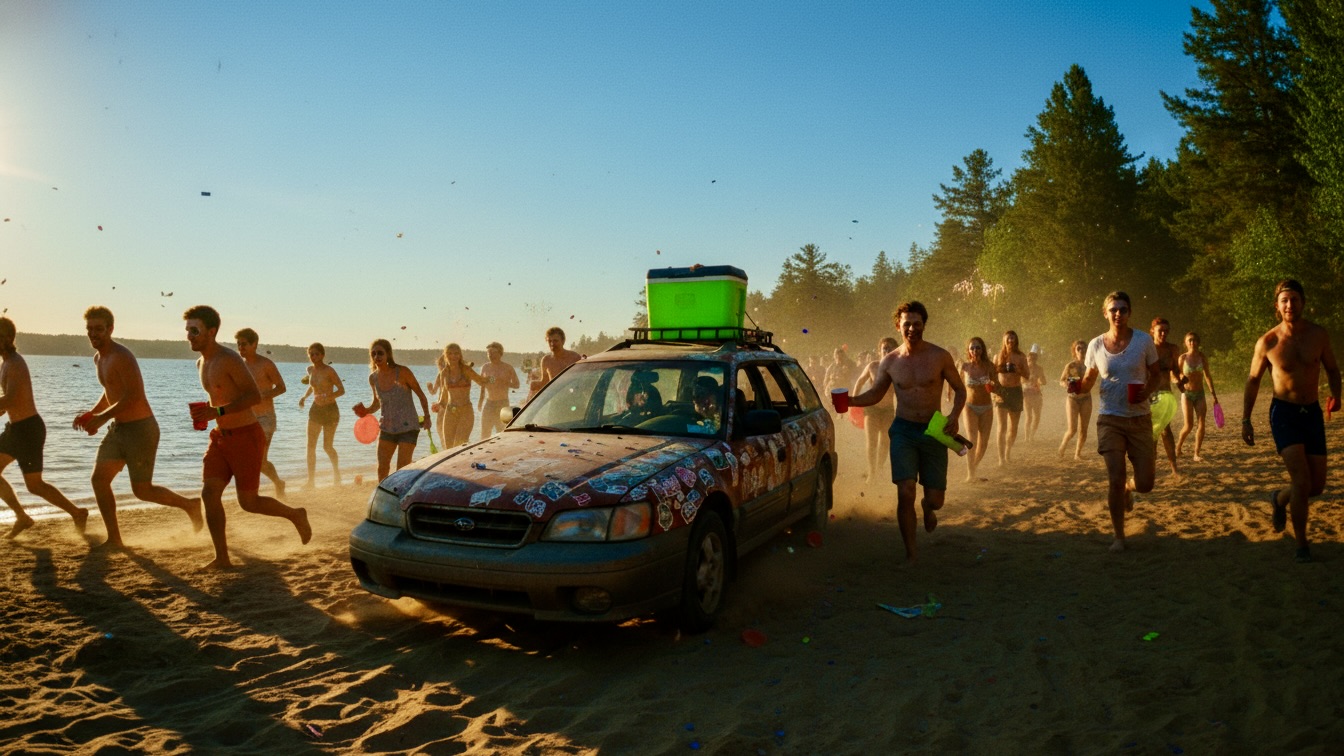
Once they arrive at a crowded beach, the situation escalates into supernatural horror when Chad drinks a mysterious blue liquid from a blank silver can found inside the cooler. He undergoes a grotesque transformation, becoming a gray-skinned "zombie party animal" who bites off a bystander's nose. The infection spreads rapidly as the cooler spits out more cans, turning the beachgoers into a horde of aggressive, partying undead. Brad and Tim realize the cooler is the source of the curse and decide they must return it to the black tent to stop the madness.
After a chaotic escape involving distractions like volleyball and frisbees, the pair makes it back to the strip mall. They encounter Gary, a bored demonic retail worker who initially refuses to accept the return because they lack a receipt. Tim’s explosive "Karen energy" and demands to see a manager eventually cow Gary into processing the return. The curse is lifted, the victims return to their human forms with massive hangovers, and the tent vanishes. Brad is left with Gary’s strawberry-scented vape pen, a lingering memento of their brush with the retail side of hell.
The narrative explores the intersection of modern consumerism and cosmic horror, suggesting that the most terrifying forces in the world are not just demons, but the bureaucratic systems that govern them. The black tent functions as a liminal space where the laws of commerce and the supernatural merge. By framing a demonic plague through the lens of a retail transaction, the story satirizes the absurdity of modern life. The horror is not just the biting of flesh, but the "store policy" that prevents a solution.
Another prominent theme is the hyper-masculine "party culture" and its inherent toxicity. The zombies are not typical mindless ghouls; they are "frat bros" whose primary drives are drinking, sports, and aggression. This suggests that the "bro" archetype is already a form of mindless consumption that strips away individuality. The transformation into a gray-skinned monster simply makes the internal state of the characters visible. The "Baja Blast Blood" serves as a literal intoxicant that fuels this mindless, destructive revelry.
The physical environment acts as a catalyst for the psychological breakdown of the characters. The oppressive heat is described as an "insult" and a "physical wave of misery," setting a tone of agitation and desperation. This environmental pressure pushes the characters to ignore obvious red flags, such as the vibrating cooler and the smell of brimstone. It highlights how physical discomfort can lead to poor decision-making, making humans vulnerable to predatory supernatural forces.
Finally, the story touches on the power of social performance as a survival mechanism. Brad and Tim navigate the zombie horde not through violence, but by engaging with the zombies' desire for "partying." By playing volleyball and throwing frisbees, they exploit the predictable social scripts of the undead. This implies that even in a state of monstrous transformation, humans remain tethered to their social habits and performative behaviors.
Brad serves as the sensory anchor of the story, experiencing the horror through the fog of a physical hangover. He is the most observant of the trio, noticing the foul smells and the vibrating nature of the cooler long before the others. His internal state is one of constant discomfort, which mirrors the external chaos unfolding on the beach. While he is initially passive, he demonstrates quick thinking when he uses the frisbee and volleyball to distract the horde.
His role is primarily that of the witness, but he also represents the lingering effects of the supernatural encounter. By the end of the story, he is the one who ends up with Gary’s vape pen, suggesting a permanent connection to the demonic realm. He moves from a state of physical misery to one of quiet realization. He is the only one who seems to truly process the absurdity of the "zombie party animal" phenomenon.
Tim is characterized by his stubborn determination and his eventual transformation into an avatar of consumer indignation. At the start of the story, he is driven by a singular, almost obsessive goal to reach the lake and find ice. He ignores the supernatural warnings because his focus is entirely on his own immediate physical needs. This narrow-mindedness is what leads the group into danger, as he insists on taking the cursed cooler.
However, Tim becomes the hero of the story when he leans into his "Karen energy" to confront Gary. His refusal to accept "no" for an answer and his demand to speak to a manager prove more effective than any physical weapon. He successfully navigates the demonic bureaucracy by using the language of retail complaints. He demonstrates that in a world governed by rules and receipts, the most powerful person is the one who makes the most noise at the customer service desk.
Chad represents the impulsive, unthinking consumer whose primary drive is immediate gratification. He is the first to complain about the lack of drinks and the first to reach into the mysterious cooler without hesitation. His lack of caution makes him the perfect first victim for the curse. He is the catalyst for the transition from a mundane road trip to a supernatural nightmare.
Even after his transformation, Chad’s personality remains a distorted version of his former self. He becomes a creature of pure "party instinct," seeking out brains while still wanting to "hang out." His character arc is a cautionary tale about the dangers of mindless consumption. He ends the story in a state of physical ruin, clutching his stomach on a curb, highlighting the literal and metaphorical hangover of his experience.
Gary is the personification of retail apathy and the banal nature of evil. Despite being a representative of the "Dark Lord of the Seventh Circle," he behaves like a bored, underpaid employee at a failing mall. He is entirely unimpressed by the carnage the cooler has caused, focusing instead on "store policy" and receipts. He represents the soul-crushing indifference of bureaucratic systems.
His use of the strawberry vape pen and his flat delivery of lines contrast sharply with the high-stakes horror of the beach. He is a reminder that even the most terrifying supernatural events can be reduced to a mundane transaction. Gary does not care about the fate of the world; he only cares about finishing his shift and following the rules. He is the ultimate gatekeeper, more concerned with "Hell-bucks" than human lives.
The pacing of the story is relentless, mirroring the escalating heat and the chaotic spread of the zombie infection. The author uses short, punchy sentences to create a sense of urgency and physical discomfort. This "staccato" style reflects Brad’s fragmented mindset as he struggles with his hangover. The transition from the slow, miserable car ride to the frantic escape from the beach is handled with a sharp increase in action-oriented prose.
Sensory details are used effectively to ground the supernatural elements in a visceral reality. The smell of "sulfur and cheap tequila" provides a nauseating olfactory backdrop to the visual horror of the gray-skinned zombies. The descriptions of the "Baja Blast Blood" and the "blank silver cans" create a specific aesthetic of corporate, "off-brand" dread. These details make the curse feel tangible and disgusting rather than ethereal or abstract.
The tone of the narrative is a unique blend of "bro-comedy" and grim horror. The author manages to find humor in the absurdity of zombies doing keg stands and playing volleyball without undermining the genuine threat they pose. This tonal balance is essential for the story’s satirical edge. It allows the reader to laugh at the ridiculousness of "zombie party animals" while still feeling the tension of Brad and Tim’s life-or-death situation.
The narrative voice is cynical and observant, often highlighting the ugliness of the setting. The "bleached white" sky and the "rusted box of bad decisions" that is the Subaru set a gritty, unromanticized stage for the Fourth of July. This cynicism carries through to the ending, where the resolution is found not in a heroic battle, but in a frustrating retail negotiation. The final image of the strawberry vape pen serves as a perfect, ironic coda to a story about the intersection of the mundane and the monstrous.


