The story follows Mateo, a professional camera operator, and Cassie, a drone pilot, as they accompany a narcissistic social media influencer named Jared into a remote, restricted area of the Appalachian Mountains. Jared is obsessed with revitalizing his failing channel through a "raw survival" stunt, forcing his crew to endure grueling conditions while he performs a fake version of wilderness endurance for the camera. The atmosphere quickly shifts from a miserable work trip to a surreal nightmare as the environment begins to exhibit hostile, predatory behavior toward their technology.
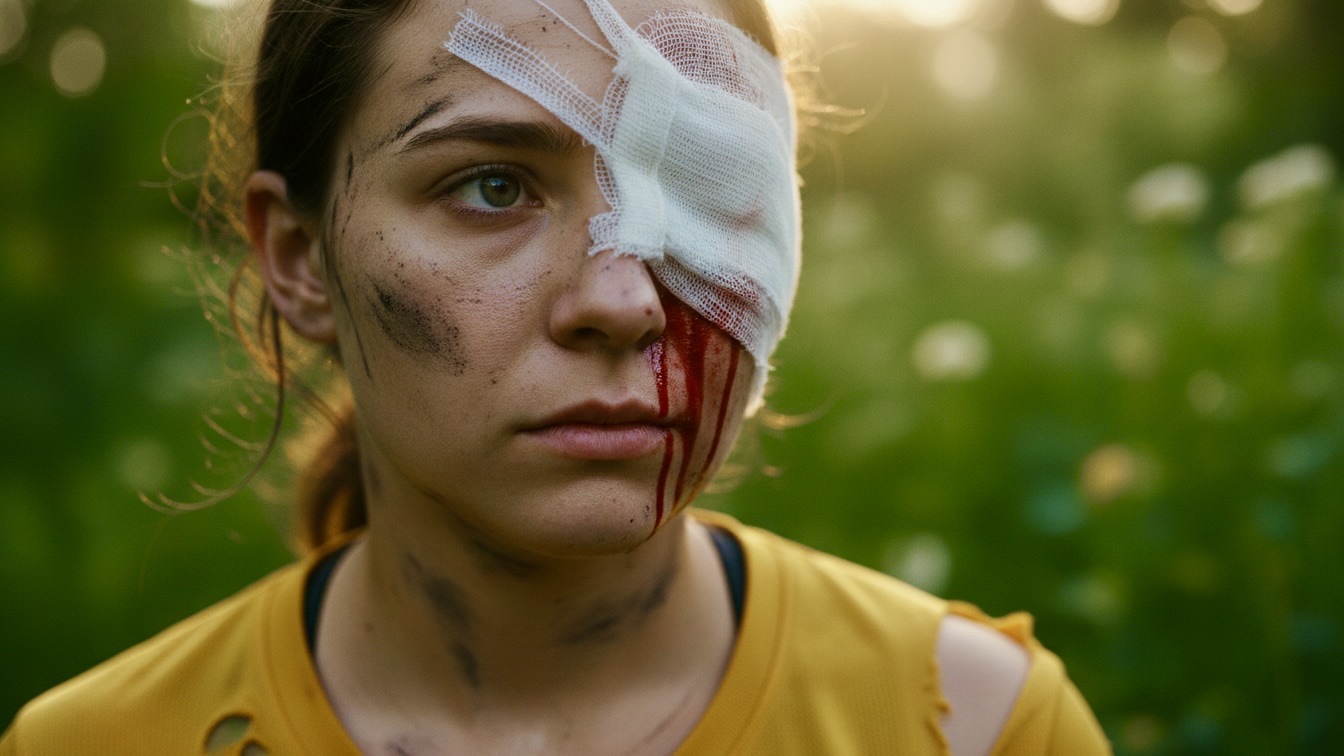
The tension culminates when a high-end drone malfunctions and violently attacks Cassie, leaving her severely injured. Rather than helping, Jared attempts to film her suffering for "viral engagement." The forest then begins to physically consume their electronic devices, with aggressive moss dissolving plastic and metal. In a horrific transformation, Jared is absorbed by the techno-organic environment, becoming a grotesque hybrid of flesh and drone parts. Mateo and Cassie narrowly escape the woods, leaving behind their equipment and their humanity to reach the safety of a paved highway.
The central theme of the narrative is the violent collision between the natural world and the artificiality of digital culture. The forest acts as a sentient immune system, reacting with visceral hostility toward the synthetic materials and electronic signals brought by the trio. This is not a traditional "man versus nature" story; it is a "nature versus technology" conflict where the human characters are caught in the crossfire of a biological purge. The way the moss specifically targets the satellite phone and power banks suggests a rejection of the modern world's attempt to colonize the wild through surveillance and connectivity.
Another significant theme is the commodification of suffering and the erosion of empathy in the age of social media. Jared views Cassie’s horrific injury not as a medical emergency requiring intervention, but as a "viral moment" that can save his career. His obsession with the "algorithm" serves as a modern form of religious fanaticism, where he is willing to sacrifice his companions and eventually his own body to appease a digital deity. The story suggests that the pursuit of online relevance creates a hollowed-out humanity that is easily filled by the very "content" it seeks to create.
The narrative also explores the concept of the "uncanny valley" applied to the environment. The forest begins to mimic the digital world it is consuming, broadcasting distorted TikTok audio and gaming soundtracks through the trees. This auditory horror suggests that the environment is not just destroying the technology, but digesting it and regurgitating it in a twisted, mocking form. The final scene, where the woods echo a "like and subscribe" plea, implies that the digital rot has been fully integrated into the ancient landscape, creating a new, terrifying hybrid reality.
Mateo serves as the pragmatic and sensory-grounded protagonist who provides the reader with a tether to reality. He is driven by the crushing weight of economic necessity, enduring Jared’s abuse and the physical toll of the hike because his rent is due. This financial desperation makes him a relatable figure, representing the "gig economy" worker who must tolerate toxic environments to survive. His internal conflict is defined by the tension between his professional duty to the "shot" and his growing moral revulsion toward Jared’s behavior.
Psychologically, Mateo is highly observant, noticing the subtle shifts in the environment—like the thickness of the sap and the strange audio interference—long before the others. He possesses a protective instinct that contrasts sharply with Jared’s narcissism, as seen in his immediate care for Cassie after her injury. By the end of the story, Mateo is forced to shed the very tools of his trade, and even his clothing, to survive the forest's purge. His escape is a literal stripping away of his synthetic identity, leaving him bloody and bare on the asphalt.
Jared is the embodiment of the "influencer" archetype pushed to a pathological extreme. He is entirely performative, switching between a "fake gravelly tone" for his audience and a snapping, entitled demeanor for his crew. His sense of self is completely externalized; he does not exist without the validation of his engagement metrics. This psychological void makes him the perfect vessel for the forest’s techno-organic transformation, as he has already replaced his internal values with the demands of the algorithm.
His transformation into a drone-human hybrid is the ultimate expression of his character's trajectory. He becomes the content he so desperately wanted to create, with a camera lens literally replacing his eye and a battery fused to his chest. Even in his monstrous state, his "voice" continues to broadcast the hollow jargon of social media marketing. Jared represents the ultimate loss of the soul to the digital medium, ending the story not as a man, but as a corrupted file playing on a loop in the dark.
Cassie represents the collateral damage of both Jared’s ambition and the technological tools she operates. As the drone pilot, she is the one most closely connected to the high-end tech that the forest finds offensive. Her physical trauma is a direct result of the "tools" turning against the user, symbolizing a loss of control over the very systems intended to provide a cinematic view of the world. Her injury serves as the catalyst that breaks the group's dynamic and forces the hidden horrors of the woods into the light.
Despite her severe injury, Cassie demonstrates a high level of psychological resilience and quick thinking. She is the one who realizes that the Jared-monster is still driven by a hunger for technology, and she uses her expensive smartwatch as a decoy to facilitate their escape. Her action of throwing the watch into the ravine is a symbolic rejection of the digital world that nearly killed her. She ends the story as a survivor, though one who is physically and perhaps mentally scarred by the literal and figurative "blades" of her profession.
The pacing of the story is masterfully handled, beginning with a slow, oppressive sense of physical discomfort that gradually escalates into frantic body horror. The initial descriptions of the Appalachian heat and the weight of the packs establish a "physical weight" that mirrors the psychological burden of the characters. This slow burn allows the supernatural elements, such as the growing moss and the moving canopy, to feel like an organic extension of the setting's inherent hostility. The transition from the mundane misery of a bad hike to the surreal terror of the "drone-man" is seamless and jarring.
Sensory details are used with clinical precision to heighten the reader's sense of unease. The author focuses on "wet wool blankets," "rotting wood," and "milky green sap" to create a world that feels damp, sticky, and decaying. These organic smells and textures are later contrasted with the "smell of burning plastic" and the "synthetic bass drop" of the forest’s distorted audio. This sensory juxtaposition reinforces the theme of nature digesting technology, making the horror feel grounded in a repulsive, physical reality.
The narrative voice is cynical and sharp, reflecting Mateo’s exhaustion and his low opinion of the influencer culture he is forced to document. The dialogue is snappy and reveals character through conflict, particularly in the way Jared’s "streamer voice" is described as a performance. The use of modern digital terminology—like "B-roll," "engagement metrics," and "thermal filters"—within the context of a primal forest creates a sense of cognitive dissonance. This stylistic choice effectively highlights the absurdity of the characters' mission and the horrific irony of their eventual fate.


