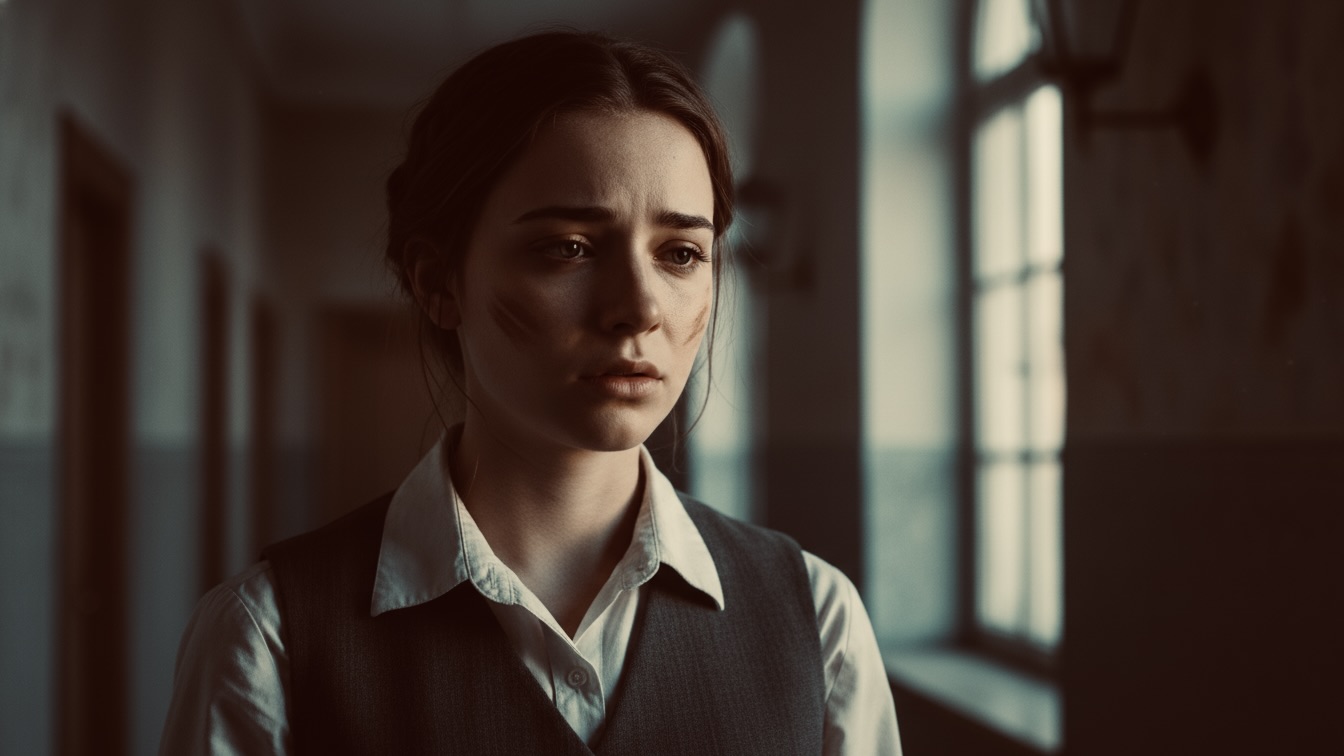
Format: Short Film / Anthology Episode | Est. Length: 10-12 minutes
This story serves as a standalone entry in a psychological thriller anthology series titled The Thaw, which explores the corrosive nature of buried secrets in isolated, institutional settings. Each episode focuses on a different group of individuals tethered together by a singular, catastrophic moral failure, examining how their shared guilt manifests as a physical, almost supernatural pressure on their environment.
As the winter snow retreats from the grounds of an elite boarding school, the thawing mud reveals a dark, half-submerged backpack that was meant to stay hidden forever. Andy and Sarah stand over the site, realizing that their months of carefully maintained silence are literally being unearthed by the changing seasons.
Two students bound by a hidden crime must decide how far they are willing to go when the evidence of their past begins to surface. As the thaw threatens to expose them, the fragile trust between them fractures into a cold, desperate power struggle.
The episode explores the theme of moral decay, illustrating how a secret acts as a pollutant that infects the environment and the psyche alike. It delves into the transactional nature of trauma, where love is weaponized as a tool for survival and complicity becomes a form of imprisonment.
The narrative also highlights the concept of "the return of the repressed," where nature itself acts as an antagonist, refusing to allow the characters to outrun their history. It questions whether true absolution is possible when the foundation of one's life is built upon a foundation of lies.
The stakes are total annihilation for both Andy and Sarah, encompassing their academic futures, their personal freedom, and their sanity. Beyond the legal consequences of their crime, they risk the total collapse of their interpersonal relationship, which has become the only thing keeping them from a complete psychological breakdown.
The primary conflict is internal—a battle between Sarah’s burgeoning conscience and Andy’s ruthless, survivalist pragmatism. Externally, they are pitted against the indifferent, encroaching environment of the school campus, where the physical landscape acts as a ticking clock that threatens to expose their secret to the wider world.
Andy and Sarah discover that the spring thaw has partially exposed a backpack containing evidence of a crime they committed months prior. While Sarah is paralyzed by guilt and the desire to confess, Andy insists on moving the evidence, forcing a confrontation that exposes the toxicity of their codependent relationship.
As the tension peaks, Andy resorts to emotional blackmail, threatening to frame Sarah for the crime if she attempts to turn them in. The episode concludes with Andy preparing to rebury the evidence, leaving the audience to wonder if the cycle of concealment can ever truly be broken.
Andy is a pragmatic, cold-blooded survivalist whose psychological arc moves from a state of controlled denial to one of overt, predatory manipulation. He views their shared secret as a burden to be managed rather than a moral failure, and by the end, he has fully embraced his role as the architect of their mutual entrapment.
Sarah is a fragile, guilt-ridden individual whose arc shifts from a state of exhaustion and remorse to a terrifying realization of her own captivity. She begins the episode wanting to purge her conscience through confession but ends it feeling utterly hopeless, realizing that her love for Andy has effectively made her a hostage to his will.
The episode opens with the discovery of the backpack in the mud, establishing the immediate physical threat and the visceral, sensory reaction of the two protagonists. The tension escalates as Sarah attempts to break away from the site, leading to a heated argument where they debate the merits of confession versus continued concealment. The midpoint occurs when Sarah confesses her love, only for Andy to pivot the conversation into a dark ultimatum, effectively shattering the possibility of a peaceful resolution.
The climax arrives when Andy explicitly threatens to cast all blame onto Sarah if she betrays him, cementing his role as her captor. In the final moments, the narrative shifts to the equipment shed, where Andy secures the shovel with a sense of grim, mechanical purpose. The episode ends on a note of chilling ambiguity, as Andy prepares to bury the evidence deeper, fully aware that he has lost his humanity in the process.
The episode follows a trajectory from dread and atmospheric unease to sharp, claustrophobic panic, finally settling into a state of hollow, nihilistic resignation. The audience is meant to feel the weight of the "Shadow Mass"—the oppressive, heavy silence of the woods—which mirrors the internal crushing weight of the characters' guilt.
If expanded, the season would track the gradual unraveling of the school’s administration as more secrets from the "thaw" begin to emerge across the campus. Each episode would focus on a different pair or group, eventually revealing that the school’s foundation is built upon a history of systemic cover-ups, leading to a season finale where the entire facade collapses.
The visual style is characterized by a desaturated, earthy palette dominated by grays, browns, and the sickly yellow of dying winter sunlight. The camera work should be intimate and handheld, emphasizing the characters' physical discomfort and the claustrophobic nature of their secret.
Tonal influences include the grim, grounded realism of True Detective and the psychological intensity of The Killing. The tone is consistently somber and oppressive, prioritizing atmosphere and character tension over traditional thriller pacing.
The target audience is viewers aged 18-35 who appreciate character-driven psychological thrillers and dark, atmospheric dramas. It is designed for streaming platforms that cater to audiences interested in prestige television and nuanced, morally complex storytelling.
The pacing is deliberate and slow-burning, mirroring the sluggish, messy process of the thaw itself. The narrative structure follows a tight, real-time feel, focusing on the immediate pressure of the discovery to keep the tempo taut despite the lack of traditional action sequences.
The production requires a location that can effectively convey the transition from winter to spring, specifically focusing on the texture of the mud and the skeletal nature of the woods. Practical effects for the "exposed" items in the mud should prioritize a realistic, gritty aesthetic to heighten the audience's sense of revulsion.
The sound design is critical, utilizing the constant, rhythmic dripping of melting ice to function as an auditory countdown, heightening the tension throughout the runtime. The contrast between the cold, wet exterior and the sterile, imposing architecture of the school should be emphasized to reinforce the characters' lack of safe havens.


