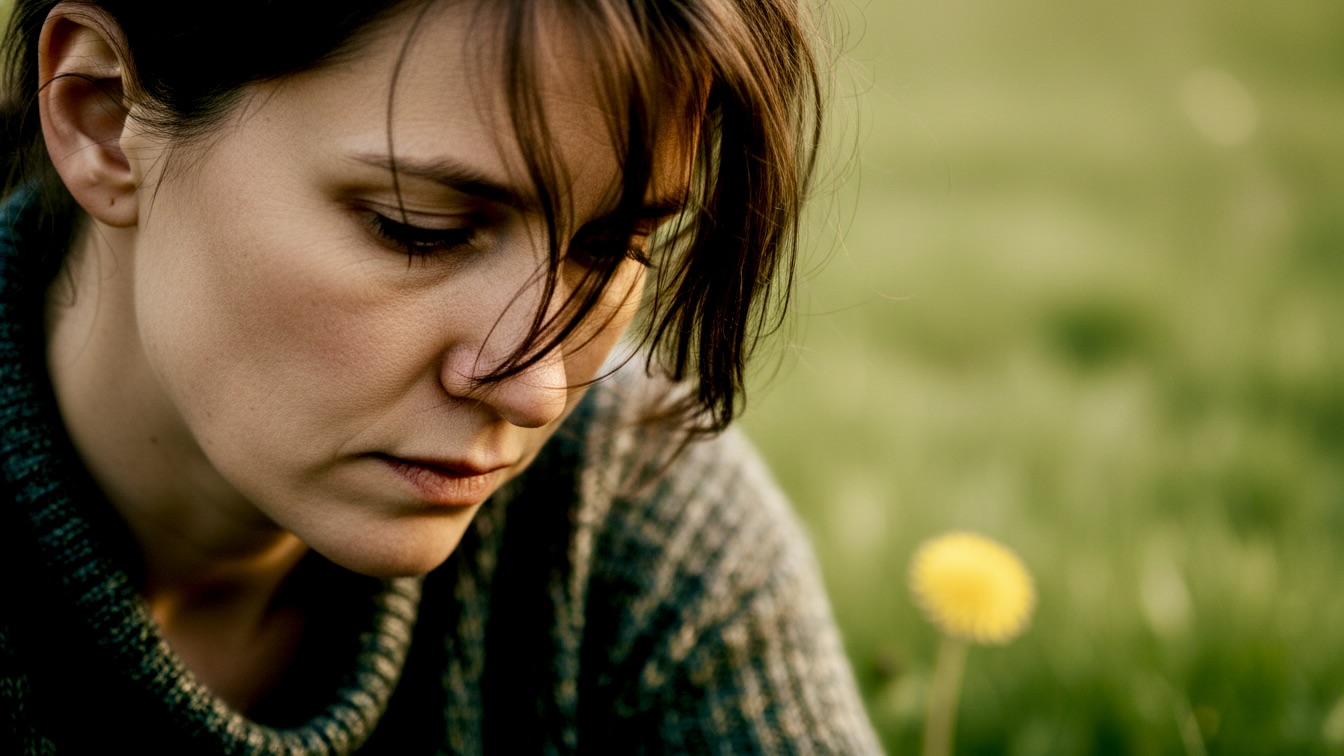
A discarded pacifier in the mud sparks a quiet, devastating negotiation about a future that might not exist.
The plastic was chewed at the edges. I found it tucked between a clump of crabgrass and a yellowing dandelion. A pacifier. It was a dull, faded blue, the kind of color that suggested it had been sitting in the dirt since the last thaw. I didn't pick it up. I just stared at it, the silicone nipple crusted with dried mud. It felt like a bad omen, or maybe just a reminder of how things get lost when you aren't paying attention. The park wasn't what the brochures promised. It was a municipal afterthought. The city had stopped mowing the perimeter to 'encourage biodiversity,' which was just a polite way of saying they ran out of money for the parks department.
I shifted my weight on the thin wool blanket. A rock was digging into my left hip, but I didn't move. I wanted to feel the discomfort. It was more honest than the pretend relaxation we were performing. Beside me, Mike was lying flat on his back, his hands behind his head. He looked like he was nap-prepping, but I knew better. His jaw was tight. I could see the muscle jumping in his cheek. He was staring at the sky like it owed him an apology. The clouds were thin, wispy streaks that didn't provide any real shade. It was that specific kind of Spring day where you’re either too hot in a jacket or too cold without one. We were both in that middle ground, shivering slightly every time the wind kicked up the scent of wet earth and exhaust from the nearby highway.
'It’s filthy,' I said. I pointed at the pacifier. Mike didn't look. He just closed his eyes, his eyelashes casting long shadows over his cheekbones. He looked tired. Not just the 'I worked late' tired, but the kind of deep-seated exhaustion that comes from three years of the same argument on loop. It was the tired eye. He saw the world as a ledger. Everything had a price. Every choice was a withdrawal from a bank account that was already nearing zero. I wasn't sure if he was talking about money or his soul anymore.
'Someone’s kid is crying right now,' Mike said. His voice was flat, devoid of any inflection. 'Or they bought a new one. It’s a ten-dollar fix. Not a tragedy.'
'I didn't say it was a tragedy,' I replied. My throat felt dry. The pollen was starting to settle on everything—a fine, yellow dust that coated the blanket and my skin. I could feel it in my lungs. 'It just feels weird. Finding it here.'
'Everything is weird, Jane. The world is a fever dream. Can we just lie down? I just want to not think for twenty minutes.'
'We’re already not thinking, Mike. We’ve been not thinking for six months.' I sat up, hugging my knees to my chest. My jeans were damp from the ground. The moisture had seeped through the blanket. It was cold and unpleasant. I looked at him. He was thirty-six, but in this light, he looked fifty. There were new lines around his mouth, the permanent etchings of a man who spent too much time grinding his teeth. We were supposed to be in our prime, or whatever the hell the magazines call it. Instead, we were just two people sitting in the dirt, calculating the cost of survival.
'The lease is up in June,' I said. The words felt heavy, like stones I was dropping into a deep well. 'We have to decide.'
'We decided,' he muttered, still not opening his eyes. 'We stay. We save. We wait for the interest rates to stop being insane.'
'That's not the decision I'm talking about.'
Mike finally opened his eyes. They were a pale, washed-out grey. He looked at me, then at the sky, then back at me. He didn't move his hands from behind his head. 'I know what you're talking about. I’m not stupid.'
'I never said you were.'
'You just think I’m heartless.' He sat up then, his movements stiff and jerky. He brushed a bit of grass off his sleeve. His shirt was a high-tech synthetic blend, the kind that was supposed to breathe but mostly just smelled like old sweat after an hour. He bought it because it was 'efficient.' 'It’s not about not wanting it, Jane. It’s about the math. Look at this place. Look at the news. You want to bring a person into this? Into a world where we can barely afford the rent on a place with a mold problem?'
'People have had kids in war zones, Mike. People have had kids during the plague. If everyone waited for the perfect economy, the species would have died out in the Stone Age.'
'The Stone Age didn't have subscription models for everything,' he snapped. 'The Stone Age didn't have microplastics in the rain. It’s not a fair comparison.'
I looked away from him, focusing on a robin that was tugging at a worm near a discarded soda can. The bird was frantic, its movements sharp and desperate. That’s how I felt. Frantic. Like I was running out of time and the ground was literally shifting beneath my feet. I was thirty-four. My body was a clock that only knew how to count down. Every month was a missed opportunity, a door closing that I couldn't pry back open with logic or a spreadsheet.
'I don't care about the math,' I said softly. 'I care about the fact that I feel empty. Physically empty. It’s like there’s a space in the house that’s meant for someone else, and we’re just filling it with boxes and bad vibes.'
Mike sighed, a long, whistling sound through his nose. He reached out and touched my hand, but his fingers were cold. There was no heat in the gesture. It was a tactical touch, meant to de-escalate rather than connect. 'It’s a biological urge, Jane. It’s hormones. Your brain is lying to you.'
'And your brain isn't? Your brain is telling you that if we just save enough, we’ll be safe. But we won't. No one is safe. That’s the lie you’re telling yourself.'
We sat in silence for a while. A group of teenagers biked past on the paved path, their speakers blaring a song with a heavy, distorted bassline that vibrated in my chest. They were loud and messy and full of a kind of energy that felt alien to me. I envied them. I envied their lack of a ledger. They were just existing in the Spring air, not caring about the pollen or the mud or the future.
I looked back at the pacifier. It was still there, a little blue corpse in the weeds. I wondered who the kid was. I wondered if the mother had noticed it was gone, or if she was too tired to care. Probably the latter. Everyone was too tired. Life in 2026 was a series of small loses and large anxieties. You lost your keys, you lost your patience, you lost your sense of purpose. You just kept moving because stopping felt like a death sentence.
'I went to the doctor,' I said. I hadn't planned on telling him yet. Not here. Not in the dirt.
Mike froze. His hand stayed on mine, but it went heavy. 'When?'
'Tuesday. During my lunch break.'
'And?'
'Everything is fine. For now. But he said... he said the window isn't as wide as I thought. My levels are low.'
'Levels,' Mike repeated. He said the word like it was a foreign language. 'They always say that. It’s a sales pitch. They want you to freeze your eggs. They want the thirty grand.'
'It wasn't a pitch, Mike. It was a blood test. It was data. You love data, right?'
He pulled his hand away. He started picking at a loose thread on the blanket, his eyes focused intensely on the task. 'Data can be manipulated.'
'Why are you fighting me on this? Why is this the hill you want to die on?'
'Because I don't want to fail!' He finally looked at me, and for a second, the cynicism cracked. I saw the fear underneath. It was raw and ugly. 'I don't want to bring a kid here and then realize I can't protect them. I can't even protect my own job. They’re laying off another ten percent in May, Jane. I haven't told you because I didn't want you to spiral, but my manager won't even look me in the eye.'
I felt a cold prickle of dread. 'Another round?'
'Another round. The AI tools are doing sixty percent of my workload now. I’m basically just a glorified proofreader for a machine. How am I supposed to be a father when I don't even know if I’ll have an office to go to in six months?'
I reached for him this time, but he pulled back, standing up abruptly. He shoved his hands into his pockets and walked a few paces away, his back to me. The sun caught the silver in his hair. He was graying early. We both were. The stress of the last few years had aged us in dog years.
'We’d figure it out,' I said, my voice shaking. 'We always do.'
'No, we survive,' he said, turning around. 'There’s a difference. I don't want to just survive. I want to live. I want to breathe without feeling like someone is standing on my chest. A kid... a kid is just more weight.'
'Weight? That's what a child is to you?'
'In this economy? Yes. It's a tether. It's a liability.'
I stood up too, the blanket falling away. I felt exposed. The wind was sharper now, biting through my thin sweater. I looked at the park—the gray grass, the trash-filled bushes, the gray sky—and I realized he was right. It was a mess. But he was also wrong. He was so incredibly wrong that it made my heart ache.
'If we wait for the world to be perfect, Mike, we’re going to die alone in a very expensive apartment,' I said. 'Is that the goal? To have the most points in the bank when the lights go out?'
'It’s not about points. It’s about not being a victim of our own optimism.'
He walked back to the blanket and started folding it. He did it methodically, matching the corners with a precision that felt like an insult. He was closing the book. He was ending the session. The transaction was over, and the balance was zero.
'I’m going to the car,' he said. 'I need to check my email.'
'Mike.'
'I can't do this right now, Jane. I really can't.'
He walked away, his boots crunching on the dry patches of earth. I stayed there for a minute, watching him go. He didn't look back. He just kept moving toward the parking lot, a man with a plan and no future.
I looked down at the pacifier one last time. I reached down, my fingers brushing the cold, damp silicone. I picked it up. It felt heavy in my hand, much heavier than a piece of plastic should feel. I rubbed the dirt off with my thumb, revealing the pale blue underneath. It was scarred and worn, but it was still there. It hadn't dissolved. It hadn't given up.
I shoved it into my pocket.
As I walked back to the car, the wind picked up, carrying the smell of rain. Not a refreshing Spring rain, but a heavy, sulfurous downpour that promised to turn the park into a swamp. I saw Mike sitting in the driver's seat, the blue light of his phone illuminating his face. He looked like a ghost.
I realized then that we weren't just arguing about a baby. We were arguing about whether or not we still believed in anything. And as I opened the car door, the air felt thin, like the oxygen was being sucked out of the world, leaving us with nothing but the dirt and the debt.
Somewhere in the distance, a siren began to wail, a long, mournful sound that cut through the quiet of the afternoon.
“As I pulled the door shut, a flash of lightning flickered on the horizon, illuminating a figure standing at the edge of the woods, watching us.”


