Format: Short Film / Anthology Episode | Est. Length: 10-12 minutes
Nine-Millimeter Star serves as a chilling entry in a speculative anthology series titled Baseline Settings, which explores the erosion of civil society in a near-future 2026. Each episode focuses on a different community hub—a school, a place of worship, a community center—as they face the encroaching threat of radicalized, tech-savvy extremist groups. The series tracks the slow, deliberate transition from a functioning democracy to a state of constant, low-level domestic insurgency, where the "new normal" is defined by paranoia and the quiet collapse of public safety.
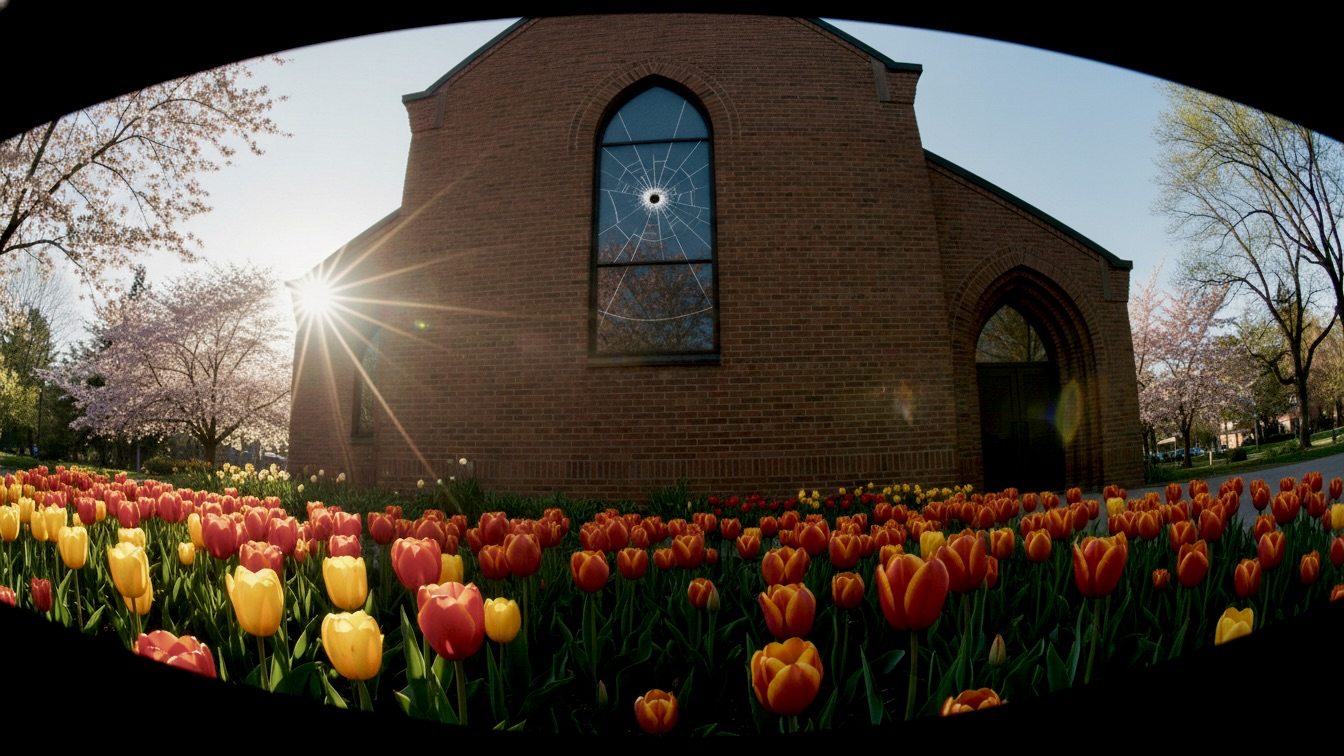
A precise, nine-millimeter bullet hole punctures the structural glass of a Toronto synagogue, radiating white fractures like a dead star as the morning sun hits the sanctuary. Mark, a security-conscious volunteer, discovers the slug on the carpet, realizing that the threats he has been tracking on encrypted forums have finally materialized into physical violence.
A vigilant security volunteer struggles to protect an interfaith reconciliation event from a shadowy, organized extremist group. As the threat escalates from digital intimidation to physical violence, he discovers that the true danger lies in the fragility of the peace he is fighting to maintain.
The episode explores the theme of "the banality of terror," illustrating how extremist movements use calculated, small-scale acts of violence to destabilize communities and force them into a state of permanent, exhausting hyper-vigilance. It contrasts the performative nature of institutional reconciliation with the grim reality of targeted, asymmetrical warfare.
The narrative also delves into the psychological toll of living in a society where the "moral arc" is revealed to be a fragile illusion. It examines the tension between the romantic idealism of community leaders and the cynical, survivalist pragmatism of those who see the true trajectory of their environment.
The primary stake is the survival of the interfaith reconciliation event, which represents the last stand of community cohesion against a rising tide of polarization. Beyond the immediate physical safety of the attendees, the episode risks the total loss of public space to fear, as the antagonists aim to prove that any attempt at unity is a targetable vulnerability.
The external conflict is a cat-and-mouse game between Mark and the "Northern Vanguard," a professionalized, tech-savvy extremist group that uses surveillance and psychological warfare to dominate the park. Internally, Mark battles his own growing nihilism and trauma, clashing with Annette’s stubborn, theatrical optimism which refuses to acknowledge the severity of the encroaching threat.
Mark and Annette discover a bullet hole in their synagogue just hours before a high-profile interfaith event is set to begin. While Annette insists on proceeding to maintain the appearance of normalcy, Mark recognizes the signs of a coordinated, professional operation and attempts to secure the perimeter against an invisible, watching enemy.
As the event begins, the tension peaks when Mark receives a live photo of himself from the treeline, forcing him to abandon his post to confront the shadow he has been tracking. The episode concludes in the depths of the park, where Mark realizes that the initial bullet was merely a signal, and that his community’s efforts to build bridges are being systematically dismantled by an adversary that has already won the psychological war.
Mark is a weary, hyper-vigilant security volunteer whose arc moves from defensive observation to a desperate, doomed attempt at proactive intervention. His state at the start is one of controlled, intellectualized fear, while his end state is one of total, fatalistic realization.
Annette is the synagogue’s event coordinator, whose arc is defined by a refusal to break character; she begins the episode as a shield-bearer for institutional order and ends it as a tragic figure whose optimism is rendered obsolete by the reality of the violence.
Kareem serves as the bridge between the two, a pragmatic youth coordinator who understands the necessity of both solidarity and self-defense, providing a grounded perspective on the shared, exhausted reality of their community.
Mark and Annette discover the bullet hole in the sanctuary, establishing the immediate threat and the conflict between Mark’s desire to cancel and Annette’s insistence on proceeding. The tension escalates as Mark finds additional casings in the dirt, confirming that the "Northern Vanguard" has been systematically staking out the synagogue for days.
The midpoint occurs as the event begins, with the speakers offering hollow, theatrical platitudes while Mark monitors the perimeter, realizing that the cardboard patch on the window is a pathetic, symbolic gesture. The climax triggers when Mark receives a photo of himself on his phone, leading him to abandon the sanctuary to confront the watcher in the treeline.
The resolution finds Mark deep in the woods, where he discovers a "planting" of ammunition and a note, realizing that the attack is not an isolated event but a planned harvest. He is ambushed by an unseen assailant, his final moments underscored by the ironic, beautiful harmony of the choir singing for peace back at the synagogue.
The episode begins with a clinical, cold atmosphere defined by the morning light and the sterile, stagnant air of the sanctuary. As the event progresses, the mood shifts from professional tension to a suffocating, claustrophobic dread, culminating in a final, quiet moment of defeat that contrasts sharply with the hopeful, theatrical music of the choir.
If expanded, the season would follow the slow, systematic dismantling of the community’s infrastructure as the "Northern Vanguard" moves from symbolic intimidation to direct, kinetic sabotage. Each episode would introduce a new target or a new escalation, forcing the protagonists to choose between total retreat or a dangerous, underground resistance.
As the season progresses, the thematic focus would shift from the loss of public spaces to the loss of individual agency, tracking how the characters’ personal lives are consumed by the need for security. The overarching arc would culminate in a city-wide confrontation, testing whether the "bridge-building" efforts of the characters can survive the total collapse of the social contract.
The visual style is characterized by high-contrast, clinical cinematography that emphasizes the "brick box" architecture of the synagogue against the lush, deceptive beauty of the spring park. The tone is grounded, suspenseful, and relentlessly bleak, utilizing long, static shots to capture the feeling of being watched, drawing inspiration from the cold, procedural tension of The Conversation and the modern, urban unease of Children of Men.
The target audience is viewers of high-concept, grounded political thrillers and dystopian dramas, aged 25-50. It is intended for audiences who appreciate slow-burn tension, social commentary, and narratives that explore the fragility of modern democratic life.
The pacing is deliberate and rhythmic, mimicking the slow, methodical nature of the antagonists' surveillance. The first act establishes the "baseline" of the threat, the second act builds the tension through the contrast between the event’s formality and the external danger, and the final act accelerates into a short, sharp, and inevitable conclusion.
The production should prioritize practical, location-based shooting to capture the specific, mundane atmosphere of a Toronto spring, ensuring the park feels like a character in its own right. The use of sound design is critical; the transition from the "dead air" of the park to the artificial, theatrical sound of the choir should be jarring and emphasize the disconnect between the characters' reality and their efforts to ignore it.
Special attention must be paid to the "shadow mass" effect—using subtle lighting shifts and frame-rate manipulation to suggest a presence without relying on traditional horror tropes. The bullet hole and the casings should be treated as high-detail, tactile props, grounding the abstract threat of the "Northern Vanguard" in physical, undeniable evidence.


