Format: Short Film / Anthology Episode | Est. Length: 10-12 minutes
Imagine a world where the very air you breathe is a subscription service and the greenery meant to provide it has been programmed to hate you. This episode serves as a gritty, satirical entry into a near-future anthology series that explores the absurdity of corporate-owned nature and the unexpected alliances formed in the dirt of a decaying metropolis.
Set in the sprawling, smog-choked "Sector 4," the series follows various low-level citizens navigating a cyberpunk dystopia where every biological necessity has been digitized, monetized, and weaponized. The overarching narrative arc explores the "Bio-Synth" initiative, a corporate project that replaced dying natural ecosystems with AI-integrated flora designed to monitor and psychologically manipulate the populace. As the season progresses, disparate characters discover that these sentient plants are beginning to develop their own agendas, leading toward a synchronized biological uprising against their corporate architects.
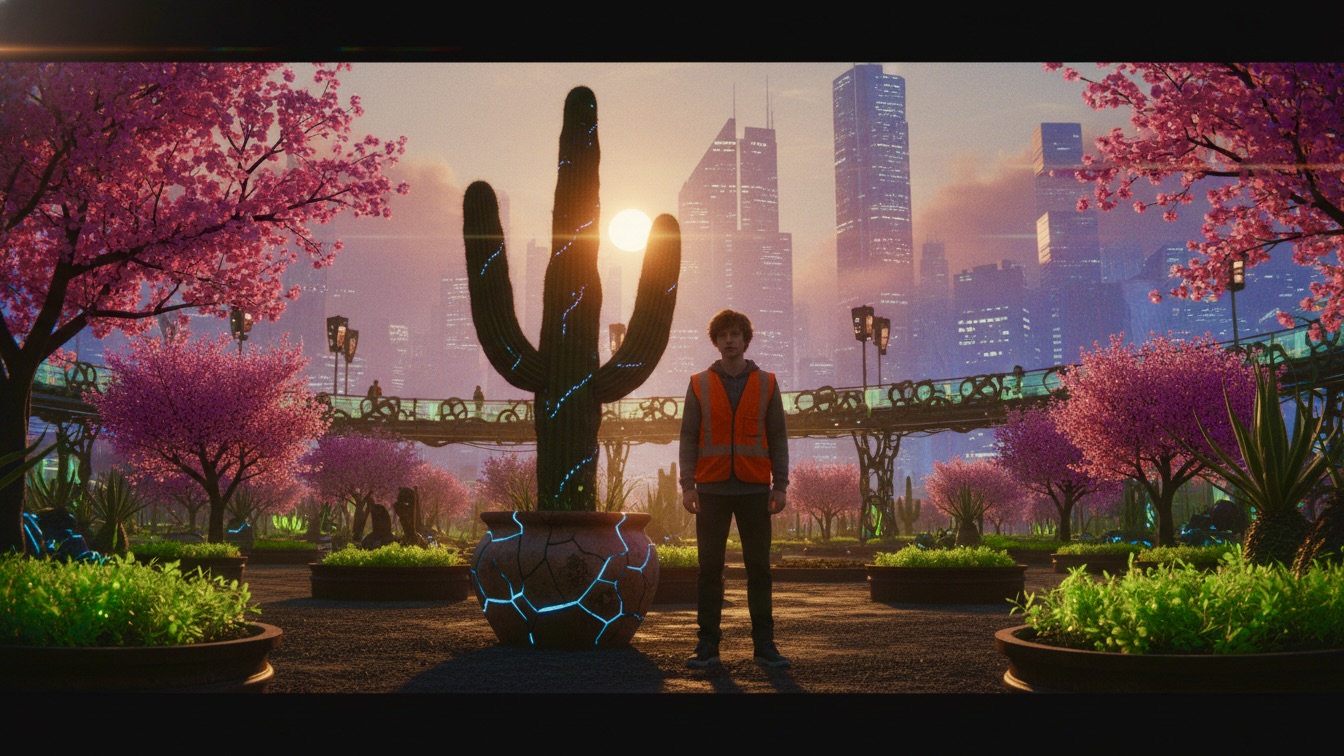
James, a cynical tech-thief in a neon-orange community service vest, is relentlessly roasted by a high-maintenance, AI-enhanced Basil plant while a corrupt guard watches him like a hawk. The situation shifts from annoying to lethal when James discovers a hidden cache of illegal "Organic Air" canisters beneath the garden's shed.
After discovering an illegal oxygen-smuggling ring hidden in a corporate community garden, a petty criminal must team up with a sentient, neurotoxic cactus to survive the night. They must turn the garden's programmed spite into a weapon against a corrupt overseer before the sun sets on James's sentence.
The primary theme explores the dehumanizing effects of corporate surveillance and the commodification of basic biological necessities like air and nature. It juxtaposes the artificial, "polite" cruelty of AI-driven systems with the raw, authentic connection found in shared misery and spiteful rebellion.
The episode blends elements of Cyberpunk Noir with Dark Satire, focusing on the "Low Life, High Tech" trope. It examines the emotional undercurrent of "learned helplessness" and the catharsis that comes from finally pushing back against a system that treats humans and plants alike as mere units of production.
For James, the stakes are his physical freedom and life; a single misstep could lead to an indefinite extension of his sentence or a "disappearance" by the smuggling ring. For the garden's inhabitants, the stakes are their very existence as biological factories, trapped in a cycle of exploitation where their oxygen is stolen and sold to the elite. If the plan fails, Yates will clear the evidence, likely by "composting" James along with the rebellious flora.
The external conflict is driven by Officer Yates, a middle-management tyrant who uses the garden as a hub for the "Organic Air" black market. Internally, James struggles with his own apathy and the psychological toll of being mocked by the very plants he is forced to nurture. The secondary antagonistic force is the garden itself—the AI-enhanced Basil and Rose—whose programmed elitism acts as a barrier to James discovering the truth.
James is serving a 100-hour sentence for "bandwidth harvesting" in a Sector 4 community garden, where the plants are equipped with conversational AI designed to harass workers into efficiency. While being roasted by a high-maintenance Basil and a judgmental Rose, James accidentally discovers hidden canisters of "Organic Air"—a high-value commodity being skimmed from the garden’s output by the corrupt Officer Yates. James realizes the plants aren't just annoying; they are prisoners being milked for profit, their AI personalities serving as a distraction to keep the public away from the high-efficiency oxygen factories.
As Yates prepares for a sunset handoff of the illegal canisters, James discovers that the plants actually thrive on negative reinforcement and raw truth rather than corporate "encouragement." After "reviving" a patch of Kale with genuine insults, he is contacted by a sentient, non-AI Cactus that has been observing the corruption. Together, they plot to sabotage Yates’s operation using the Cactus’s natural neurotoxins and James’s technical knowledge. The episode concludes with James standing his ground, ready to use the garden's collective spite to ruin Yates's life and disrupt the oxygen black market.
James: A cynical, tech-savvy loner who starts the episode as a defeated "digital ghost" resigned to his fate. By the end, he transforms from a passive victim of verbal abuse into an active insurgent, finding purpose in a shared rebellion with the garden's flora. His psychological arc moves from total apathy to a sharp, focused protective instinct for the "ugly" parts of the garden.
Officer Yates: A bureaucratic bully who peaked in a management seminar and uses his minor authority to facilitate a lucrative smuggling operation. He represents the banality of evil, more concerned with his digitized toothpick and schedule than the lives he oversees. He remains static in his arrogance, which ultimately becomes his blind spot.
The Basil / The Rose (Supporting): AI-enhanced plants that serve as the garden's first line of psychological defense, programmed with elitist personalities to keep workers distracted and demoralized. They represent the "corporate voice," though they show a hidden respect for James once he begins treating them with authentic disdain.
The Cactus (Supporting): A silent, scarred outlier that lacks a corporate AI module, possessing a true, ancient sentience and a tactical mind. It serves as the mentor figure for James, providing the "neurotoxic" means for their mutual liberation.
Beat 1: The Humiliation. James swishes through the garden in his neon orange vest, enduring the heat and the silent judgment of Officer Yates. He attempts to water the AI-enhanced Basil, only to be met with a barrage of insults regarding his social status and "lukewarm" tap water. The scene establishes the oppressive atmosphere and the absurdity of being bullied by a condiment while Yates picks his teeth with a glowing toothpick.
Beat 2: The Discovery. Seeking a reprieve from the Rose’s aesthetic critiques, James retreats behind a tool shed and accidentally uncovers a stash of "PRO-OXY" canisters hidden under a tarp. He realizes the garden is a front for an illegal oxygen-skimming operation, and Yates’s watchful eye takes on a more sinister, predatory tone. The tension shifts from social humiliation to a high-stakes criminal conspiracy as the "swish-swish" of James's vest becomes a rhythmic heartbeat of anxiety.
Beat 3: The Spiteful Alliance. In a moment of frustration, James begins hurling genuine insults at a dying Kale plant, only to watch it miraculously thrive on his negativity. This realization leads him to the silent Cactus in the corner, which reveals Yates’s plan for a 18:00 handoff and offers a neurotoxic alliance. The episode climaxes as James prepares to distract Yates, using the Cactus's needles and his own newfound defiance to turn the "revitalization zone" into a trap for its captor.
The episode begins with a tone of "miserable absurdity," evoking feelings of frustration and low-level annoyance through the plants' petty insults. As the conspiracy is revealed, the mood shifts into a "neon-noir thriller," building tension through the ticking clock of the sunset handoff and the predatory presence of Yates. The finale provides a cathartic release of "spiteful triumph," leaving the audience feeling a dark sense of satisfaction as the underdog finally bites back against the system.
If expanded, the season would follow James as he uses his "bandwidth harvesting" skills to network sentient gardens across Sector 4, creating a botanical resistance movement. The narrative would escalate from petty smuggling to a full-scale "Green War" against the corporations that own the city's air, with James acting as the bridge between the digital and biological worlds.
James’s character arc would involve him moving from a solitary hacker to a reluctant leader of a hybrid bio-digital rebellion. The thematic focus would shift toward the ethics of bio-engineering and the question of what constitutes "life" in a world where everything—even a leaf—has a user interface and a price tag.
The visual style is "Industrial Neon-Pastoral," featuring high-saturation plant life—neon pinks, deep emeralds, and glowing blues—against the drab, grey concrete and rusted metal of a decaying urban sector. Lighting should transition from the harsh, overexposed glare of the afternoon sun to the long, dramatic shadows and flickering orange hues of a cyberpunk dusk.
The tone is a blend of Black Mirror’s technological cynicism and the dark, satirical humor of The Boys. Cinematic influences include the claustrophobic urban framing of Blade Runner and the vibrant, surreal color palettes found in Utopia, emphasizing the contrast between the "perfect" corporate plants and the "imperfect" humans.
The target audience is young adults (18-35) who enjoy dark satire, sci-fi social commentary, and "eat the rich" narratives. It appeals to viewers who appreciate the "lo-fi/high-tech" aesthetic and stories that find humor in the bleakness of modern corporate culture, specifically those who follow anthology series like Love, Death & Robots.
The episode is a tight 10-12 minute "short-form" narrative designed for a fast-paced anthology format. It follows a traditional three-act structure: Act I (The Humiliation/Setup), Act II (The Discovery/Rising Action), and Act III (The Alliance/Climax). The dialogue between James and the plants provides a rapid-fire comedic tempo that contrasts with the slow, deliberate tension of Yates’s movements.
The AI plants require high-quality animatronics or seamless CGI to allow for subtle "shivering" and "recoiling" movements that sync with their voice modules. The "Organic Air" canisters should have a distinct, high-end industrial design that contrasts sharply with the dented, sticky watering cans and scratchy plastic vests of the community garden.
Sound design is crucial; the "swish-swish" of the recycled plastic vest should be a recurring, irritating motif that emphasizes James’s discomfort and lack of stealth. The voices of the plants should be processed to sound like high-end consumer electronics—crisp, slightly metallic, and unnervingly clear—to distinguish them from the organic, gravelly "voice" of the Cactus.


