Format: Short Film / Anthology Episode | Est. Length: 10-12 minutes
This story serves as a pilot episode for "The After-Life of Things," an anthology series exploring the secret, eccentric legacies left behind by seemingly ordinary people. Each episode focuses on a different community or family dealing with the sudden departure of a local fixture, revealing that the deceased had curated a hidden, often mysterious, second life that forces the living to re-examine their own mundane existences.
The casket sits crooked at the graveside, a minor imperfection that grates on the nerves of Pete, who is already battling a severe allergic reaction to an aggressive surplus of lilies. As the priest drones on, the absurdity of the situation—the sneezing, the sweating, and the indifferent beauty of spring—collides with the finality of the dirt hitting the lid.
A funeral wake descends into drunken chaos and existential dread when a mysterious stranger arrives with a secret key. The mourners must decide if they are ready to uncover the truth behind the deceased’s final, cryptic project.
The episode explores the tension between the performative nature of grief and the messy, authentic reality of human connection. It examines the "absurdist" approach to mortality, where the triviality of everyday life—pollen, plastic cups, and bad sandwiches—serves as a necessary buffer against the crushing weight of loss.
Secondary themes include the generational divide in processing trauma, contrasted through the lens of the "Bleak Smirk" of the older generation versus the digital, ironic detachment of the youth. The narrative posits that legacy is not found in grand gestures, but in the small, stubborn acts of beauty we leave behind.
For Pete, the stakes are internal; he risks remaining trapped in a cycle of cynical detachment, unable to truly connect with his peers or process his grief. For the group, the arrival of the stranger and the "Spring Surprise" key threatens to dismantle the comfortable, sanitized version of Mrs. Thompson they have constructed, forcing them to confront a reality that may be far more complex and demanding than they anticipated.
The primary external conflict is the clash between the rigid, traditional expectations of a funeral and the chaotic, messy reality of the mourners, embodied by the allergies, the cheap alcohol, and the disruptive arrival of the stranger. Internally, Pete battles his own cynicism and the physical discomfort of his environment, which serves as a metaphor for his inability to engage with the emotional truth of the day.
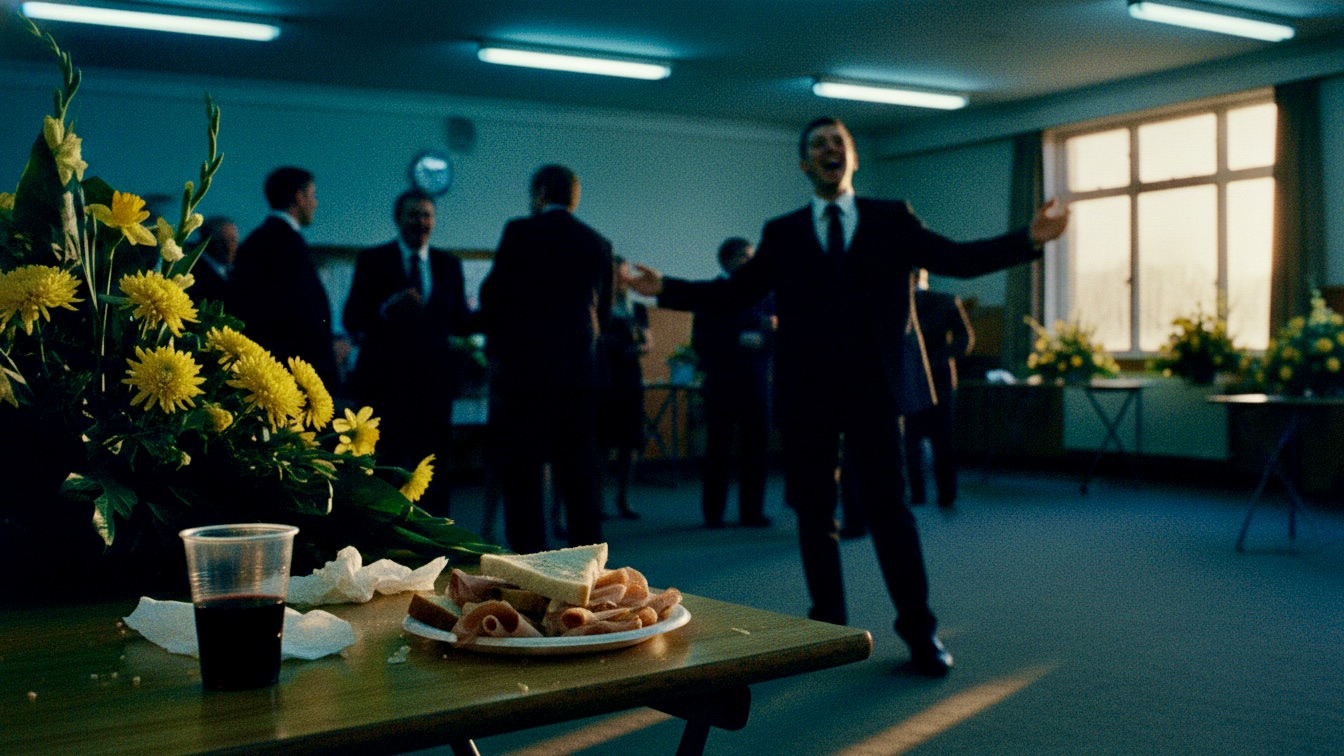
The funeral of Mrs. Thompson is a trial of endurance for Pete and his cousin Sarah, as they navigate a stifling cemetery and a community hall filled with bad wine and worse food. As the afternoon progresses, the initial somber atmosphere gives way to a chaotic, drunken celebration of the deceased’s life, marked by tall tales and the clash of generational perspectives.
The turning point arrives when a frantic stranger bursts into the hall with a bouquet of peonies and a brass key, claiming Mrs. Thompson has one final task for them. The revelation of the "Spring Surprise" shifts the mood from mournful nostalgia to palpable tension, leaving the characters standing on the precipice of a mystery that challenges everything they thought they knew about their neighbor.
Pete: A cynical, observant protagonist struggling with repressed grief and physical discomfort. He starts the episode detached and judgmental, but ends it with a newfound appreciation for the "mess" of life and a willingness to engage with the unknown.
Sarah: Pete’s cousin, who uses sarcasm and alcohol as a shield against her own vulnerability. She acts as the catalyst for the group’s engagement, transitioning from a state of irritation to one of active, if slightly tipsy, leadership.
Uncle Dave: The embodiment of the "old guard" of mourning, using humor and alcohol to mask deep-seated pain. He provides the comic relief that eventually reveals the genuine affection the community held for the deceased.
The Stranger: A mysterious, frantic figure who serves as the bridge between Mrs. Thompson’s public persona and her private, hidden life. He acts as the inciting force that shatters the status quo of the wake.
The graveside service establishes the atmosphere of stifling, allergic misery, culminating in the finality of the burial. The transition to the community center highlights the shift from mourning to the "Bleak Smirk" of the wake, where the characters attempt to normalize their grief through alcohol and cynical humor. The climax occurs with the arrival of the stranger and the reveal of the brass key, forcing the characters to abandon their comfortable, drunken haze for a sudden, sharp confrontation with a lingering mystery.
The episode begins with a tone of irritation and physical discomfort, quickly shifting into a dark, comedic, and slightly surreal exploration of grief. By the end, the mood darkens into one of suspense and intrigue, leaving the audience with an unsettled, curious feeling that mirrors the characters' own transition from mourning to discovery.
If expanded into a series, the "Spring Surprise" would serve as the first of many clues left by the deceased, potentially connecting to a larger, town-wide web of secrets. Each episode would introduce a new "curator" of a secret, gradually building a narrative about how a small community is inextricably linked by the hidden, eccentric projects of its departed residents.
The visual style should be hyper-realistic and slightly claustrophobic, emphasizing the textures of the funeral—the sweat, the pollen, the curling sandwiches, and the harsh fluorescent lighting of the hall. The tone is a blend of dark comedy and melancholic drama, similar to the works of Alexander Payne or the dry, observational humor of "The Banshees of Inisherin."
The target audience is adults aged 25-50 who appreciate character-driven dramedies and stories that balance dark, existential themes with grounded, human moments. It is ideal for viewers who enjoy "indie-film" sensibilities within a serialized format.
The pacing starts slow and heavy, mirroring the lethargy of a long funeral, before accelerating into the chaotic, fragmented energy of the wake. The final act tightens significantly, moving from the rambling, drunken atmosphere to a sharp, focused suspense as the mystery is introduced.
Practical effects should be prioritized for the environment—the pollen should be a tangible, visual element that impacts the actors' performances. The "Spring Surprise" key should be a distinct, tactile prop that stands out against the drab, cheap setting of the community center, signaling its importance as a narrative hinge point.


