Format: Short Film / Anthology Episode | Est. Length: 10-12 minutes
Signal Rot serves as the pilot episode for an anthology series titled The Static Plains, which explores the intersection of rural isolation and unexplained technological phenomena. The series posits a reality where the vast, unmonitored expanses of the heartland act as a breeding ground for sentient, parasitic data signals that feed on human trauma and community fractures. Each episode follows different residents of the region as they realize their local infrastructure has been compromised by an encroaching, digital-organic hybrid intelligence.
In a damp community hall basement, Ella struggles with a leaking pipe while an antique Zenith radio—long disconnected from any power source—begins broadcasting her deceased father’s voice. The radio’s acidic green dial pulses in rhythm with her own heartbeat, revealing secrets that threaten to dismantle her fragile sense of reality.
When an inexplicable signal begins broadcasting the deepest secrets of a dying prairie town, three friends must uncover the source beneath the soil. They soon discover that the transmission is not a hack, but a parasitic intelligence feeding on their growing paranoia.
The episode explores the corrosive nature of isolation and the way digital disinformation can weaponize personal history against a community. It examines the fragility of truth in an age of artificial synthesis, where the boundary between human memory and algorithmic manipulation becomes indistinguishable.
Beyond the technological, the story delves into the theme of "environmental rot," suggesting that the land itself is turning against its inhabitants. The narrative highlights how unresolved grief and secrets act as a conduit for external forces to infiltrate and destroy interpersonal trust.
The primary stake is the total psychological and social collapse of the town of St. Isidore as the signal systematically turns neighbors against one another. Individually, Ella, Brad, and Devon risk losing their sanity and their lives as the entity beneath the grain elevator begins to manifest physical influence over their environment and their perceptions.
The conflict is dual-layered: an external struggle against a sentient, root-like technological organism that is physically consuming the town’s infrastructure, and an internal struggle against the weaponized paranoia the signal induces. The antagonist is the "Signal"—a hybrid of organic growth and corrupted data—which acts as a mirror for the characters' darkest impulses and hidden resentments.
Ella, Brad, and Devon find themselves caught in a localized crisis when a mysterious signal begins broadcasting private, damaging information to the residents of St. Isidore. While Devon dismisses the phenomenon as a foreign psy-op meant to influence an upcoming secession vote, Brad’s technical tracking reveals the source is buried deep beneath the town’s abandoned grain elevator.
Upon entering the subterranean bunker, the trio discovers a nightmare of fiber-optic cables fused with living, pulsing roots. As the signal intensifies, it begins to broadcast the characters' own voices back at them, revealing hidden betrayals and inciting a violent confrontation that results in the group’s fragmentation and the ultimate escape of the entity’s influence.
Ella is a pragmatic, grieving survivor who carries the weight of a past tractor accident that claimed her family. Her arc moves from a state of skeptical control to one of profound, destabilizing doubt as she realizes her own mind is being turned against her.
Brad is a tech-obsessed, anxious resident whose reliance on data and logic acts as a shield against his lack of social belonging. His arc shifts from a quest for objective truth to a state of total, paranoid isolation as he loses faith in his companions.
Devon serves as the cynical, disillusioned voice of the group, struggling with the urge to abandon his roots for a better life. His arc is one of rapid descent from skeptical dismissal to defensive cowardice, ultimately choosing flight over resolution when the signal exposes his secret plans to leave.
The episode opens in the claustrophobic basement of the community hall, establishing the sensory dread of the leaking pipe and the impossible, static-filled transmissions. The tension escalates as the characters gather, moving from the mundane frustrations of a water main repair to the terrifying realization that their private secrets are being broadcast to the entire town.
The midpoint occurs when the trio reaches the grain elevator, transitioning the story from a psychological mystery to a visceral, subterranean horror. The discovery of the root-fused server farm forces the characters to confront the physical reality of their tormentor, shattering their remaining trust.
The climax erupts within the bunker as the signal uses the characters' own voices to incite a violent, paranoid breakdown. The episode concludes with a frantic escape, leaving the characters physically safe but psychologically shattered, as the signal continues to haunt them through their own devices.
The episode begins with a mood of damp, gray melancholy, reflecting the exhaustion of a late spring thaw. As the signal takes hold, the tone shifts into high-tension paranoia, utilizing erratic, dissonant sound design and suffocating, shadow-heavy cinematography to mirror the characters' internal decay.
If expanded, the series would follow the spread of the "Signal" from St. Isidore to neighboring towns, revealing a massive, subterranean network connecting the entire region. Each episode would peel back a layer of the mystery, suggesting the signal is not just a parasite, but a terraforming event designed to replace human social structures with a hive-mind collective.
The overarching narrative would track the characters' attempts to survive as they realize they are being "harvested" for their memories and traumas. The season would culminate in a desperate, last-ditch effort to sever the connection between the organic roots and the global internet, forcing a choice between a return to normalcy or a total surrender to the new, digital-biological paradigm.
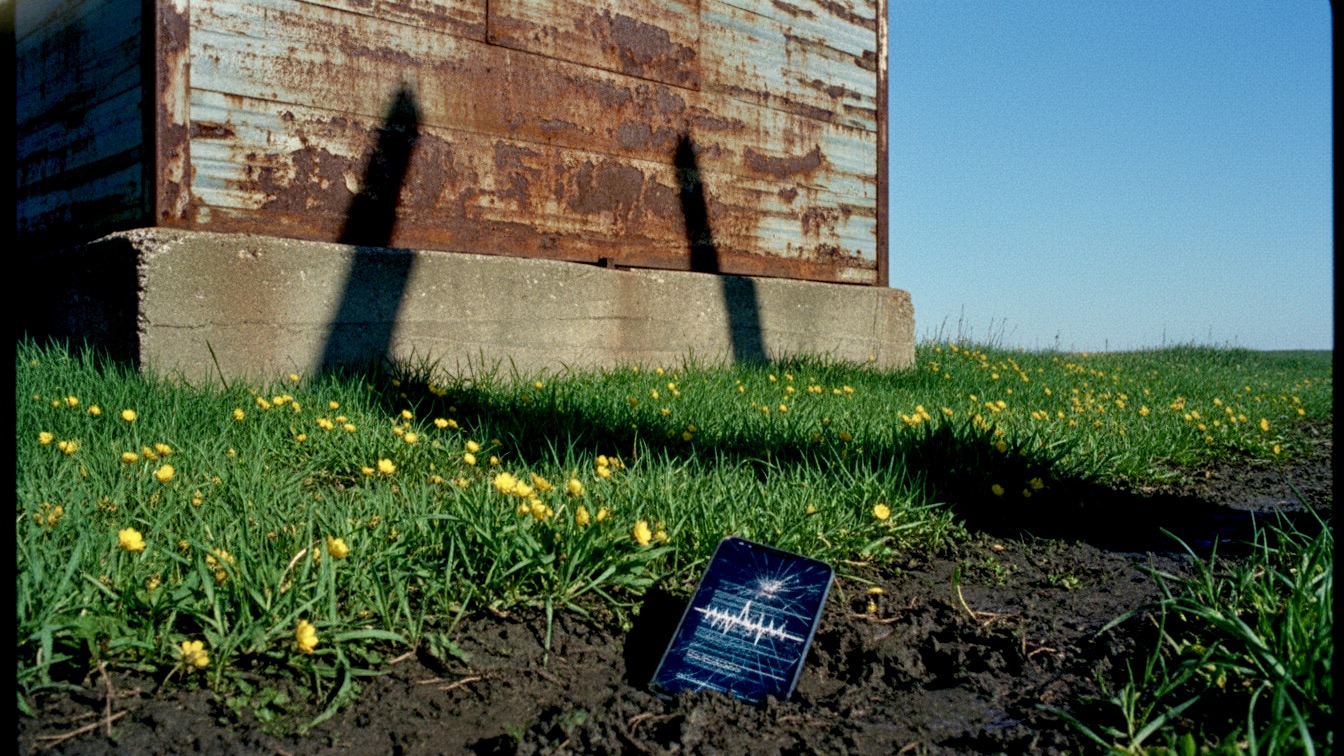
The visual style is characterized by "prairie gothic"—a blend of wide, indifferent, bright blue skies and oppressive, ink-like shadows that seem to move with intent. The cinematography favors tight, claustrophobic close-ups in the basement and bunker, contrasted with wide, lonely shots of the flat, featureless landscape to emphasize the characters' vulnerability.
Tonal influences include The Thing (1982) for its sense of isolation and distrust, and Pontypool for its focus on language as a vector for infection. The aesthetic is gritty and tactile, emphasizing the contrast between the sleek, blinking LEDs of the servers and the raw, wet, fibrous texture of the roots.
The target audience is fans of psychological horror, speculative fiction, and "weird" rural noir, typically aged 18-45. The viewing context is designed for an audience that appreciates slow-burn tension, atmospheric storytelling, and narratives that reward close attention to thematic detail and subtext.
The pacing starts deliberately, mirroring the slow, heavy movement of mud, before accelerating into a frantic, chaotic rhythm during the bunker sequence. The 10-12 minute runtime is structured as a tight, three-act sprint, ensuring that the transition from mystery to horror is earned and impactful without unnecessary exposition.
The production will require significant practical effects to blend the server hardware with organic, root-like materials, utilizing animatronics or high-quality prosthetics to give the "Signal" a living, breathing quality. The sound design is paramount, requiring a layered audio mix that distinguishes between natural ambient noise, digital static, and the synthesized, uncanny-valley voices of the characters.
Lighting should be used as a character in itself, with the "sickly yellow" of the basement and the "acidic green" of the signal acting as visual markers for the presence of the entity. The use of practical, on-location shots of the prairie landscape will provide a grounded, realistic anchor that makes the intrusion of the supernatural elements feel all the more jarring and intrusive.


