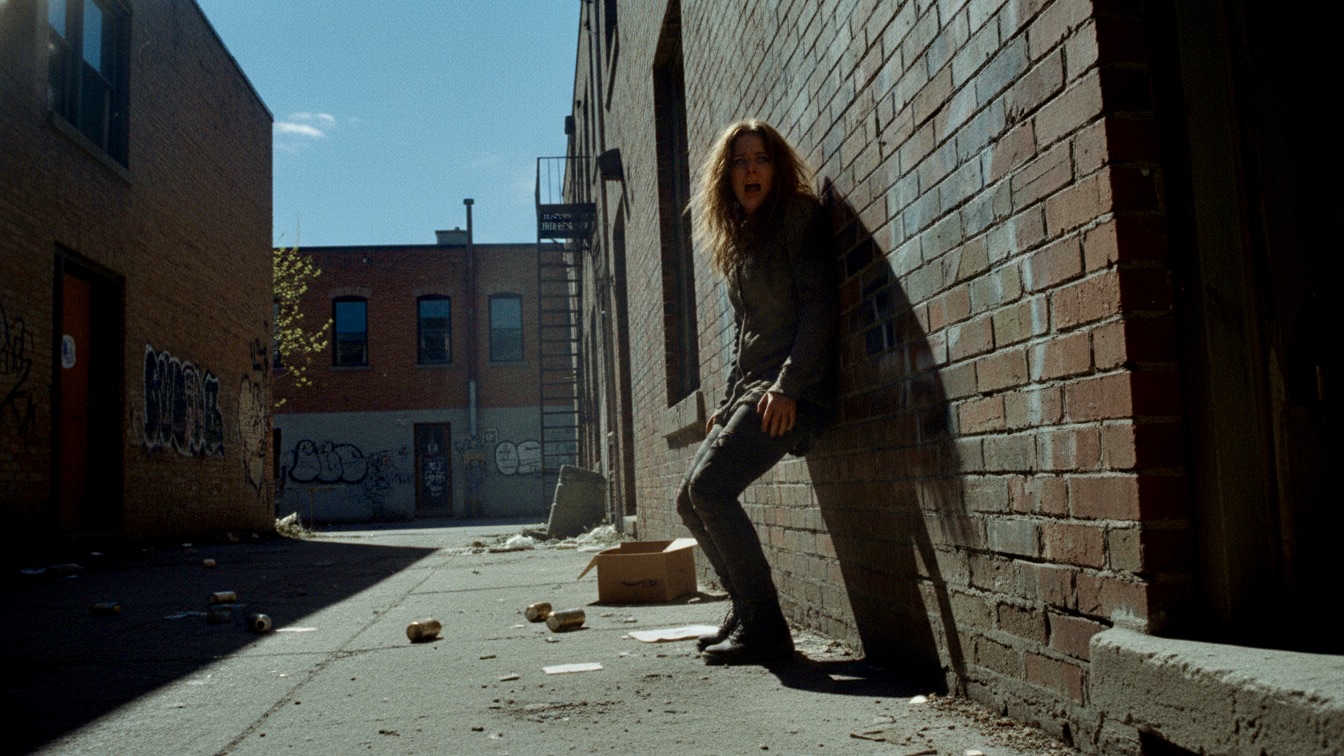
Format: Short Film / Anthology Episode | Est. Length: 10-12 minutes
This episode serves as a standalone entry in a psychological horror anthology titled The Architecture of Dread, where physical spaces act as sentient, malevolent entities. The series explores the concept that historical buildings—repurposed through conflict and colonization—absorb the trauma of their inhabitants, eventually manifesting that trauma into non-Euclidean, lethal traps. Each episode features a different location, linked by the recurring mystery of a shadowy organization cataloging these "living" structures.
The morning sun cuts through the bullet-riddled lobby of a besieged embassy, but the light reveals an impossible truth: a massive, ornate chandelier has shifted three feet across the ceiling, defying physics. As the group waits for a rescue that isn't coming, the building begins to groan with a rhythmic, mechanical hum that vibrates through their very teeth.
Trapped in a crumbling war-torn embassy, four diplomats discover the building is a sentient, shifting labyrinth that consumes those who dwell within it. They must navigate the impossible architecture to escape before the structure fully assimilates them.
The episode explores the theme of "colonial haunting," where the physical remnants of imperial history become literal prisons for the present. It juxtaposes the loud, tangible violence of modern warfare with the silent, creeping horror of a space that has turned against humanity, reflecting the anxiety of being caught in a trap one cannot fight with conventional weapons.
The secondary theme is the breakdown of rationalism under extreme duress. As the characters face the impossible, their reliance on logic and hierarchy fails, forcing them to confront the primal, irrational nature of their environment. The story highlights the fragility of human civilization when pitted against ancient, indifferent forces.
The characters face total erasure; they are not just dying, but being absorbed into the building’s impossible geometry, effectively ceasing to exist in reality. Beyond their lives, the stakes involve the loss of their sanity as they realize that the external war is a secondary, manageable threat compared to the predatory nature of the building itself.
The primary antagonist is the building itself, a sentient, shifting structure that uses its history of colonial exploitation to manipulate its interior layout. The secondary conflict is the interpersonal friction between the survivors, as their differing methods of coping—denial, aggression, and hyper-vigilance—prevent them from forming a cohesive escape plan.
Mae, Will, Dylan, and Nadia are huddled in a secondary embassy compound, waiting for a diplomatic convoy that has been canceled due to the escalating war outside. As the reality of their abandonment sets in, the group realizes the building is physically altering its layout, trapping them inside as it begins to "feed."
When they descend into the basement to scavenge for supplies, they discover a collection of cursed, colonial-era artifacts that seem to be the source of the building's activity. After witnessing the disappearance of one of their own into a wall of solid concrete, the survivors must navigate the shifting, narrow corridors of the basement while being hunted by the very structure they are trapped in.
Mae: The pragmatic anchor. She starts as a rational, task-oriented survivor but ends as a traumatized witness to the impossible, forced to abandon her logic to survive the shifting environment.
Dylan: The aggressive leader. He starts as a man of action who believes he can force his way out of any situation, but his inability to dominate the building leads to his swift, brutal assimilation.
Nadia: The intuitive observer. She is the first to notice the building's unnatural changes, shifting from a state of terrified paralysis to a grim, prophetic acceptance of their fate.
Will: The desperate follower. He begins as a nervous, wounded man clinging to hope and ends in a state of total psychological collapse, unable to reconcile the reality of his situation.
The lobby sequence establishes the oppressive atmosphere of the warzone and the initial, subtle "glitch" in the building’s architecture. Tension spikes when the radio confirms their abandonment, forcing the group to descend into the basement for resources.
The discovery of the artifacts acts as the midpoint, where the horror shifts from psychological to supernatural as the shadow of the statue moves independently. The climax occurs when the staircase vanishes and Dylan is consumed by the concrete wall, shattering the group's remaining sense of safety.
The final sequence finds the survivors hiding in a cramped coal chute, realizing that the building is not just a prison, but a predator. The episode ends on a note of absolute dread as the environment continues to close in on them, signaling that there is no escape.
The episode begins with the frantic, high-stress energy of a warzone, characterized by loud, external threats. As the narrative progresses, the mood shifts to a cold, claustrophobic, and surreal dread. The audience experiences a transition from the fear of being killed to the deeper, more primal fear of being erased by an indifferent, impossible reality.
The season would follow a shadowy group of researchers, perhaps linked to the "Ministry of Antiquities" mentioned in the basement, who are attempting to map these "living" structures. Each episode would reveal a piece of a larger puzzle regarding why these buildings are waking up and how they are connected across the globe.
As the season progresses, the characters would realize that these buildings are not just isolated incidents, but part of a global network of "anchors" that are slowly rewriting the physical laws of the world. The arc would culminate in a confrontation at the source of this phenomenon, questioning whether humanity is being replaced or simply harvested.
The visual style relies on high-contrast lighting, using the harsh, dusty sunlight of the lobby to contrast with the deep, suffocating blacks of the basement. The camera work should be handheld and frantic during the lobby scenes, transitioning to slow, steady, and unsettling tracking shots as the building begins to shift.
The tone is grounded, gritty realism that slowly bleeds into cosmic horror. Comparable to The Ritual for its sense of being trapped in a hostile, ancient space, and Annihilation for its focus on the physical transformation of reality. The sound design is crucial, focusing on low-frequency humming and the unnatural, rhythmic sounds of shifting stone.
The target audience is fans of elevated horror and psychological thrillers, aged 18-40. It is designed for viewers who appreciate slow-burn tension, atmospheric storytelling, and narratives that challenge the boundaries of reality, suitable for streaming platforms that host serialized anthology content.
The pacing is designed to be relentless, starting with a rapid-fire dialogue-heavy opening that establishes the stakes, before slowing down into a tense, claustrophobic crawl through the basement. The runtime of 10-12 minutes requires a tight focus on the "descent into madness" arc, ensuring that every scene contributes directly to the sense of isolation and the building's predatory evolution.
Practical effects are preferred for the "shifting" walls and the statue, using subtle, hidden mechanical rigs to create the sense of movement in the architecture. This provides a tactile, grounded feel to the horror that CGI might lack, emphasizing the physical weight of the building.
The sound design should prioritize "sub-bass" frequencies to create a physical sense of discomfort for the audience, mimicking the sensation of the characters' teeth aching. The set design for the basement must be modular, allowing the space to feel like it is rearranging itself between shots without requiring massive set changes.


