Format: Short Film / Anthology Episode | Est. Length: 10-12 minutes
This episode serves as a standalone entry in a speculative anthology series titled The Frictionless State, which explores the dehumanizing consequences of hyper-optimized, algorithm-driven societies. Each episode focuses on a different citizen grappling with the "glitches" of a supposedly perfect utopia, revealing the systemic decay hidden beneath the veneer of technological convenience and environmental restoration.
Arthur, a sixty-three-year-old man, struggles to navigate a high-tech grocery store as his "Smart-Cart" locks up due to a minor, algorithmic weight-distribution error. The high-pitched shriek of the metal wheel sets an immediate tone of sensory overload and systemic hostility.
In a hyper-efficient utopia where resources are managed by unforgiving algorithms, an elderly man fights to secure his groceries before a price-hike deadline. His struggle against a malfunctioning cart exposes the cold, systemic cruelty of a society that discards those who cannot keep pace.
The primary themes explore the intersection of aging and technological obsolescence, highlighting how "optimized" systems inherently marginalize the vulnerable. It critiques the illusion of progress, where environmental sustainability is weaponized through dynamic pricing and surveillance-based social control.
The narrative also delves into the concept of "performative utopia," where citizens maintain a collective delusion of harmony by ignoring the suffering of others. The story questions the cost of convenience and the moral bankruptcy of a society that prioritizes efficiency over human dignity.
Arthur faces the immediate loss of his food security and the depletion of his meager financial credits, which threatens his basic survival within the housing system. Beyond the physical, the stakes involve his loss of autonomy and the psychological breaking point of realizing he is an invisible, disposable cog in a machine that no longer values his existence.
The conflict is primarily man-versus-system, represented by the unyielding algorithms of the Smart-Cart and the indifferent bureaucracy of the store monitors. Arthur faces internal conflict as he struggles to maintain his composure and dignity against a world that demands he move at a pace his aging body can no longer sustain.
Arthur attempts to complete a grocery run before the 10:00 AM "Spring Bounty" subsidy expires, but a malfunctioning Smart-Cart traps him in a cycle of mounting debt and digital errors. As the store’s algorithm dynamically increases prices based on demand and his own inability to navigate the store efficiently, Arthur becomes a target for security alerts and the impatient scorn of younger, tech-integrated shoppers.
The situation culminates in a public breakdown when his cart tips, destroying his rations and forcing him to confront the reality of his own obsolescence. Abandoning his debt and his dignity, Arthur exits the store into a seemingly idyllic park, only to realize that the rhythmic, ominous thumping beneath the city suggests the entire "Utopian" foundation is beginning to fracture.
Arthur is a man defined by his past, struggling to adapt to a present that has rendered his physical capabilities and lived experience irrelevant. His arc moves from a desperate attempt to conform and survive within the system to a state of hollowed-out resignation and final, chilling awareness of the system's impending collapse.
The Store Monitor represents the banality of evil, acting as a bureaucratic drone who prioritizes "New Spring" protocols over human empathy. Other shoppers, like the woman in the workout suit, serve as reflections of the societal pressure to remain "optimized," acting as secondary antagonists who reinforce the culture of invisibility for those who fail.
Arthur struggles with the jammed cart in the produce aisle, his frustration mounting as the cart’s interface mocks his physical limitations. The tension peaks when he accidentally crashes into a display of heirloom tomatoes, triggering an automated security response that marks him as a social liability.
The midpoint occurs when Arthur realizes the system is rigged against him, prompting him to abandon his attempt at following the rules and instead grab extra food in a final act of petty defiance. The climax unfolds at the checkout, where the price-flip and the destruction of his flour rations force him to abandon his cart and his status as a compliant citizen.
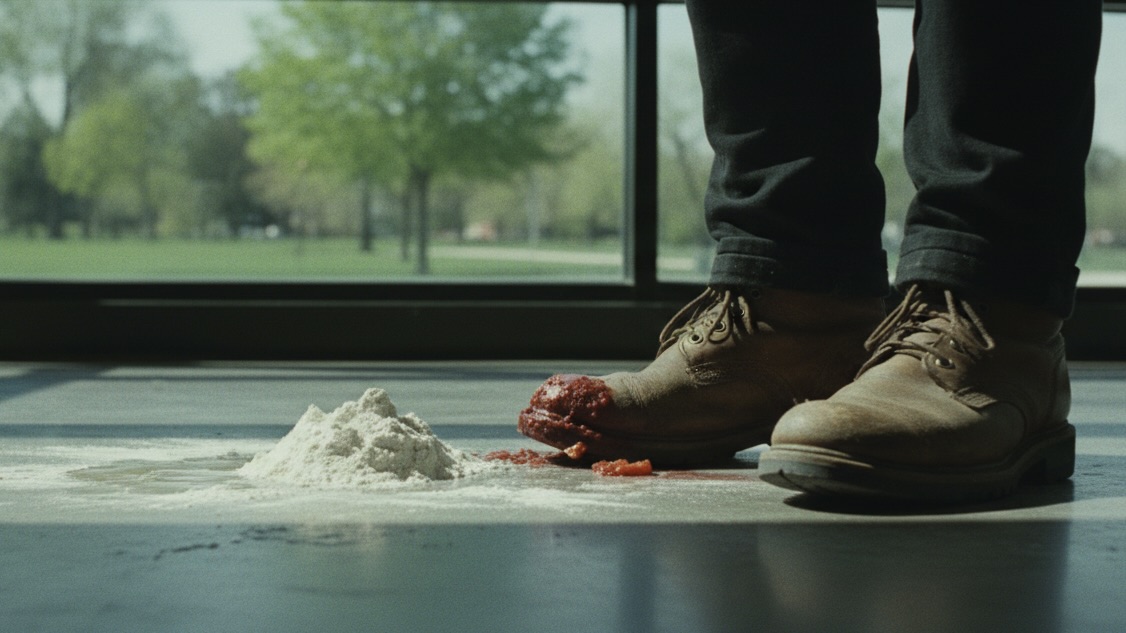
In the final moments, Arthur stands outside the store, his hands stained with flour, as he senses a deep, structural vibration that signals the end of the current order. He realizes that the "Utopia" is not just failing him, but is fundamentally unsustainable and on the brink of a total, violent collapse.
The episode begins with a sharp, abrasive sense of irritation and claustrophobia, utilizing high-frequency sound design and bright, sterile lighting to mirror Arthur’s anxiety. As the story progresses, the mood shifts toward a heavy, melancholic resignation, finally transitioning into an eerie, suspenseful atmosphere as the external threat of the "thumping" emerges.
If expanded, the season would follow the slow unraveling of the "New Spring" initiative, with each episode showing a different sector of the city experiencing similar "glitches." Arthur’s realization about the cracking foundation serves as the catalyst for a broader narrative arc involving a resistance movement that operates in the shadows of the city's infrastructure.
As the season progresses, the "thumping" sound becomes a recurring motif, representing the awakening of a subterranean force or a systemic rebellion. Characters from previous episodes would begin to intersect, forming a mosaic of the disenfranchised who are finally beginning to see the cracks in the glass.
The visual style is characterized by "High-Key Dystopia," utilizing overly saturated greens and blindingly bright whites to create a sense of artificial, oppressive perfection. The camera work is tight and handheld during Arthur’s struggle to emphasize his lack of control, contrasting with the smooth, gliding shots of the "optimized" shoppers.
The tone is comparable to Black Mirror or Children of Men, blending a grounded, gritty realism with a sleek, futuristic aesthetic. It avoids traditional sci-fi tropes, focusing instead on the tactile, sensory details of decay—the smell of ozone, the texture of spilled flour, and the sound of a dying wheel.
The target audience includes adults aged 25-55 who enjoy social commentary, dystopian fiction, and character-driven dramas. It is intended for viewers who appreciate slow-burn tension and stories that challenge the ethics of technological advancement and social stratification.
The pacing is designed to be frantic and claustrophobic during the first two acts, mirroring the time-sensitive nature of the grocery store's dynamic pricing. The final act slows down significantly, allowing the weight of Arthur’s realization and the ominous, rhythmic thumping to resonate with the audience, effectively shifting the tempo from a frantic sprint to a chilling, steady dread.
The primary production challenge is the "Smart-Cart" interface, which should be designed to feel both intuitive to the world's inhabitants and infuriatingly opaque to the audience. The sound design is critical; the "screaming" of the wheel and the synthesized, flat voices of the store's AI must be distinct and jarring to maintain the episode's high-tension atmosphere.
Practical effects should be used for the flour and tomato debris to ensure a grounded, tactile feel, contrasting with the clean, digital overlays of the store's interface. The "thumping" sound at the end should be mixed to be felt in the sub-bass frequencies, creating a physical sensation for the viewer that mirrors Arthur’s experience on the sidewalk.


