Format: Short Film / Anthology Episode | Est. Length: 10-12 minutes
Failing Light serves as a foundational episode for an anthology series titled The Glitch, which explores the disintegration of reality in a near-future world where the digital and physical realms have begun to bleed together. Each episode focuses on isolated individuals or groups who stumble upon "rendering errors" in the environment, suggesting that the world is a simulated construct suffering from systemic decay. The overarching arc tracks the slow realization that humanity is living within a failing architecture, leading to a desperate search for the "source code" of existence.
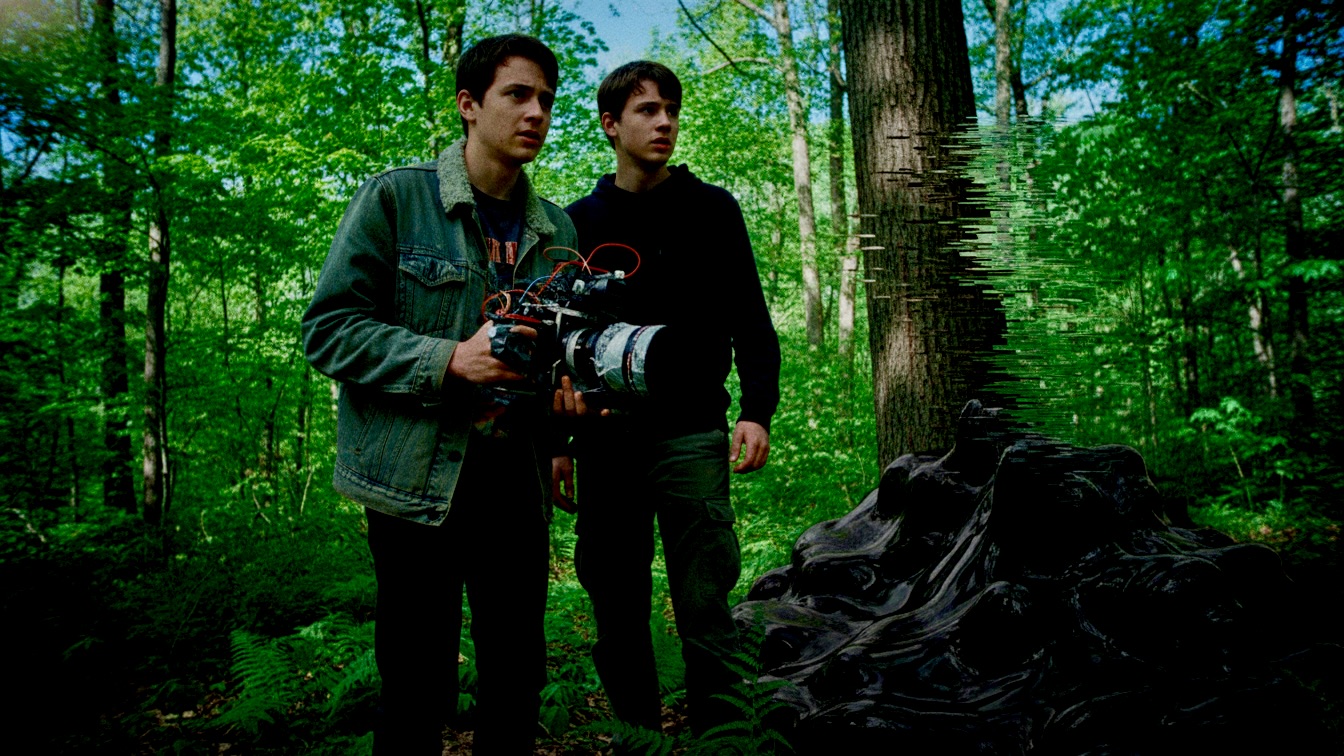
Two tech-obsessed teenagers, Jacob and Corey, venture deep into the North Woods to locate a rumored "glitch" in the geography, only to find the forest’s physics beginning to unravel into static and shadow. As their connection to the digital world severs, they realize the woods are not just empty—they are actively failing to render.
Two teenagers hunting for urban legends in the wilderness discover that reality is a fragile, simulated construct beginning to collapse. They must navigate a landscape of shifting geometry to survive before they are permanently deleted from the system.
The episode explores the existential dread of a "post-authentic" generation, focusing on the reliance on digital validation and the terror of losing that tether. It examines the fragility of perception, questioning whether our reality is a tangible truth or merely a high-definition projection that can be corrupted or erased.
Secondary themes include the isolation inherent in hyper-connectivity and the psychological breakdown that occurs when one is forced to confront a world that lacks objective consistency. The narrative serves as a metaphor for the burnout of the digital age, where the "silence" of the natural world becomes a terrifying, physical weight.
Jacob and Corey risk total erasure from reality, as the forest acts as a predatory, logic-based trap that consumes those who wander into its "dead zones." If they cannot escape the shifting geometry of the woods, they face the prospect of becoming "data" themselves, permanently integrated into the system’s corrupted memory.
The primary antagonist is the environment itself—a hostile, simulated reality that actively rejects their presence. Internally, the characters struggle with the psychological trauma of digital withdrawal and the desperate, frantic need to document their experience, which ultimately makes them more vulnerable to the system’s influence.
Jacob and Corey trek into a remote forest to find a cabin rumored to be a "glitch" in the local geography, initially treating it as a lark to escape their academic stress. As they lose their signal, the environment begins to exhibit signs of technical failure, with shadows pooling into solid masses and the visual spectrum shifting into a grey-scale haze.
Upon reaching the "cabin"—a low-resolution, non-textured void—they are confronted by the reality that the forest is a hollowed-out logic gate. After a terrifying encounter with the system’s defenses, they narrowly escape back to the edge of the ridge, only to realize that their survival was not an escape, but a successful data upload of their consciousness to an unknown destination.
Jacob is a cautious, observant teenager who uses his salvaged camera as a shield against the world, seeking to document the truth to validate his own existence. His arc moves from a state of skeptical detachment to one of profound, paralyzing terror as he realizes he is a subject, not an observer.
Corey is the catalyst, a performative philosopher who masks his deep-seated anxiety about the future with intellectual detachment and irony. His arc begins with a bravado-filled attempt to master the "un-synced" environment and ends in a state of shattered, primal fear as he realizes his intellectualism is useless against the system’s cold, digital logic.
The journey begins with the pair trekking through the woods, establishing their reliance on technology and the growing, unnatural silence that signals the forest's instability. The midpoint occurs when they find the "cabin," a non-textured, glitching structure that forces them to confront the impossibility of their surroundings and the failure of their own perceptions. The climax erupts as the forest turns into a wireframe grid, forcing a frantic, surreal chase where the characters must outrun the encroaching, silent expansion of the "Shadow Mass" to reach the boundary of the real world.
The episode begins with a sense of mid-morning, sun-drenched restlessness that quickly curdles into a claustrophobic, high-tension atmosphere. As the reality-glitches intensify, the mood shifts from uneasy curiosity to a frantic, existential panic, leaving the audience with a lingering, cold sense of dread that the world they are watching is fundamentally broken.
If expanded, the series would follow a clandestine group of "glitch-hunters" who realize that the UPLOAD COMPLETE notification is a recurring phenomenon across the globe. The season would escalate as these individuals begin to find one another, discovering that their memories and experiences are being harvested to "patch" the crumbling simulation.
The characters would evolve from victims of the system into active investigators, attempting to locate the "Admin" or the source of the simulation. The season finale would culminate in a confrontation with the architects of the world, revealing whether humanity can break free from the code or if they are destined to be reset.
The visual style utilizes a stark contrast between "real" world scenes—shot with natural, over-exposed sunlight—and "glitch" sequences, which employ desaturated colors, digital artifacts, and shifting frame rates. The tone is clinical and detached, reminiscent of Black Mirror or The Twilight Zone, focusing on the uncanny valley effect where the familiar becomes subtly, horrifyingly wrong.
The cinematography should favor tight, claustrophobic framing that expands into wide, empty shots of the forest to emphasize the characters' insignificance. Sound design is critical, moving from the ambient noise of nature to a synthesized, abrasive hum that mirrors the digital decay of the environment.
The target audience is young adults and fans of speculative, psychological, and sci-fi horror. It is best suited for viewers who enjoy high-concept storytelling that challenges the nature of reality, suitable for streaming platforms that cater to a tech-savvy, genre-focused demographic.
The pacing starts with a slow, observational tempo that mirrors the aimless wandering of the characters, then accelerates rapidly once the first "glitch" occurs. The final act maintains a relentless, breathless pace, utilizing a rapid-fire edit to simulate the collapse of the environment before ending on a sudden, chilling silence.
The production requires a strong emphasis on practical-to-digital transitions, specifically in how the environment "renders" and "de-renders" around the actors. The "Shadow Mass" should be achieved through a mix of practical lighting effects and subtle, unsettling CGI that suggests a lack of texture rather than traditional monster design.
The cabin sequence should be treated with a distinct visual language—perhaps using forced perspective and minimalist set design to emphasize its "low-resolution" nature. The final shot of the notification should be clear and sharp, contrasting with the chaotic, blurred visuals of the escape to provide a jarring, final impact.


