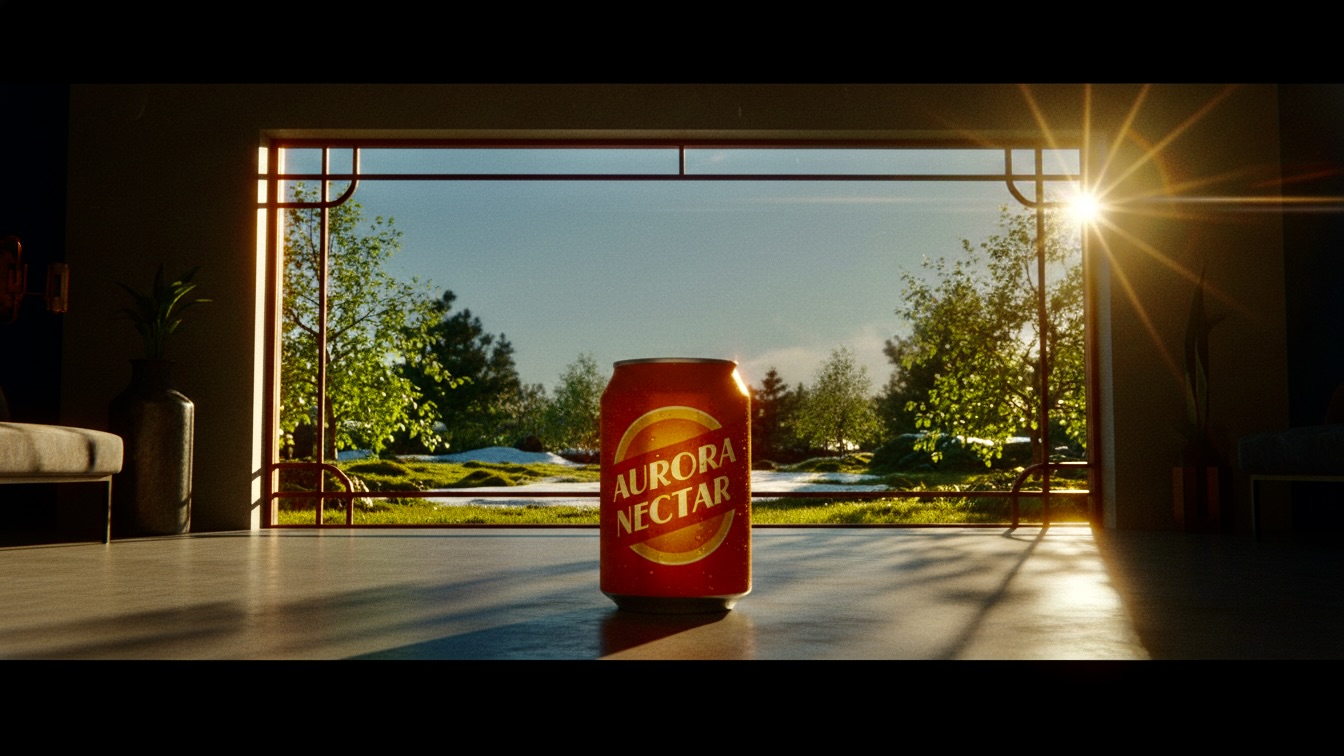
The story unfolds in a quiet, sterile room within a futuristic society known as the Garden Cities. Toby, a young boy, sits by the bedside of Steve, an elderly man who is nearing the end of his life. They share a moment over a rare, vintage can of "Super-Nova Orange Burst" soda, a sugary relic from a bygone era that stands in stark contrast to their modern, health-obsessed world. Toby is fascinated by the bubbles in the glass, seeing them as tiny people rushing toward an inevitable end.
As the soda goes flat, Steve uses the beverage and the changing April weather outside to explain the nature of mortality to Toby. He describes the messy transition from winter to spring, comparing his own fading life to the mud that must precede the blooming of flowers. Their conversation is briefly interrupted by Mia, a technician who cares for Steve and represents the structured, utopian system they inhabit. She provides a glimpse into the societal shift toward perfection, though she maintains a deep, weary affection for Steve’s rebellious spirit.
The narrative concludes with a poignant silence as the final bubble in the glass pops. Steve closes his eyes, drifting into a state that suggests the finality of his "hour" has arrived. Toby is left to contemplate the quiet room and the heavy realization that life is a series of climbs toward a surface. The boy remains in the creaky wooden chair, holding the empty glass and observing the natural world continuing its hungry, stubborn cycle of renewal outside the window.
The central theme of the story is the acceptance of mortality as a natural and even celebratory conclusion to life. Through the metaphor of the soda bubbles, the narrative suggests that the "pop" at the surface is not a failure of the bubble, but its intended finale. Steve serves as a philosophical guide, reframing death not as a tragedy to be avoided by technology, but as the "tada" at the end of a magic trick. This perspective challenges the modern clinical view of death, suggesting that the ending gives the preceding journey its meaning.
Another prominent theme is the tension between sterile perfection and the "beautifully messy" reality of the past. The setting of 2026 is described as a Utopian world where everything is organic, healthy, and controlled. However, Steve finds more comfort in a can of "poison" and a creaky wooden chair than in the floating furniture and green pods of the Garden Cities. This highlights a psychological need for imperfection, suggesting that human satisfaction often stems from things that are "tangled" or "chemical" rather than perfectly engineered.
The cycle of nature, specifically the transition from winter to spring, reinforces the inevitability of change and decay. Steve’s description of the "pre-mud phase" of his life aligns human existence with the seasonal shifts of the earth. The story posits that for new life to emerge, the old must be "chewed up" and recycled. This ecological view of death provides Toby with a framework to understand loss, moving away from the fear of the "empty battery" toward an appreciation for the "hungry" renewal of the world.
Toby functions as the emotional lens through which the reader experiences the heavy atmosphere of the palliative wing. As a child, he possesses a heightened sensory awareness, noticing the "frantic noise" of bubbles and the specific scent of melting snow. His psychological state is one of transition, as he moves from a literal understanding of the world to a more symbolic one. He is initially distressed by the idea of things "running out of batteries," reflecting a youthful anxiety about the cessation of existence.
His connection to Steve shows a deep empathy and a longing for stability in a world that feels increasingly artificial. He prefers the solid, creaky chair to the floating ones, indicating a developmental need for grounding and history. By the end of the chapter, Toby has begun to internalize Steve’s lessons, finding a strange logic in the behavior of the bubbles. His quiet observation of the last bubble suggests he is learning to witness the end of things without immediately turning away in fear.
Steve is a man who has maintained his autonomy and identity in a society that emphasizes collective, sterilized well-being. He uses humor and "bad jokes" as a psychological defense mechanism against the encroaching silence of his own death. His decision to trade a rare book for a can of orange soda is a final act of rebellion against a system that prioritizes health over joy. He views his own body with a detached, sardonic wisdom, referring to himself as "pre-mud" and "dust."
Psychologically, Steve has reached a stage of ego integrity, where he can look back on life—and even the prospect of death—with a sense of wholeness. He does not fight the "clock" but acknowledges that its purpose is to finish the hour. He acts as a mentor to Toby, passing on a legacy of appreciation for the imperfect. His refusal to be "fixed" by the young people who see endings as failures demonstrates his profound acceptance of the human condition.
Mia represents the compassionate face of the futuristic system, yet she carries the psychological weight of its demands. Her "messy knot" of hair and high-strung shoulders reveal the exhaustion inherent in maintaining a "Utopian" peace. She is caught between her professional duty to monitor vitals and her personal affection for Steve’s "menace." Unlike Steve, she still views the ending as something to be managed and delayed, showing the gap in perspective between the healthy and the dying.
Her interaction with the orange soda reveals a hidden appreciation for the chaos Steve represents. While she sighs at his "liquid candy," her smile indicates a recognition that the "Great Recalibration" has perhaps stripped away some essential human element. She provides the necessary care that allows Steve to have his "big finale" in comfort. Her character highlights the struggle of those who must facilitate the transition of others while still feeling anchored to the responsibilities of the living.
The pacing of the narrative is slow and rhythmic, mirroring the "drip-drip-drip" of the melting icicles and the steady pulse of the medical monitors. The author uses a deliberate cadence in the dialogue, allowing for long pauses and contemplative silences that reflect the setting's atmosphere. This unhurried approach forces the reader to sit in the room with Toby and Steve, experiencing the weight of each passing second. The transition from the "riot" of the bubbles to the "quiet" of the room marks a masterfully executed shift in energy.
Sensory details are used extensively to ground the futuristic setting in a relatable, tactile reality. The contrast between the "sharp, fake scent" of the orange soda and the "wet dogs and old leaves" of the outside world creates a vivid olfactory landscape. These descriptions bridge the gap between the artificiality of the Garden Cities and the raw, primal nature of spring. The use of sound—the "wet, rattling laugh," the "dry scrape" of a voice, and the "snapping sound" of wings—adds a layer of intimacy to the scene.
The narrative voice is deeply empathetic, utilizing Toby’s perspective to soften the harsh reality of a clinical deathbed. By personifying the bubbles as "tiny people" who "didn't want to get out of bed," the prose makes the abstract concept of mortality accessible and poignant. The tone is bittersweet, balancing the "poison" of the soda with the "magic trick" of the flowers. This stylistic choice ensures that the story feels like a meditation on life’s value rather than a bleak observation of its end.


